
 Baku 27° C
Guadeloupe activist: France wrongly labels decolonization calls interference
- 28 July, 2026
- 15:22
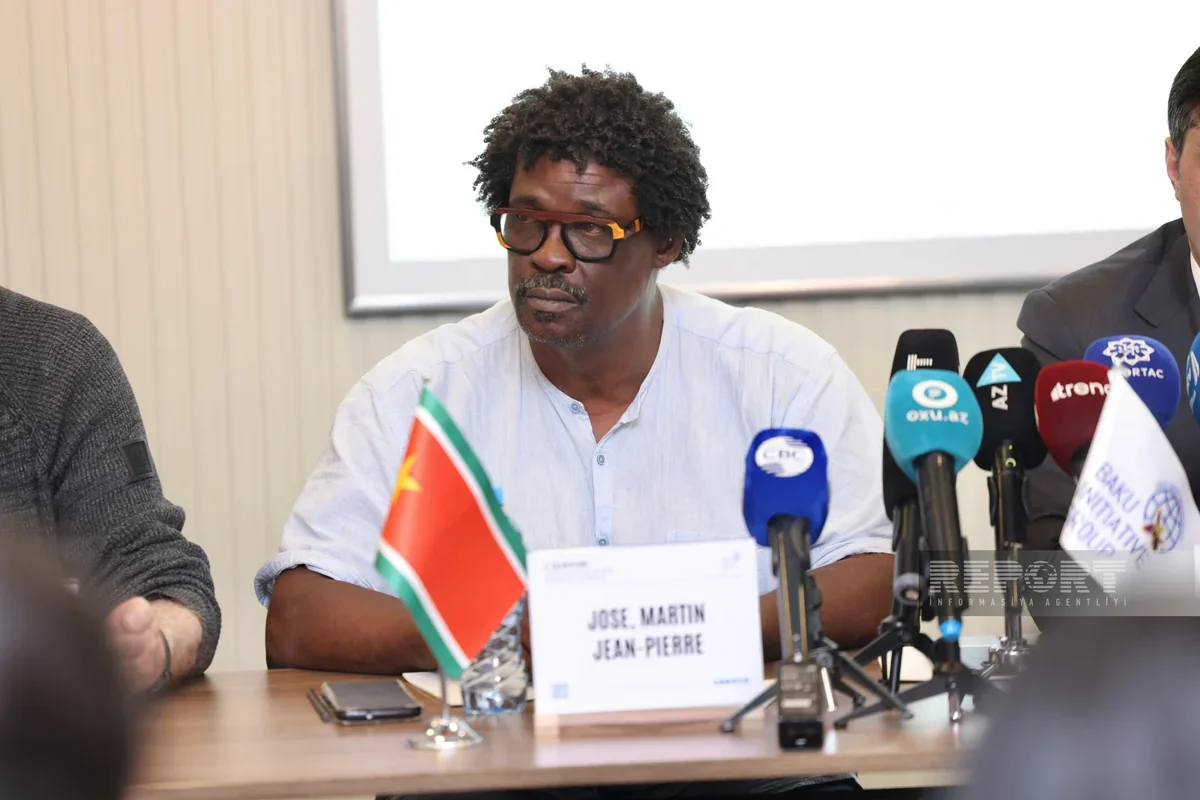
Jose Jean-Pierre, the president of the MIR Guadeloupe organization operating in Guadeloupe and the secretary of the International Front for Decolonization, gave a strong response to the colonial policy of the French authorities regarding the overseas territories and their attempts to present decolonization calls as "interference in internal affairs," Report informs, citing a statement by the Baku Initiative Group (BIG).
As stated, he addressed separate letters to the President of France Emmanuel Macron, the deputy of the French National Assembly Nicolas Metzdorf, and the UN Special Committee on Decolonization - C-24:
"The letters strongly reject the French parliamentarians' portrayal of Azerbaijan's position regarding the completion of the decolonization of the overseas territories as 'interference'. It is emphasized that raising the status of territories under colonial rule by any state in the context of international law is not an interference in France's internal affairs. On the contrary, this is an expression of the collective commitment undertaken by UN members to eradicate all forms of colonialism."
It was noted that the Guadeloupean political activist reminds Paris that New Caledonia and French Polynesia are still on the UN list of territories to be decolonized. Therefore, calling the discussion of the colonial status of these territories at the international level "foreign interference" is legally and politically groundless. The situation of these territories is reviewed annually within the framework of the UN C-24 Committee and the Fourth Committee of the General Assembly.
"The letters also expose France's claims about the allegedly voluntary integration of Guadeloupe, Martinique, Reunion, and French Guiana into France. It is stated that the departmentalization law adopted in 1946 was adopted unilaterally by the French parliament without the participation of those peoples, without any referendum and direct nationwide voting. A year later, the removal of these territories from the UN list of territories to be decolonized was also carried out based on the unilateral decision of Paris. Thus, the 'free choice' referred to by France has never been confirmed by the will of those peoples.
Jean-Pierre also shows with concrete facts that France's statements on legal equality contradict the real situation in the overseas territories. According to official statistics, the unemployment rate in Guadeloupe and Martinique remains high compared to metropolitan France. It is emphasized that contamination with a toxic pesticide called chlordecone in the Antilles affects more than 80 percent of the adult population, and this incident was recognized even by French courts as a 'sanitary scandal'," the information says.
It was also emphasized that the letter addressed to the C-24 Committee demands sending a UN mission to New Caledonia and French Polynesia and granting the choice of independence. At the same time, it is proposed to request a report from France on what legal grounds Guadeloupe, Martinique, Reunion, and French Guiana were removed from the UN list in 1947, to recognize the separate people status of these peoples from the perspective of international law, and to hold referendums for their self-determination.
And in the letter sent to Macron, an open call is made to Paris: instead of disputing the legitimacy of the right to decolonization, France must fulfill its international obligations. For this, the separate people status of the residents of the overseas territories must be recognized, a real self-determination process under the auspices of the UN must begin in New Caledonia and French Polynesia, and referendums, which have not been held since 1946, must finally be organized in Guadeloupe, Martinique, Reunion, and French Guiana.
"The voice of the Guadeloupean people reaches a wider audience through the decolonization agenda raised by Azerbaijan and the international platform formed by the BIG. The BIG unites the separate struggles of the peoples suffering from French colonialism on different continents around a single international political and legal agenda, allowing their positions to be brought to the UN level," the letter says.
These letters addressed from Guadeloupe are another clear answer given to Paris: colonialism cannot be hidden under the guise of an "internal affair". Instead of silencing the demand for decolonization with threats and diplomatic pressure, France must recognize the right to free choice, independence, and self-determination of the peoples whose rights have been deprived for centuries.
Author