Baku 23° C
Giorgia Ziliani: Inclusiveness in urban planning doesn't happen automatically
- 20 May, 2026
- 10:38
Stay up to date with the top news!
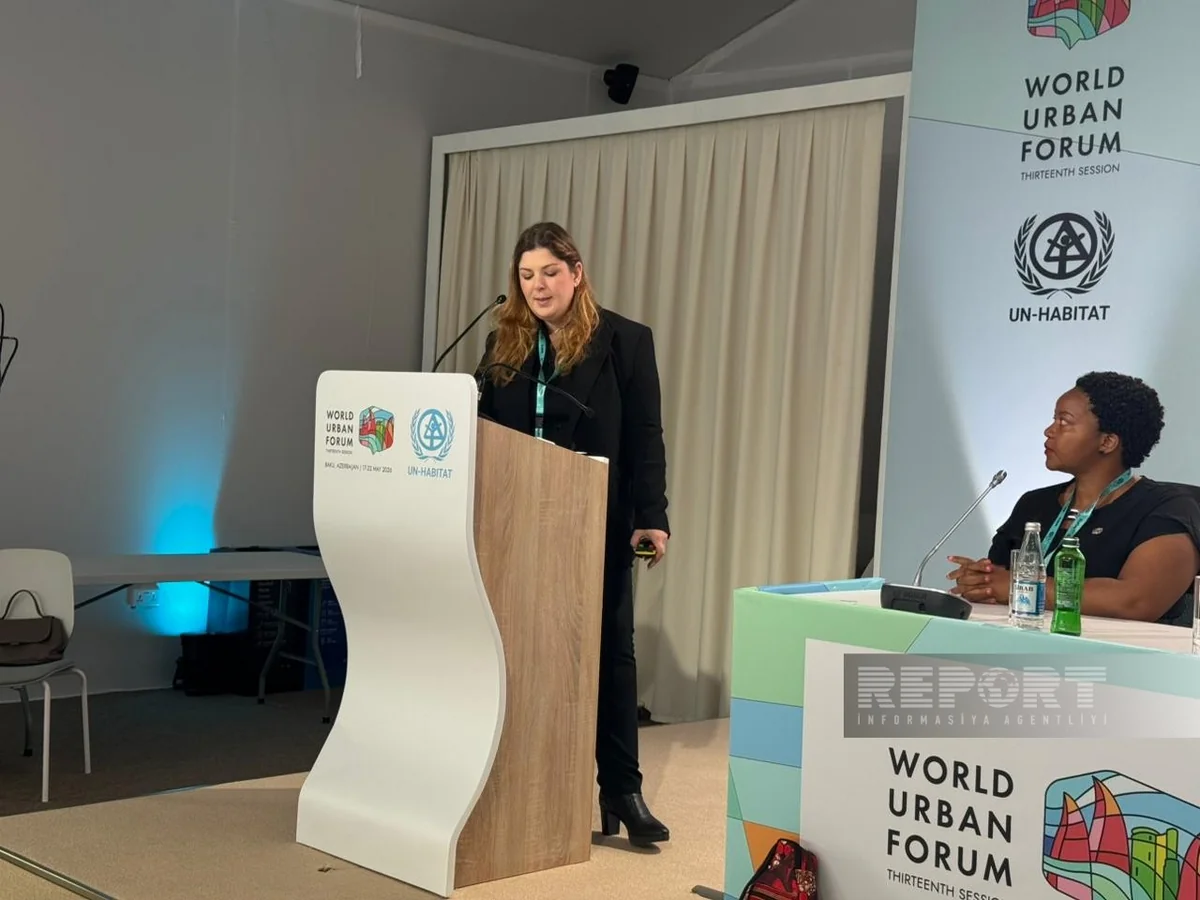
Inclusive urban development cannot be achieved automatically, even with public participation mechanisms in place, as many population groups still face significant barriers to involvement in decision-making, Giorgia Ziliani, project manager for the Italian NGO Dare, said during a panel discussion at WUF13 in Baku.
According to Report, she noted that the HerCity Corvetto project in Milan (a UN-Habitat initiative) successfully engaged women of different ages and cultural backgrounds, migrants and refugees, children and youth, mothers, older residents, local volunteers, and community organizations.
"Bringing together participants of different ages and nationalities certainly sometimes led to different opinions and perspectives. But it also demonstrated how many urban issues are common to different communities," she noted.
Ziliani explained that the Corvetto neighborhood in southeastern Milan is considered unsafe, especially for women.
"Due to the high level of drug trafficking and the fact that public spaces are predominantly held by large groups of men, many women prefer to avoid these spaces," she emphasized.
According to her, 13 workshops were organized in the area as part of the initiative, including interviews, group discussions, neighborhood walks, territorial mapping, photo projects, and collaborative design activities.
She noted that an important part of the work was not only identifying active participants but also understanding who was not included in the process.
"We encountered language barriers, a lack of trust in institutions, time constraints due to family care responsibilities, and difficulties in engaging underrepresented groups," Ziliani stated.
According to her, this is why the HerCity project aimed not only to collect information but also to create more accessible and inclusive public spaces.
"It was important for us to understand who is missing from the process and what barriers prevent people from participating in decision-making about urban development," she added.
Author