Baku 17° C
EU could expand support for demining in Azerbaijan, academic says
- 27 October, 2026
- 19:55
Stay up to date with the top news!
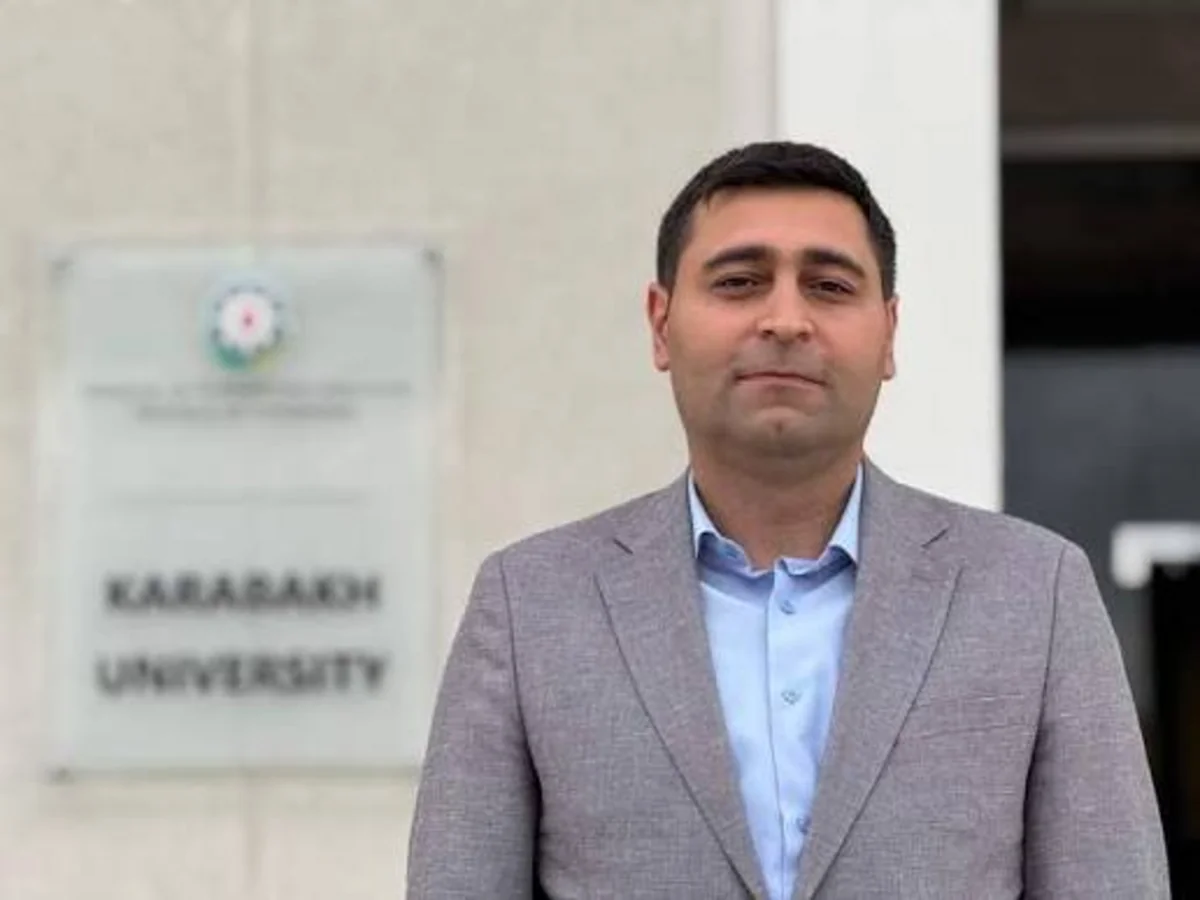
The European Union could expand its support for demining Azerbaijan's liberated territories, including through technical assistance and capacity building, Garabagh University Dean Elmar Mustafayev said.
Report's European bureau informs that he spoke at the "Azerbaijan and the European Union: new perspectives" forum in Brussels, jointly organised by the Center of Analysis of International Relations (AIR Center) and the Royal Institute for International Relations.
"More than 12,000 square kilometres of land are contaminated with mines. To help our European colleagues grasp the scale of the problem, that is equivalent to 40% of Belgium's territory," Mustafayev said.
He said more than €500 million had been allocated to demining so far, with Azerbaijan's government providing 96% and international humanitarian assistance accounting for just 4%.
"We are grateful for the EU's assistance, but the figures show considerable scope to expand support for Azerbaijan, not only financially but also through technical assistance and capacity building," he said.
Citing Azerbaijan's State Committee for Refugees and Internally Displaced Persons, Mustafayev said nearly 40,000 former internally displaced people had returned home.
"In total, around 100,000 people live, work and study in the liberated territories," he said.
According to Mustafayev, 28 billion manats ($16.47 billion), equivalent to approximately €14 billion, has been allocated to reconstruction and development projects under the Great Return programme.
Mustafayev, who has lived and worked in Khankandi for around three years, said the restoration of roads and housing is accompanied by the gradual return of people who left these areas years ago.
"Sustainable development in these territories requires quality education, access to healthcare and jobs for residents," he said.
In this context, he highlighted the role of Garabagh University, established in September 2024. He said more than 3,000 students currently study across 49 fields.
"The university must not only educate young people but also train specialists for the labour market in the liberated territories," he said.
Mustafayev added that the EU mainly views the liberated territories through the prism of Azerbaijan–Armenia relations, the peace process and geopolitics, while the return of residents requires greater attention.
"Geopolitics and the peace process are important, but we believe the conflict in this territory is over. The most difficult problem now is mines," he said.
Author