Baku 16° C
Egyptian ambassador on Baku-Cairo cooperation: Regional leadership, energy, tourism – INTERVIEW
- 06 July, 2026
- 12:10
Stay up to date with the top news!
Relations between Azerbaijan and Egypt have been developing dynamically in recent years. Mutual high-level visits, the expansion of political dialogue, and cooperation in energy, trade, tourism, and other spheres have brought bilateral interaction to a qualitatively new level.
Today, Baku and Cairo are consistently strengthening their partnership, opening new opportunities for the implementation of joint projects. Particular attention is given to the development of economic ties, the expansion of tourist exchanges, cooperation in the oil and gas sector, education, and other areas.
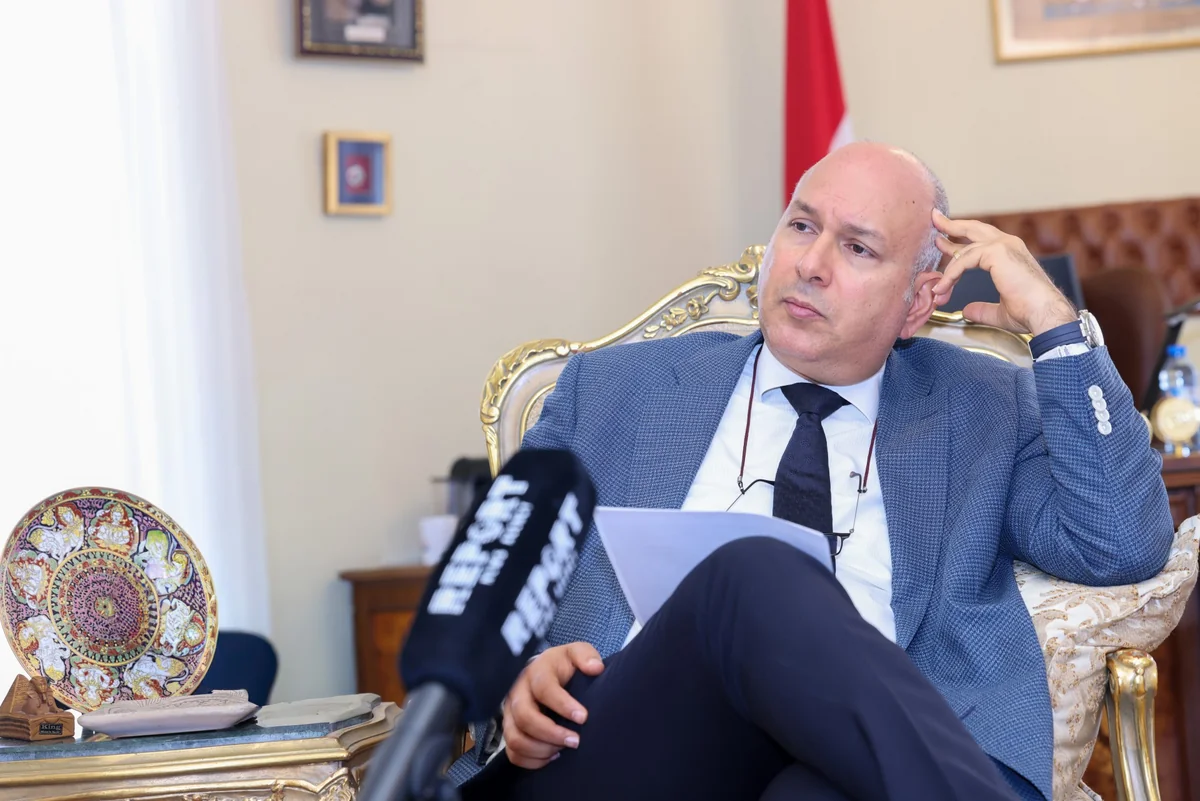
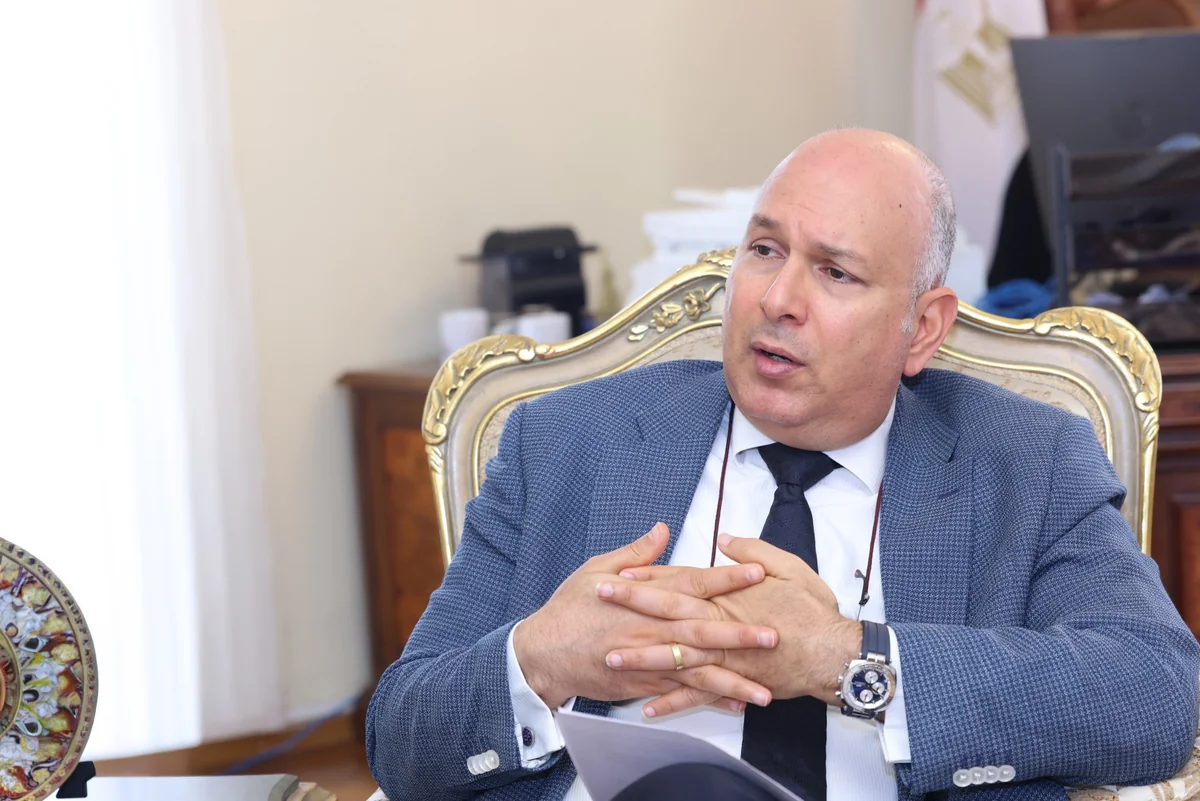
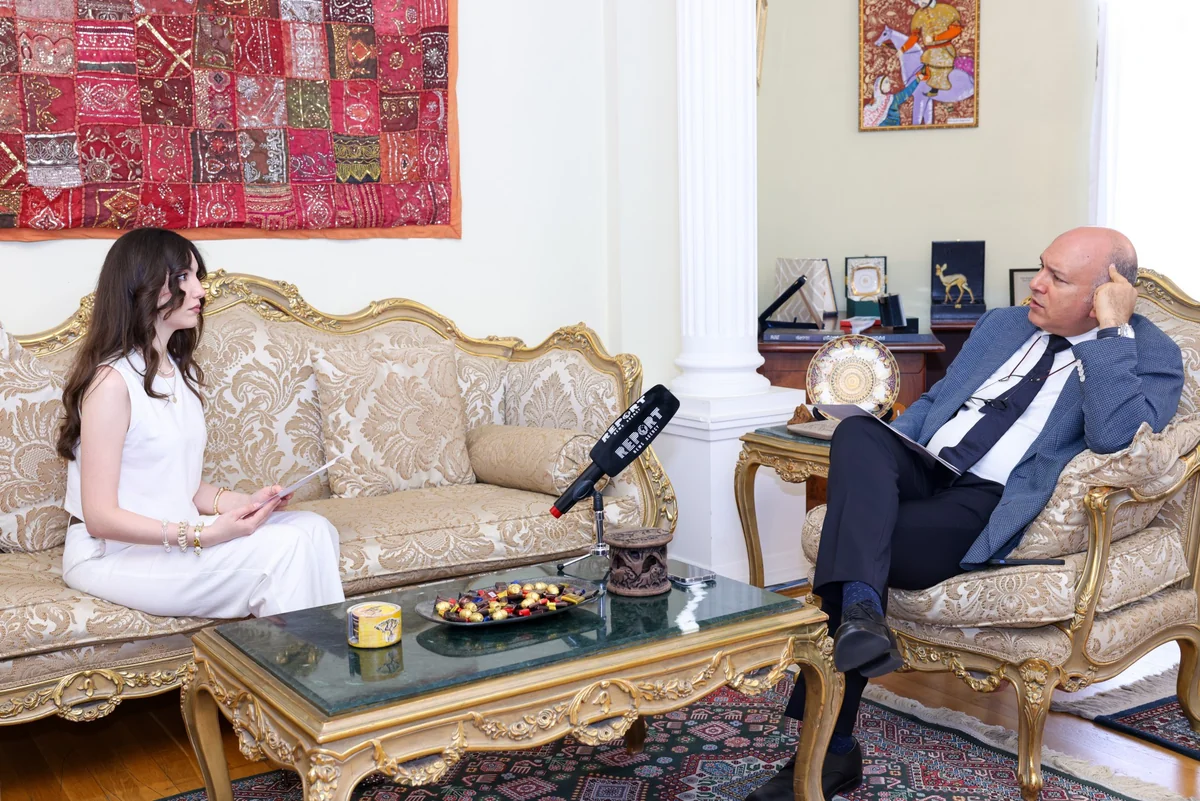
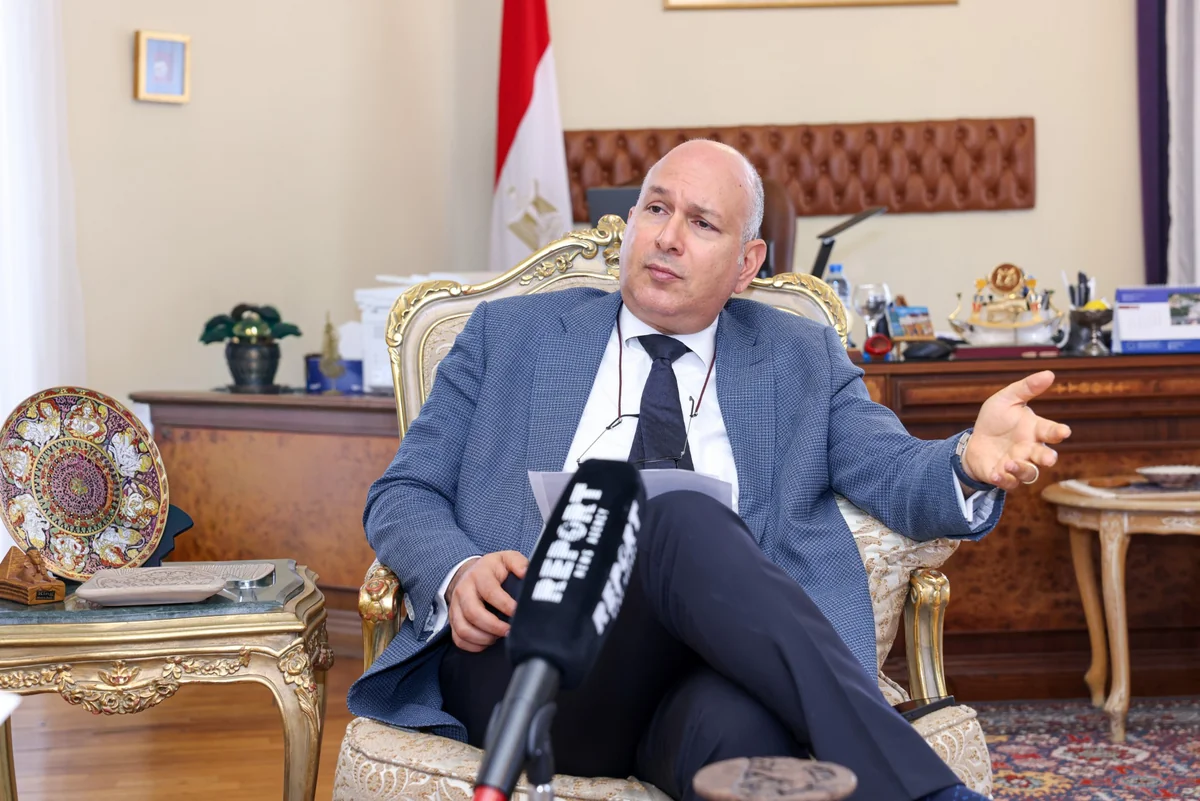
In an interview with Report, Ambassador Extraordinary and Plenipotentiary of Egypt to Azerbaijan, Houssam Eldine Reda, spoke about the current state of Azerbaijani-Egyptian relations, prospects for interaction, possible simplification of the visa regime, cooperation in the energy sector, and the role of the two countries in regional processes.
- Mr. Ambassador, how do you assess the current level of relations between Egypt and Azerbaijan?
- We have far more in common than differences. This raises the question: if we have so much in common, why do we know so little about each other in everyday life? Returning to your question, I can say that there are many opportunities for cooperation. We have already achieved good results, but we are capable of achieving much more.
- What achievements in bilateral relations in recent years do you consider the most significant?
- To be frank, the main milestones were two events: the state visit of Egyptian President Abdel Fattah el-Sisi to Azerbaijan in 2023 and the state visit of Azerbaijani President Ilham Aliyev to Egypt in 2024. It was these visits that defined the framework and set the pace for the further development of our relations.
- Are any high-level visits between Egypt and Azerbaijan expected in the near future?
- Such visits are always possible. In June, two Egyptian ministers visited Azerbaijan - the Minister of Petroleum and the Minister of Planning. In addition, as part of the conference of the Parliamentary Union of the Organisation of Islamic Cooperation member states, the chairpersons of two parliamentary committees and the leader of Egypt's parliamentary majority were present in Baku. This already demonstrates a high level of contacts. The political will to develop relations is always present. Sometimes the scheduling of visits depends solely on the alignment of working schedules.
- Which areas of bilateral cooperation hold the greatest potential?
- The potential is virtually limitless. We must develop cooperation in those areas where each side has its own advantages. Azerbaijan has an oil industry, and Egypt does too. You have a developed gas sector, and we have one as well. We can exchange experience on a mutually beneficial basis. Azerbaijan is located in the Caucasus and has access to Central Asia, while Egypt is a natural gateway to Africa. Thanks to its strategic location and the Suez Canal, we can become a logistics hub for promoting Azerbaijani products in the region, providing transportation and storage of goods. Similar opportunities open up for Egyptian products using Azerbaijan's geographical position. There are great prospects in bilateral relations in medicine, pharmaceuticals, and, of course, tourism.
- How do you assess the cooperation between Egypt and Azerbaijan in the field of tourism? According to official statistics, the number of Azerbaijani tourists visiting Egypt has been growing in recent years. What additional steps are being discussed to further develop tourism ties?
- I am glad that Azerbaijanis are interested in the history of Egypt. I should note that Azerbaijanis enjoy vacationing in Sharm el-Sheikh very much. I am convinced that Egyptians feel at home in Azerbaijan because our societies share similar family values. Azerbaijanis, like Egyptians, hold traditional views and respect the institution of family. All of this should contribute to the development of tourism exchange. My words sometimes provoke mixed reactions in the West, but I believe that the views of Azerbaijani and Egyptian families on traditional values are very similar. There are certain patterns of behavior that families would not want to see on the streets of their cities. Both in Azerbaijan and in Egypt, the institution of family remains clearly defined and retains its important role. Moreover, both countries have a great deal to offer tourists. One of Azerbaijan's advantages is its high level of security. I truly believe that in this regard, Azerbaijan compares favorably with many popular tourist destinations. Here, people can walk freely in the evening without fear of attacks or harassment.
- Are Egypt and Azerbaijan discussing the introduction of a visa-free regime?
- A very good question. I can share a small piece of news with you. We have already introduced the possibility of obtaining a visa on arrival for Azerbaijani citizens, not only for trips to Sharm el-Sheikh, but for virtually the entire territory of Egypt. At the same time, we are working with our Azerbaijani friends on simplifying visa procedures for Egyptian citizens.
- What opportunities does Egypt see for cooperation with Azerbaijan in the oil and gas sector?
- Large-scale geological exploration is currently underway in Egypt, and we are interested in having SOCAR, which is the leading company of Azerbaijan's energy sector, present in our market. We have already begun discussions related to the presence of the State Oil Company of Azerbaijan in Egypt. We are ready to share our experience. During the recent visit of Egypt's Minister of Petroleum, very productive negotiations were held with SOCAR. As for specific projects, companies prefer not to disclose details until agreements are finally signed. However, I can say that the participation of Azerbaijani companies is welcome both in the field of hydrocarbon exploration and production and in the refining segment. We are ready to provide them with comprehensive support.
- How do you assess the outcomes of the World Urban Forum (WUF13) in Baku?
- Once again, there are many parallels between Egypt and Azerbaijan. Egypt hosted COP27, then the World Urban Forum; Azerbaijan hosted COP29 and WUF13. The forum in Baku was organized at a very high level. Ministers, experts, representatives of international organizations, and the non-governmental sector took part in it. We hope that its outcomes will be implemented in practice. Our countries face similar challenges in the field of urban development. Egypt is implementing a large-scale program called "Hayah Kareema" ("Decent Life"), aimed at modernizing rural areas. The project envisages the construction of modern infrastructure, including water supply, sewage systems, electricity, gas networks, roads, fiber-optic communications, schools, medical facilities, and workplaces. Thanks to this program, living conditions will improve for nearly 50 million people.
- Are Egyptian companies interested in participating in the reconstruction of the liberated territories of Azerbaijan?
- Today, Egypt is already cooperating with Azerbaijan in the field of demining. This is an essential prerequisite for the reconstruction of territories. Our specialists have extensive experience in this area. Egyptian companies are also interested in participating in reconstruction projects in the liberated territories of Azerbaijan. Of course, final decisions depend on economic feasibility and contract terms. But interest and opportunities for participation certainly exist.
Egypt and Azerbaijan share a similar history. Both countries have had parts of their land occupied. Therefore, Egyptians understand more than anyone else what it means to liberate a sovereign part of their land. You have the Karabakh area, and we have Sinai, which was occupied by Israel and subsequently liberated.
- What new opportunities does Azerbaijan's accession to the D-8 Organization for Economic Cooperation open up?
- It is interesting that the decision to admit Azerbaijan to the D-8 was made precisely at the summit in Egypt. This in itself speaks to the closeness of our relations. We are very glad to see Azerbaijan among the D-8 countries and are convinced that together we can strengthen the role of rapidly developing economies on the world stage.
- How do you assess cooperation between Egypt and Azerbaijan in the field of education?
- Both Egypt and Azerbaijan have universities of a very high level. Today, Egyptian students are studying in Azerbaijan, including in medical and oil and gas specialties. Azerbaijani students also study in Egypt. However, the potential is far from exhausted. It is necessary to more actively inform young people about educational opportunities in our countries. Many people out of habit choose traditional destinations for obtaining education without even considering alternatives.
- Can the experience of cooperation between Egypt and Azerbaijan serve as an example of interaction between the countries of the South Caucasus and the Middle East?
- Egypt has always played a leading role in the Arab world. Azerbaijan, after restoring its territorial integrity, is becoming an increasingly influential state in the South Caucasus. Our regions are united by shared cultural and religious values. But it is necessary to inform people more actively about the advantages of cooperation. Historically, many countries continue to orient themselves toward their traditional partners in trade, investment, and education. To change the situation, it is necessary to show people the real advantages of new areas of cooperation. There is always a certain resistance to new players in the market, since large companies do not want to give up their positions. But if people see the benefit, they will be ready for new opportunities.
Author

Photo