 Baku 23° C
Dmytro Shlapachenko: Azerbaijan actively advancing UN agenda in various areas — INTERVIEW
- 07 September, 2026
- 13:11

Stay up to date with the top news!
Azerbaijan has long maintained close cooperation with the United Nations (UN) and its agencies. In December last year, the sides signed a new UN Sustainable Development Cooperation Framework for 2026–2030.
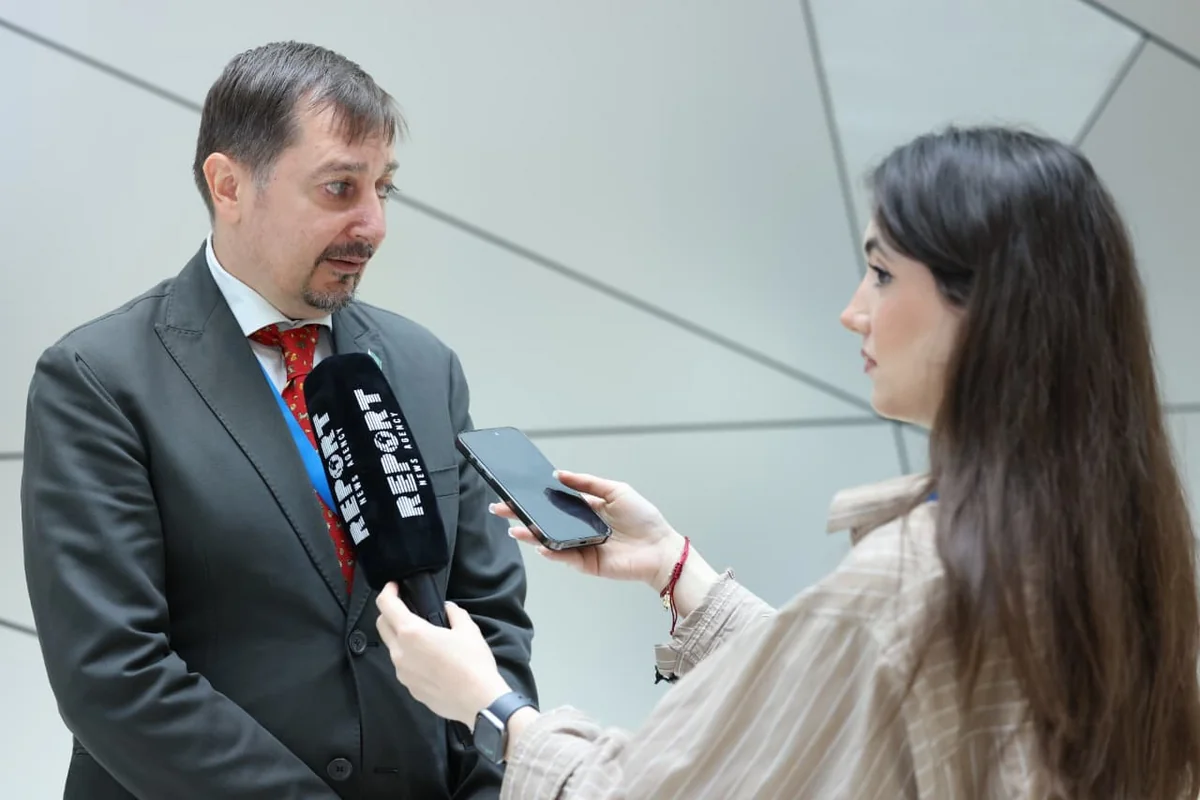
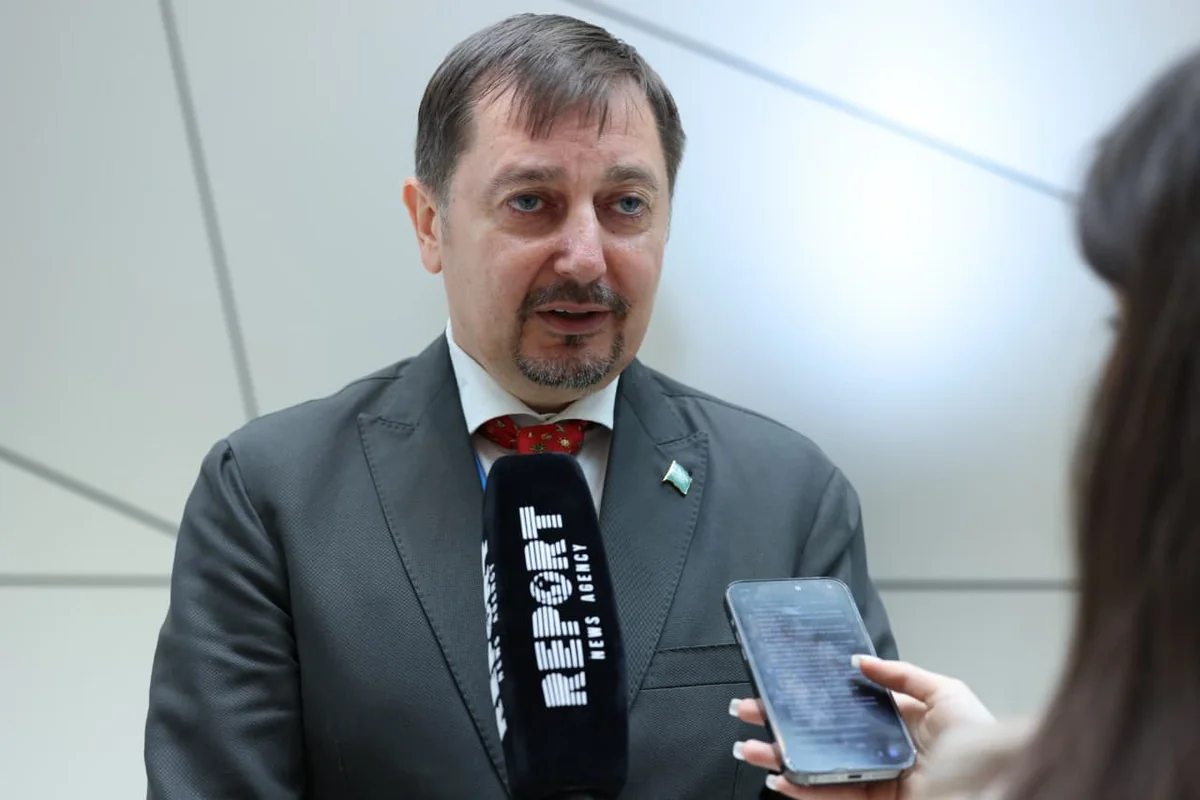
In an interview with Report on the sidelines of Baku Climate Action Week, the new UN Resident Coordinator in Azerbaijan, Dmytro Shlapachenko, spoke about the current level of cooperation and the priorities for bilateral engagement.
You started working in Azerbaijan on July 1. What are your first impressions of our country, and how do you assess the current level of cooperation between Azerbaijan and the UN?
My impressions of Azerbaijan are overwhelmingly positive. I think Baku is a fantastic city. I have been very impressed by the people. They are incredibly kind and hospitable. On the streets, in the metro and in cafes, I have met genuine intellectuals who are eager to engage in discussions and willing to share many interesting perspectives.
So I think there is a very good atmosphere here. I have also had the opportunity to visit Basgal (Ismayilli district - ed.) and see some very beautiful places in the country. I like the food and music in Azerbaijan. I have already attended several performances. Overall, as I said, my impressions are overwhelmingly positive.
As for working with the Government of Azerbaijan, I believe we have an exceptionally strong relationship. It is one of the few governments that truly invests significant resources in implementing major UN projects.
Following COP29, which of course required substantial investment from the Government of Azerbaijan, the country hosted WUF13. It is quite clear that Azerbaijan plays a very significant role on the international UN stage.
It was very important for us that UN Deputy Secretary-General Amina Mohammed (ed.) visited WUF13 in May. She held a meeting with President of Azerbaijan Ilham Aliyev. This demonstrates the level of engagement between the UN and Azerbaijan.
I have always received an exceptionally warm welcome in Azerbaijan. I met with the Minister of Foreign Affairs and, of course, presented my credentials to the President. Both meetings were very substantive.
I see a strong commitment on Azerbaijan's part to advancing the UN agenda, multilateral relations, the climate agenda and many other areas. For our part, we at the UN will be very pleased to support these initiatives, as we believe they are excellent.
Which areas of cooperation with Azerbaijan would you like to significantly expand in the coming years?
It is difficult to give a definitive answer to this question, because much depends on the Government's priorities. We work here to support the Government and together with it to implement projects, so much will depend on its priorities.
But from my perspective, one area I would definitely like to devote more attention to is mine action. I believe that without resolving the mine problem in Karabakh and Eastern Zangazur, it will be difficult for people to return to normal life.
A safe environment also means opportunities for employment, access to healthcare and, essentially, the ability to live a full life. Therefore, without ensuring security, people will not be able to return to Karabakh. I consider this very important for the Government of Azerbaijan and, consequently, an important area for us.
Another obvious area is climate change. That is precisely why we are here today, at Baku Climate Action Week. I think all countries in the region are facing the consequences of climate change. Therefore, it is absolutely clear to me that we need to do more in this area.
Several UN agencies are already working on climate change, but we need to expand these efforts. If we could involve more UN entities in this work, it would be a major step forward.
I would also like to work more actively with young people. That is why I consider such areas as engagement with universities, supporting youth participation and implementing more initiatives jointly with young people to be priorities.
I believe we should do more in the cultural sphere, because Azerbaijan has a very rich cultural heritage. We can indeed expand cooperation in this area, which the UN has traditionally not devoted as much attention to. So this is another possible area.
And perhaps a fifth area is healthcare, as it affects a huge part of society. I would like to see a comprehensive approach applied here. To me, health is not only about human health, but also the health of animals, the environment and the planet as a whole. Therefore, it is important to approach this issue from precisely that perspective.
Finally, we have an excellent UN-Habitat team. It works with the Government in the field of urbanization. Baku is a beautiful and dynamically developing city, but it is now a city with a population of around 5.5 million people. Therefore, if we can draw on global experience and offer additional solutions that could make the city even better, that would be very significant.
Do you plan to visit Azerbaijan"s liberated territories?
I am very glad you asked this question, because it is genuinely important for me to visit these territories, see them for myself and become directly involved in this work.
Strategically, I would like the UN to do much more in this area. And I am very pleased to say that I will be visiting Karabakh very soon. I am truly looking forward to the opportunity to speak with people, see the work Azerbaijan has already carried out, and understand what additional contribution we can make.
Author