Baku 22° C
Deemah Al Yahya: DCO's goal - to turn Azerbaijan's geography into digital advantage – INTERVIEW
- 05 October, 2026
- 15:03
Stay up to date with the top news!
Digital development is currently one of the world's major trends. Every country strives to establish itself within the global digitalization system and position itself at the forefront of this process to gain specific advantages. In recent years, the government of Azerbaijan has taken active steps in this direction, and the country recently joined the Digital Cooperation Organization (DCO).
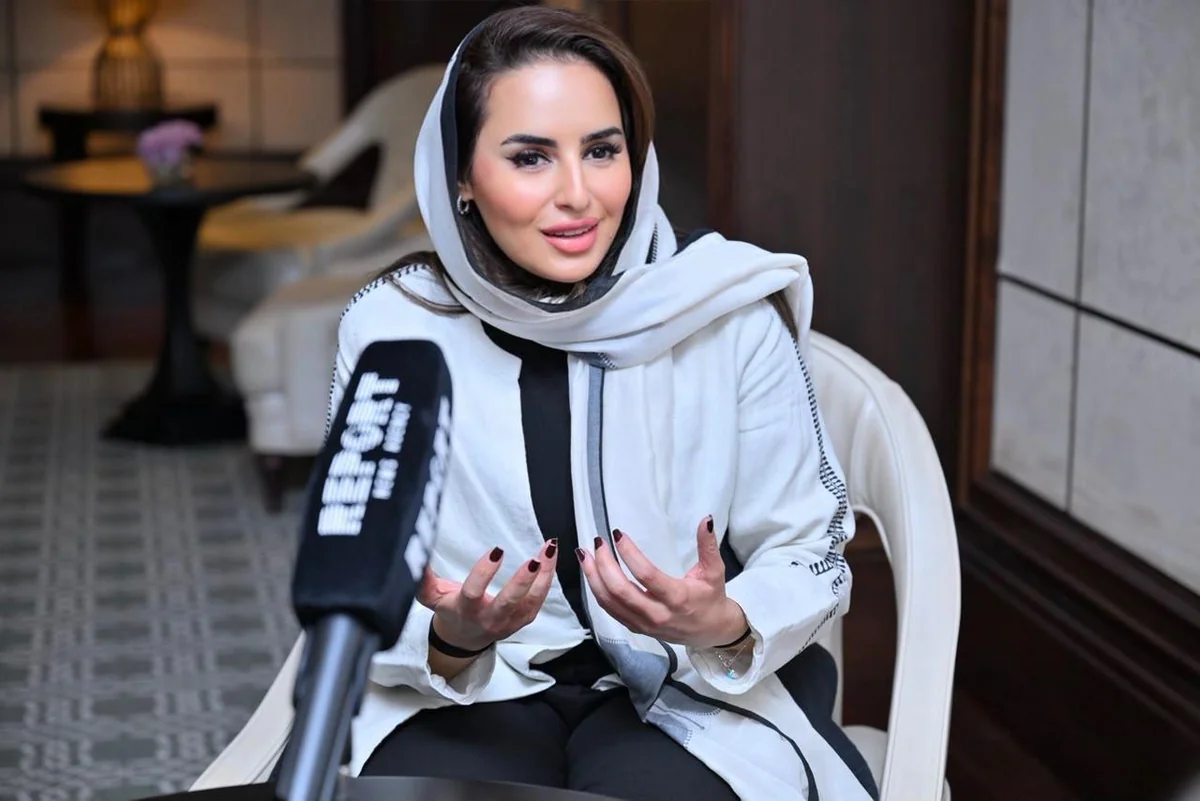
Deemah Al Yahya, Secretary-General of the DCO, has discussed the prospects for cooperation with the organization, the level of digitalization, and successful projects in an interview with Report.
- Azerbaijan recently became a member of the DCO. What will this membership change for the country in practice, and what initial results can be expected?
- Membership in the DCO gives a country a stronger voice in shaping its own digital future.
Azerbaijan joins the DCO with strong foundations. More than 9 million people in Azerbaijan are already online, almost 90% of the population, alongside significant capabilities in digital government and citizen-facing services.
Membership now gives Azerbaijan a formal platform for international digital cooperation. It means a seat at the table as Member States exchange experience, follow developments in technology and policy, and shape approaches to the global digital economy.
It also gives the Government direct access to DCO expertise and technical consultation as it sets its own digital priorities. And over time, membership can open practical opportunities: attracting more Digital FDI, connecting Azerbaijani technology companies and startups to larger cross-border markets, and building partnerships across the DCO ecosystem.
The direction, however, belongs to Azerbaijan. Our role is to inform, consult, connect and help turn national priorities into opportunities.
That is what membership should deliver: a stronger voice internationally and faster progress toward digital prosperity at home.

- Does the DCO plan to sign a cooperation program, an agreement, or any other similar document with Azerbaijan?
- We plan to sign the organization's Charter, which will formally seal Azerbaijan's accession to the Digital Cooperation Organization.
- Which government institutions and agencies in Azerbaijan do you plan to meet with during your visit?
First and foremost, our visit (the interview was recorded on October 4 – Ed.) aims to reaffirm our commitment to and support for the Government of Azerbaijan regarding its decision to join the Digital Cooperation Organization. We have come to demonstrate our support and our readiness to assist the Azerbaijani government.
It is also crucial for us to understand the country's digital ecosystem - specifically the government bodies and their vision, goals, and ambitions within the digital economy. Furthermore, we wish to meet with private sector representatives, including telecommunications companies, startups, and technology firms. Engaging with the academic community, students, and Azerbaijan's talented youth is also a priority for us. We will visit the IDDA (Innovation and Digital Development Agency) and also intend to learn about relevant funds and explore how we can help Azerbaijan expand cooperation and enter the markets of our organization's other member states.
- What specific projects does the DCO plan to implement in Azerbaijan following its accession to the organization?
- The strongest partnerships begin by listening before deciding what to build.
Azerbaijan already brings important strengths to this partnership. It has developed strong digital governance and citizen-facing services, with established e-government, digital ID and eProcurement systems. Take, for instance, Azerbaijan's mygov platform, which is already used by 4 million people. That scale of adoption demonstrates both the progress Azerbaijan has made and the willingness of its citizens to embrace digital public services.
There are also strong foundations in digital inclusion, health and education, and a growing ecosystem around digital business and innovation.
But we are still at the listening stage, and that is an important purpose of this visit. I want to hear directly from the Azerbaijani Government, its private sector, entrepreneurs and people about where they see the greatest opportunities.
Then we can align DCO's capabilities and initiatives with those national priorities and connect Azerbaijan with the right countries, companies, and institutions to help turn them into results.
We are here to listen, understand Azerbaijan's ambitions, and help accelerate the digital future it chooses for itself.
- How does the DCO plan to collaborate with Azerbaijan's Digital Development Council, led by the country's First Vice-President, Mehriban Aliyeva?
- We intend to support Azerbaijan not only through knowledge sharing but also by transferring best practices accumulated across our member states. We also aim to establish connections with the private sector and help attract investment into Azerbaijan from our organization's member states.
We recognize that Azerbaijan possesses an excellent ecosystem and a highly advantageous geographic location that connects various countries. Attracting companies and startups, along with developing this ecosystem, will help these businesses expand and grow. This is precisely the kind of support and assistance we would like to provide to the Council.
- In the DCO's assessment, which areas of Azerbaijan's digital development require the greatest attention in the coming years?
- Azerbaijan has built strong digital foundations; the next opportunity is to turn those foundations into greater economic and innovation capacity.
Our assessment points to three areas where further progress could have significant impact.
Azerbaijan has achieved universal 4G coverage, providing a strong foundation for the continued advancement of its digital connectivity. Building on this progress, there is significant potential to further develop next-generation connectivity, including commercial 5G deployment, alongside enhanced data infrastructure and advanced computing capacity.
Second is business digitalization. Digitally delivered services exports currently represent around 3.3% of GDP, highlighting further potential to build on Azerbaijan's digital progress. Supporting greater adoption of digital technologies among businesses and SMEs, while expanding their access to international markets, could contribute to increased productivity, economic diversification and export growth.
Third is innovation capacity. With R&D investment currently at around 0.2% of GDP, there is an opportunity to further strengthen Azerbaijan's innovation ecosystem by deepening the connections between research, advanced computing, startups, investment and commercialization, and translating innovation into sustainable economic value.
Our role is to help transform the national priorities into capabilities and those capabilities into sustainable digital growth.
- What role can Azerbaijan play in developing digital corridors connecting Europe, the Caucasus, and Central Asia?
- Geography has given Azerbaijan a strategic position between Europe and Asia; digital infrastructure can give that position an entirely new dimension.
Azerbaijan already has many of the foundations needed to become an important digital bridge. It combines strong digital governance with growing telecommunications and trade infrastructure, while its location places it directly at the intersection of the Caucasus, Central Asia and Europe.
We can already see that potential becoming physical infrastructure. Just last month, installation was completed on the 380-kilometre Trans-Caspian fiber-optic cable connecting Azerbaijan and Kazakhstan. Once operational, it is designed to provide more than 400 terabits per second of capacity, creating a new high-capacity data route across the Caspian as part of the Digital Silk Way.
But Azerbaijan must decide how it wants to build on that advantage. DCO's role is to provide evidence, technical consultation, and international connections, and then help enable the execution of the country's decisions.
The opportunity is to transform Azerbaijan's geographic position into a digital advantage - connecting not only markets and infrastructure, but economies, innovators, and people across regions.
- Could Azerbaijan become a regional hub for DCO digital cooperation? If so, what conditions would be necessary for this?
- A regional hub is defined not only by where it is located, but by how effectively it brings countries, markets and ideas together.
Azerbaijan has genuine potential in that respect. Its strategic location gives it access to several regions, while its growing digital economy creates an opportunity to become a meeting point for governments, technology companies, investors, entrepreneurs and innovators.
To realize that potential, the focus should be on creating the conditions that make others want to connect through Azerbaijan: an open and competitive digital business environment, strong links between local and international technology ecosystems, skilled talent, and the ability to convene regional partners around shared opportunities.
Within the DCO, Azerbaijan's membership itself creates new possibilities for that role. It can bring perspectives from the Caucasus and its wider region into our discussions while building new partnerships across the DCO community.
What matters now is building the partnerships that allow Azerbaijan's regional potential to speak for itself.
- Could a special DCO program for Azerbaijani startups be launched as part of cooperation with Azerbaijan, including opportunities to pilot their solutions, attract investment, and enter the markets of other DCO Member States?
- Absolutely. Supporting innovators to access investment and new markets is already an important part of what we do.
We have a number of initiatives that can create opportunities for startups and technology companies across our Member States. Take, for example, our Digital FDI Initiative. Rather than applying the same model everywhere, it is tailored to each country's economy, investment environment and national priorities.
We have already seen the potential of this approach in Pakistan, where our Digital FDI work helped develop a pipeline of more than $700 million in investment opportunities, while identifying practical measures to connect local companies with international investors and strengthen the wider investment environment.
For Azerbaijan, we can explore how these capabilities can best support Azerbaijani startups, from attracting international investment and building investor connections to opening pathways into markets across the DCO community.
But the precise model should be developed together with Azerbaijan, based on what its entrepreneurs and government tell us they need.
Our goal is to help Azerbaijani innovators access the capital, partnerships, and markets they need to scale beyond their borders.
- Could a digital Middle Corridor ecosystem be created in the future with DCO participation, integrating digital trade, customs procedures, logistics, payments, and data exchange among the countries along the route?
- Yes, and Azerbaijan is the natural place to anchor a digital corridor.
Digital Corridors are one of the four pillars of DCO's 4-Year Agenda. It focuses on trusted connectivity, interoperability, secure data exchange, and the movement of digital talent. Our research shows that digital trade and policy harmonization could add around $2 billion in intra-DCO digital trade by 2028.
Azerbaijan already holds many of the building blocks. In the DCO's Digital Economy Navigator DEN 2025 Azerbaijan Focus Report, its digital governance scores 82.7 out of 100, which is frontier level. A transactional e-government portal, eProcurement, a national digital ID, and a customs online single window are all in operation. Those are the foundations of paperless customs and trusted cross-border transactions.
Azerbaijan connects the Caucasus, Central Asia, Europe and the Gulf. With the right partnerships, the Middle Corridor can carry data, payments and digital services as confidently as it carries goods.
- What role does the DCO see for young people in shaping Azerbaijan's digital economy, and what programs could the organization implement for young professionals?
- The future of Azerbaijan's digital economy will ultimately be built by its young people.
Our role is to help ensure they have the skills, networks and opportunities to turn their ideas into businesses, solutions and careers. And importantly, we do not believe in a one-size-fits-all approach. We adapt our support to the priorities, capabilities and ambitions of each Member State, so that our initiatives respond to what young people and entrepreneurs actually need.
The DCO already has several initiatives that Azerbaijan can benefit from. Through NexaBridge, young innovators can work on real-world challenges and develop solutions with pathways towards pilots, investment and new markets. Through STRIDE, entrepreneurs can connect with investors, partners and markets across DCO Member States. In 2025 alone, STRIDE supported more than 300 startups and unlocked over $20 million in investment.
Our Digital Prosperity Awards also give innovators greater international visibility, while WE-Elevate provides targeted support to women- and youth-led businesses to build digital capabilities and access e-commerce opportunities.
For Azerbaijan, the next step is to understand where these opportunities can have the greatest impact and adapt them to the ambitions of its young people.
Young people have the potential to be among the strongest drivers of Azerbaijan's digital future. Our goal is to help give them the skills, connections and opportunities to turn their ambition into innovation, enterprise and lasting economic impact.
Author

Photo