Baku 23° C
Bassett Singh: 1984 events against Sikhs should be classified as genocide
- 03 June, 2026
- 11:26
Stay up to date with the top news!
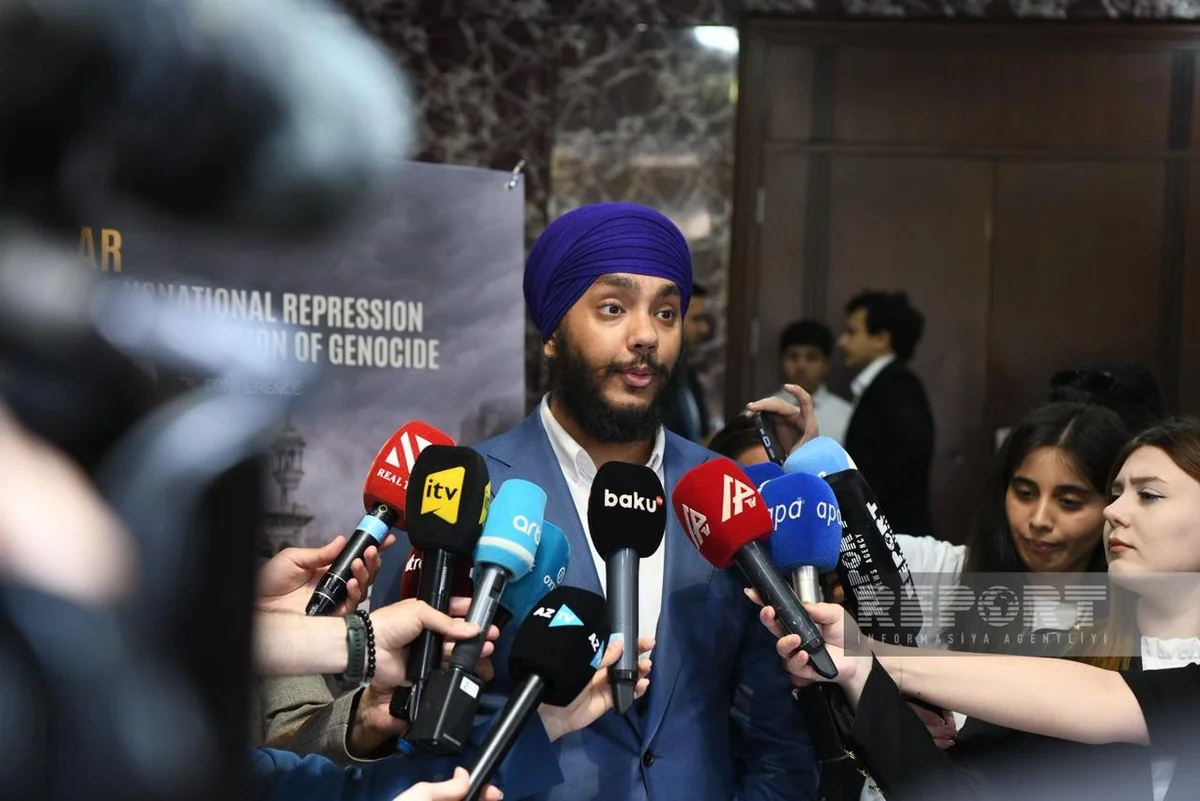
The events of 1984 involving the Sikh community should be classified as genocide, according to a representative of the Sikh Federation (USA), Bassett Singh, a representative of the Sikh Federation (USA), told journalists, according to Report.
"We use the term 'genocide' specifically because, based on existing international legal frameworks, we have legal grounds for such a classification, and we continue working in this direction. We see this as an important step within the framework of cooperation with the Baku Initiative Group," he said.
Bassett Singh also emphasized that his organization sees certain parallels between the historical experience of the Azerbaijani people and the Sikh community.
"Therefore, we speak about the events of 1984, about our shahids - martyrs, whom we call 'Shaheed Singhs,' who gave their lives for their beliefs. For us, this is the highest sacrifice. In our tradition, there is no greater feat than giving one"s life for one"s ideals," he stated.
According to him, unlike the official interpretation, particularly by the authorities of India, these events are viewed differently by the Sikh side.
"For us, it was a great victory - our people did not retreat and stood by what they believed in until the end," said the federation representative.
He also stated that, according to the Sikh community, violence against them did not end after 1984 but has changed forms.
"Today, this is manifested, for example, in transnational repression, when India allegedly goes beyond its borders and exerts pressure or carries out attacks on Sikh political activists in Canada and the United Kingdom. There is also mention of a foiled attempt in the United States, which was stopped by the American authorities," he said.
Bassett Singh added that for the Sikh community, the events of 1984 remain part of an ongoing struggle.
"Much time has passed since 1984, but for us the struggle continues. Some processes take place publicly, others out of the public eye. We see this as a continuing confrontation for freedom and recognition," he emphasized.
Author