Baku 22° C
Azerbaijan shares experience on protecting women from violence at UN Meeting
- 11 March, 2026
- 09:30
Stay up to date with the top news!
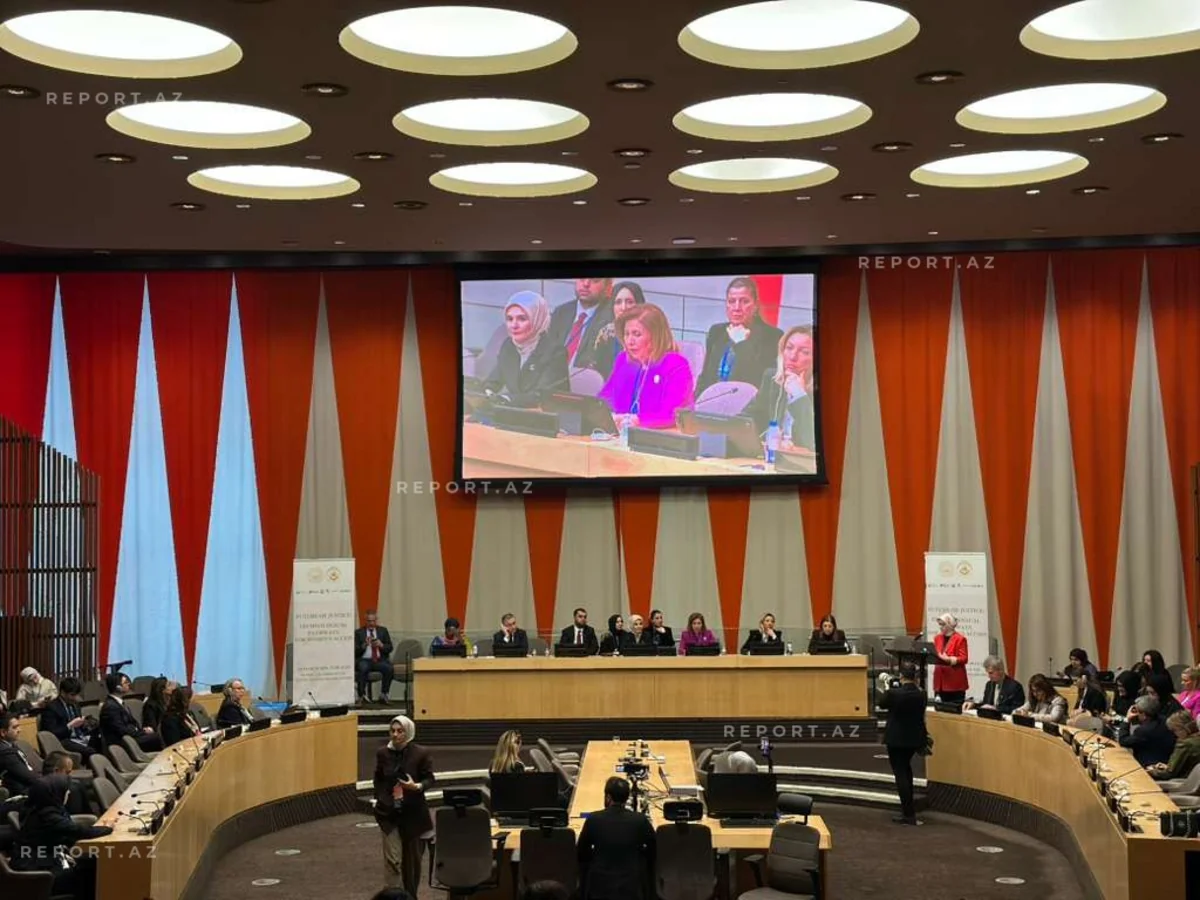
Azerbaijan has strengthened legal and institutional mechanisms to protect women from violence and improve access to justice, Bahar Muradova, Chairperson of the State Committee for Family, Women and Children's Affairs, said at a side event of the 70th session of the UN Commission on the Status of Women, Report informs.
The event was held at UN Headquarters under the initiative of Türkiye and co-organized by Azerbaijan within the framework of the UN Economic and Social Council (ECOSOC).
Muradova highlighted the importance of discussing at the international level the expansion of women's access to justice through technological means. She noted that beyond the existence of laws, ensuring real access to them is essential. According to her, access to justice is not only a legal mechanism but also a fundamental condition for development, security, and human rights.
She stressed that this issue is directly linked to the UN Sustainable Development Goals, particularly Goal 5 on gender equality and Goal 16 on peace, justice, and strong institutions, which complement each other.
Muradova pointed out that digital transformation opens new opportunities for justice systems. Electronic application systems, online legal databases, and digital monitoring mechanisms expand women's protection options and make legal procedures more efficient.
She added that Azerbaijan has aligned its legislation with international commitments, expanded protection orders and social support mechanisms, and facilitated access to legal information and applications through e‑government platforms.
Muradova underlined that digital justice must be based on principles of accessibility, security, confidentiality, and a human‑centered approach. She warned that as artificial intelligence and automated systems become part of legal processes, it is crucial to safeguard gender sensitivity and impartiality; otherwise, algorithmic bias could deepen existing inequalities.
Concluding her remarks, Muradova stressed that while the future of justice is technologically digital, its essence must remain rooted in ethical principles and human rights. She added that technologies must be inclusive and should not create new digital divides.


Author