 Baku 23° C
Azerbaijan's NAM chairmanship truly revitalized organization's activities - INTERVIEW
- 04 July, 2025
- 13:18
Stay up to date with the top news!
Pakistan has assumed the presidency of the United Nations Security Council (UNSC) for July. This is Pakistan's eighth term on the 15-member Council. Islamabad's two-year term as a non-permanent member began in January 2025 and will continue until the end of 2026.
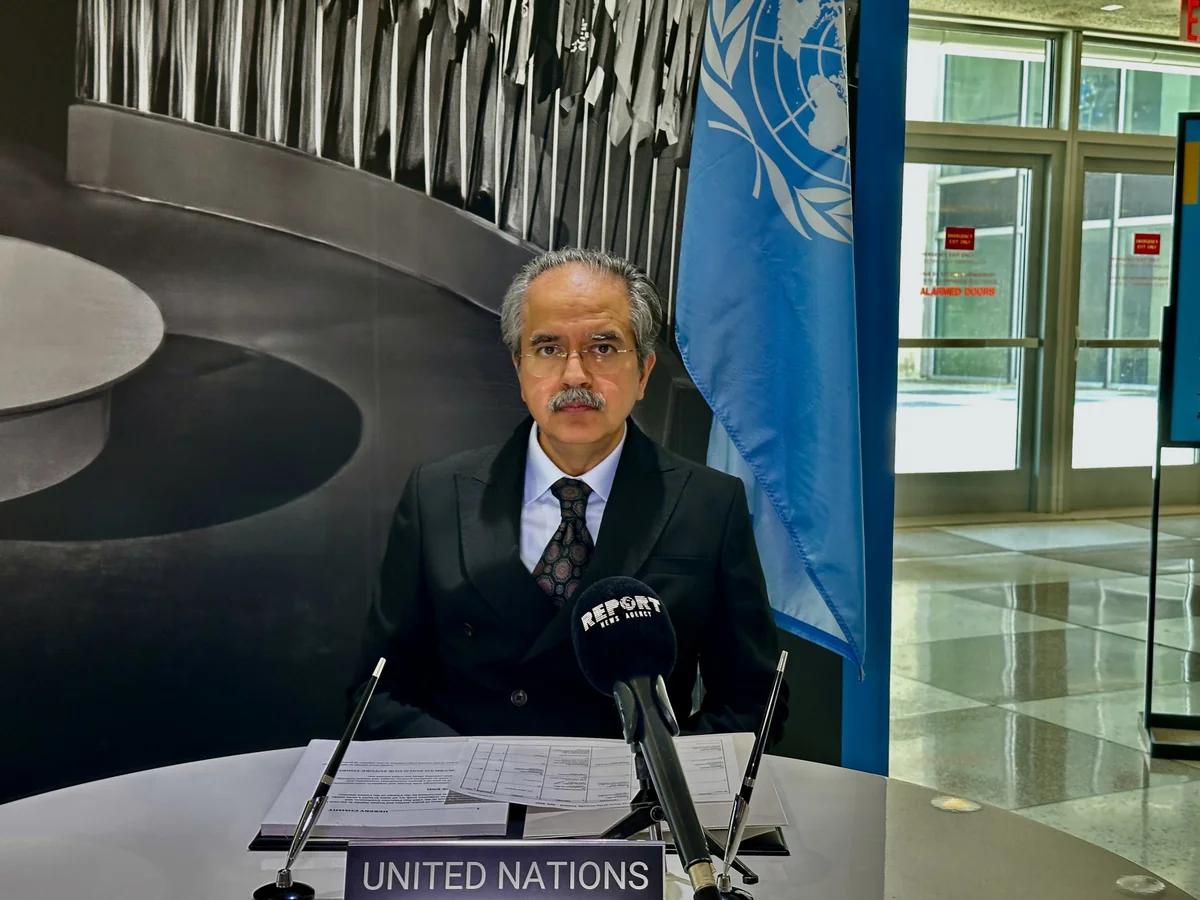
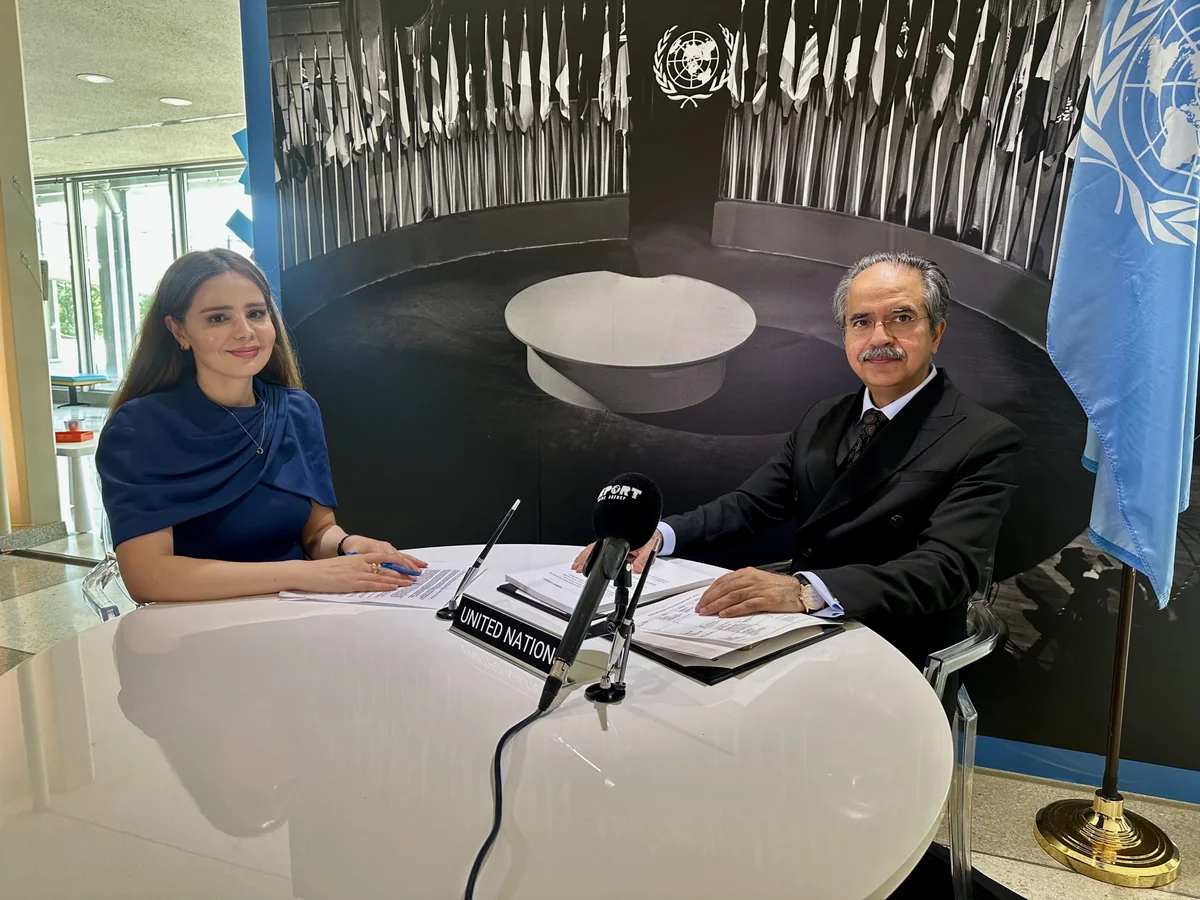
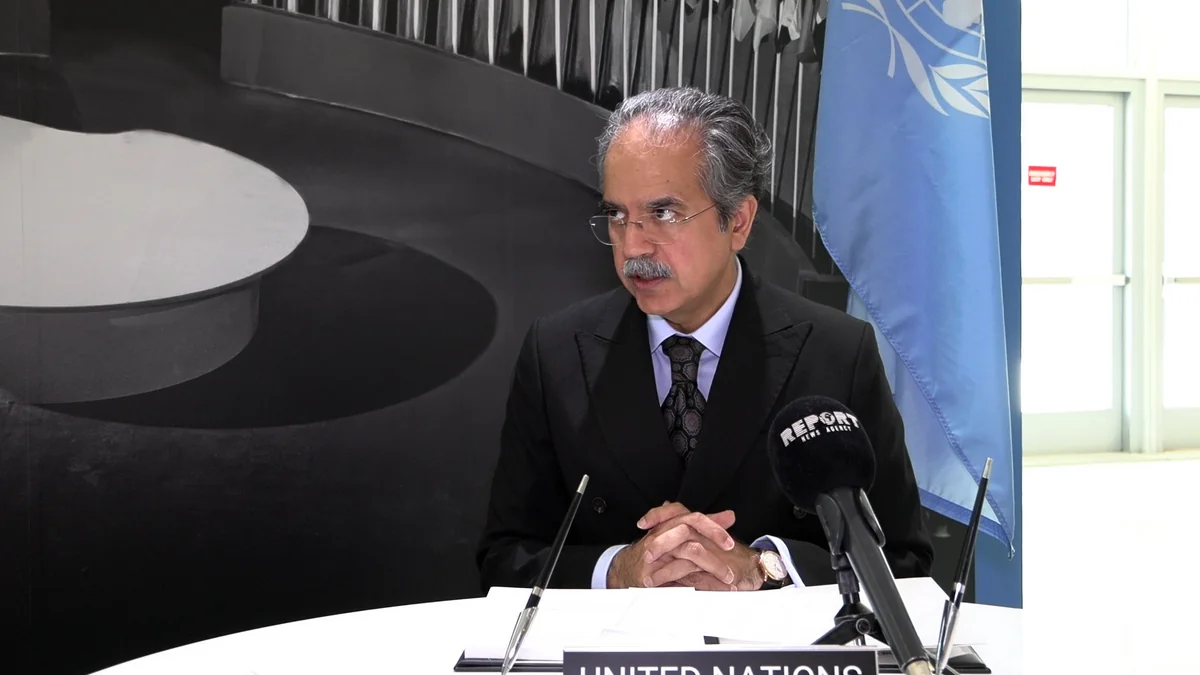
Report presents an exclusive interview with Pakistan’s Ambassador to the United Nations, H.E. Asim Iftikhar Ahmad.
- Mr. Ambassador, first of all, congratulations on Pakistan assuming the Presidency of the UN Security Council. I wish you and your team a successful and productive month.
Let’s start with the upcoming Organization of Islamic Cooperation (OIC) meeting on July 24, taking place during Pakistan’s presidency. What are the main priorities of this meeting? How is Azerbaijan expected to contribute?
- Thank you so much, and thank you for having me. In Pakistan's Presidency of the Security Council, you see that there is a program for the month which has many periodic meetings which are mandated meetings on different situations, which are on the agenda of the Security Council. And apart from that, we have proposed actually two signature events. One is on 22nd of July, which is about how we can utilize multilateralism and peaceful settlement of disputes to promote international peace and security. And the other one which you mentioned is on 24th of July. And this is again, how we can promote international peace and security within a different context, also utilizing the provisions of the Charter which talk a lot about the cooperation between the UN and regional and subregional organizations. And as you know, together with other organizations, the OIC is an important intergovernmental, multilateral organization, one of the biggest after the UN. It has 57 member states, and if you look at the agenda of the Security Council, many of the country or region-specific situations, and also many of the thematic issues that are discussed in the Council, including counterterrorism, including prevention of conflict, protection of civilians, humanitarian issues, peacekeeping, they are all related to the OIC also. So we thought that this time to have that discussion between the Council and the OIC. So we are expecting the Secretary General of the OIC to be here to brief the Council, and we believe this will be an important discussion, because you see that, together with Africa, which has many issues on the agenda of the Security Council, many of those issues from the Middle East to Africa to Asia and other situations, they are also of great relevance to the OIC. So we think this will be a good opportunity to reinforce the cooperation between the UN and the OIC and to see how we can work together to promote the common objectives with regard to maintenance of international peace and security.
– How do you see the partnership between Pakistan and Azerbaijan evolving at the UN, particularly on shared priorities like combating Islamophobia? As members of both the OIC and the Non-Aligned Movement (NAM), how important is multilateral cooperation in strengthening bilateral ties?
- Pakistan and Azerbaijan are close friends. I can say that the relationship between our two countries, in fact, our two peoples, is extraordinary. I mean, it's not very easy to describe that, and it's a relationship that goes beyond the governments, it’s heart to heart. So that's why you see that there is a lot of cooperation between our two countries, on the bilateral side, on regional cooperation, on multilateral cooperation. The Prime Minister actually is in Azerbaijan for attending the summit of the ECO. He'll be there for two days. This is just a manifestation of how closely we work together on bilateral issues, on regional issues, and also on the multilateral side. As you mentioned, we work very closely. In the context of UN in New York, in Geneva and elsewhere. We have many issues on which we work together, ranging from Islamophobia to promoting dialogue among cultures and civilizations, to promoting peace and security, counterterrorism, climate, development issues. So there's a whole range of issues.
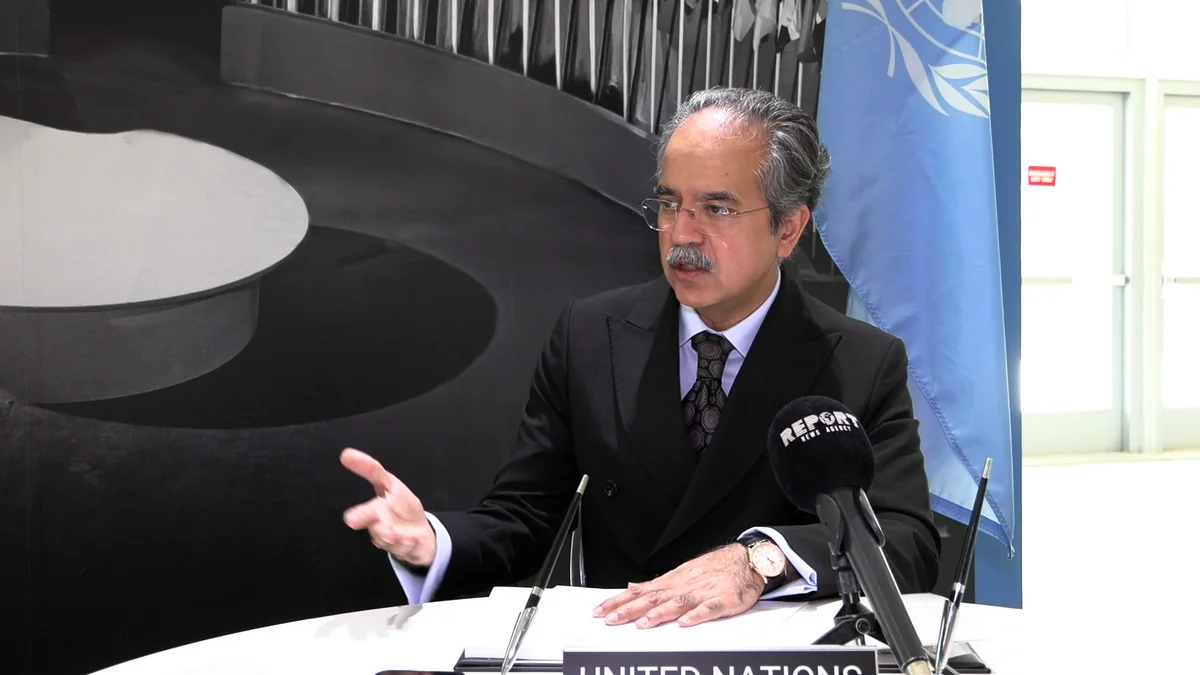
And Pakistan and Azerbaijan are members together in different regional organizations, as I mentioned, ECO, we are also members together in the OIC and the NAM. Azerbaijan is leading NAM very successfully, really reinvigorated the working and outcomes from NAM. Pakistan works together with Azerbaijan. So I see there's a lot of, you know, opportunities, a lot of potential for our two countries to promote our common objectives, which is something that we attach great importance to, because we know that both our countries take positions which are based on principles, which are based on international law, on pursuing and promoting the purposes and principles of the UN Charter. So there is a lot that brings Pakistan and Azerbaijan together.
– Pakistan was among the first countries to recognize Azerbaijan’s independence in 1991 and has consistently supported Azerbaijan’s territorial integrity. During 30 years of Armenian occupation, Pakistan was the one brotherly country backing the four UN Security Council resolutions related to Azerbaijan’s territorial integrity, including during and after the Karabakh conflict. During the 44-day war in 2020, Pakistan expressed strong diplomatic and political support for Azerbaijan. How do you assess Azerbaijan’s post-conflict reconstruction efforts and its initiatives for regional peace?
- As I was mentioning, there is a natural thing that comes in the context of relations between Pakistan and Azerbaijan, and it goes beyond governments. It is between people. It is understanding each other's positions, and then going beyond that and also extending that support, which is very important. So it is in that context that Pakistan has been very supportive of the principled position of Azerbaijan with regard to its sovereignty and territorial integrity. You know, the historic support that Pakistan has always extended on the issue of Karabakh. And not just because it was an issue of interest to Azerbaijan, but also because it was backed by the relevant resolutions of the UN Security Council and international law. So that's why we have extended that support. We continue to be in close touch, and provide that solidarity with Azerbaijan. We know that many things are being done in the days after the end of the conflict, in terms of reconstruction and development. So we attach great importance to that. And we wish Azerbaijan all the best in that very important endeavor.
– Some neighboring countries appear uneasy or even jealous of the close ties between Pakistan and Azerbaijan. How does Pakistan respond to such concerns? Could these affect your partnership?
- I don't think so, because our relations with all countries are based on principles, based on mutual interest. And the most important thing is that our relations with any country are not designed or intended to be against any other country. So, and this is our expectation that, you know, we never object to any country having relations with any other country. But, you know, it should not directly harm or impact Pakistan's interests. So that's the principle on which we establish relations.
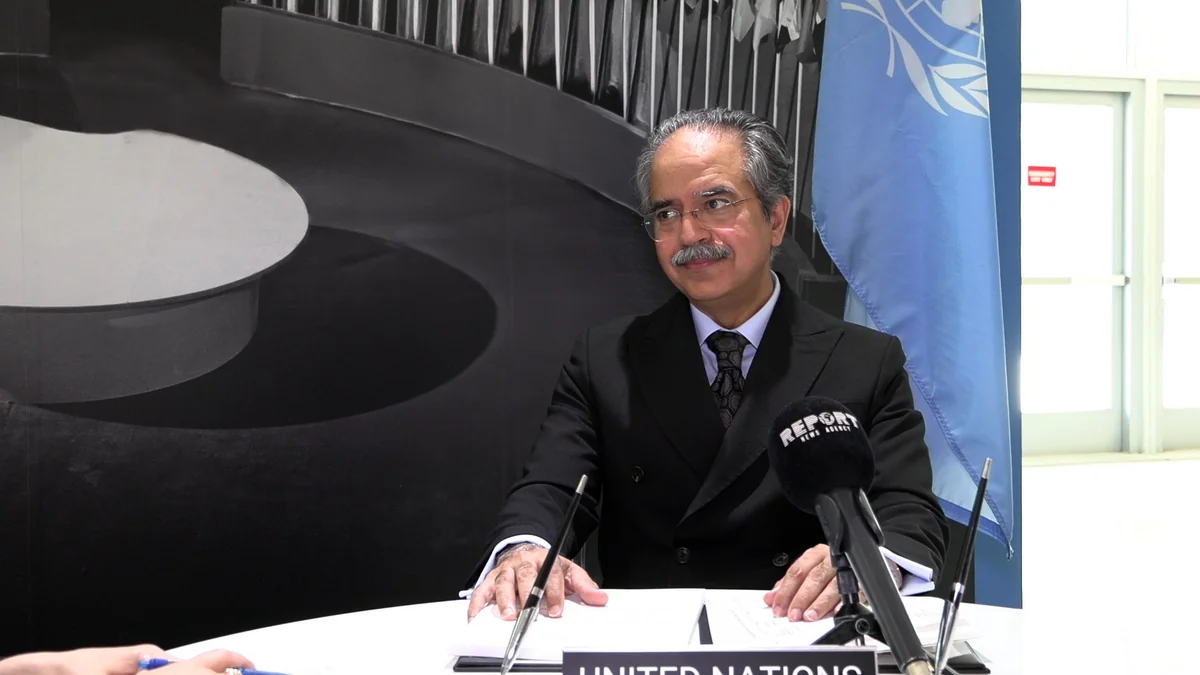
So, you know, our close and friendly relations, our strategic partnership with Azerbaijan, is not directed against any other country. So I believe, and I hope that, you know, there's no such misperception about this relationship. We want peace, we want stability, we want cooperation. We actually want win-win cooperation. So those are the principles that guide our foreign relations and our relations.
– Azerbaijan is one of the most mine-contaminated countries in the world, with civilians still being killed or injured. As President of the Security Council, do you plan to initiate any discussion on landmines? How can the world do more to help countries like Azerbaijan?
- It is an important issue, I can tell you. I mean, you know the program of work, it is not specifically there as a subject for discussion at the Security Council at the moment. But we know that this issue is of much significance because it has humanitarian consequences. Incidentally, I happened to be in Azerbaijan and visited, had the occasion to visit the affected areas, and received the briefing about the impact that landmines have for the people. Very important to properly and safely clear them. Just recently, the mission of Azerbaijan also organized a session, a briefing session here in New York, which I also attended. Pakistan is extending, and wishes to extend, its support. We have great experience, past experience in mine action. So, you know, we know the importance of this work. And again, we wish that the remnants, the remaining mines could be cleared as soon as possible. First of all, it's about raising awareness, taking the necessary precautions, obviously. And then there are technical issues, you need certain expertise and equipment and experience to do this. At the UN you know that there is the UN Mine Action Service, which provides that kind of assistance. And then, you know, there can be cooperation in the bilateral context, which Pakistan is ready to provide also. So this is ongoing work on which you are right, there has to be continued international attention. Because this is, you can say, an unfinished agenda that needs to be completed.
– What role are other countries playing in the current India–Pakistan situation? Is there any prospect for peace talks?
- Well, you know that we had this conflict recently for four days, which was totally, you know, unprovoked, unwarranted. India committed aggression against Pakistan, which Pakistan had to respond to in accordance with its right to self-defense, in accordance with international law and the Charter. So there was a ceasefire that came into effect. It is holding. It's good that it is holding. But you would recall that as part of those efforts to have that ceasefire, many friendly countries played a role, including the US and others. And in the wake of the ceasefire, you would have seen the important statements that were there from many of these friendly countries, including the UN and the UN Secretary General, which welcomed the ceasefire, also said that they expect that there will be a dialogue between India and Pakistan to address their outstanding issues. So we welcome that.
We welcome the ceasefire, welcome that expectation. But from the other side, from India, you see that there is a reluctance and opposition. First, they are trying to negate that there was any other country that played a role in facilitating the ceasefire, which is against the fact, and they're also very reluctant. They, in fact, are opposing, saying no to any dialogue with Pakistan, which I believe is not helpful. It is counterproductive, because we know that the core issue, the main dispute between India and Pakistan, when it comes to South Asia, is the unresolved dispute over Jammu and Kashmir. So it is because of this dispute, because of this core issue, that we have these recurring cycles of conflict between the two countries. It is this issue which remains unresolved, and there are UN Security Council resolutions which remain to be implemented. So it is because of this issue that the normalization of relations between India and Pakistan is not taking place. It's because of this that the true development potential of South Asia, where we have two big, great countries, India and Pakistan, is not being realized. They are not having that relationship that would really push this region, really catapult this region, towards development and prosperity for all. So Pakistan's position is very clear that there has to be a dialogue. It's not a natural situation that two big countries, two significant countries, like India and Pakistan, are not having this dialogue at all. And in fact, there is regression, there is aggression, to which Pakistan had to respond in this case. And then there are other serious developments. You know, they're going back on treaties, for example, India unjustly again used this whole thing as a pretext to put into abeyance, whatever that means, the Indus Waters Treaty, which is the main treaty governing the sharing of water and the rivers between our two countries, again a clear violation of international law and the law of treaties. So we believe that these are unhelpful and negative trends, and we expect a more positive and constructive response and behavior from India, which will enable the two countries to sit together and address our issues, including Kashmir.
– On a broader note, what is Pakistan’s position on reforming the UN Security Council? What changes are needed to make it more democratic, transparent, and representative?
- This is a very important question, in fact, and the discussion about the reform of the UN has been going on for many years, many decades, in fact, and it's a natural, logical process, because the UN is an organization. It's a big organization. As time passes, the situations are evolving. So like any other organization, it has to respond. It has to be responsive to the new situation, new challenges. So there has been reform. It's not that reform has not taken place. Over the years, you've seen that there have been many efforts, many processes in the past for reform, like one of the major exercises was in 2005, and we had the Human Rights Council established. We had the new Peacebuilding Commission, and many other activities were undertaken. But one of the major elements of this reform, which is about the Security Council, has been pending. There has been discussion. We agree that the Security Council needs to be reformed, but it has to be reformed in accordance with the new realities. Some of our friends relate to new realities only by mentioning that there are some big countries in the UN. There are no big or small or medium countries. Everyone is sovereign and equal. We think that the new realities are that now we are in an age which is open, which is transparent, in which you’re talking about democracy and democratic ideals and principles which include responsibility and accountability. And we have followed the Security Council for so many decades. You know very well that the majority of the membership believe, and they think, that the issues that are really constraining the Security Council from delivering its true potential — often you see the Security Council is blocked, is not able to perform its responsibility — is because of the permanent members, because of the veto and because of that undemocratic privilege that is there. So we see that the majority of the UN membership believe that the core of the problems confronting the Security Council is because of this special privilege and position of the permanent members.
So following up on that, and really taking that to practical proposals, Pakistan, together with our friends in the Uniting for Consensus group, believe that the best way to address this challenge, and the best way to overcome these problems that are confronting the Security Council, is by doing the opposite. It is not by replicating and further aggravating this problem. Because if you say that the problem is because of this special position and power of the permanent members, you cannot address that by adding more such powers given to individual countries. Because now you have to cater to the interest and special objectives or strategic objectives of the five permanent members. You can imagine, if it were 10 or 11 or 12, the Council would be even further blocked. It wouldn't be able to undertake its responsibility. That's why we are saying that the solution lies in some other way, and that other way is to enhance the number of the elected members, to add to their influence. You already see how elected members can really perform, can really bring their weight in the discussions and decision-making of the Council. So what we are proposing is that we add the number of elected members, and we recognize that some countries have the desire to be in the Council for a longer period. That's why we have also proposed that there can be a midway. We could consider having medium-term seats, between three- to four-year seats. There could be the possibility of re-election, but it will all be in the context of the principles that we have agreed upon of democracy, accountability, and responsibility. Only the elected members, with periodic elections, can be responsible and accountable to the general membership. The permanent members are not and cannot be so. That is our position. We think that our proposal, which provides for elected members who can rotate, provides a better opportunity for the majority of the general membership to have an opportunity to be represented on the Council. So this is our proposal. It can be very flexible. It can work with different numbers in the new reformed Security Council. It can accommodate the interests of regional and subregional and cross-regional organizations, like the Arab League, the OIC, also to be represented on the Council. So this is our proposal. We think it's democratic, it corresponds to the new realities, and it will enhance the accountability and effectiveness of the Security Council.
– So, do you have hope that in the near future we will see more chairs or new members? Are there any specific countries you’d like to see on the Council?
- We are never saying that, you know, this or that country should sit over there. Otherwise, Pakistan itself is a big country. There are other countries even in our group who can stake a claim to be there. But we are saying that this is not the way that we want a reform. So that's why we are not presenting ourselves as some country that has to be there forever. So we are proposing a democratic reform. These will be seats that will be allocated to the regions. It will be for the regions to decide how these are distributed between the region or subregional allocation or cross-regional allocation, but it will be a system of rotation, and we believe that it will also allow and enable regions like the African Union, because you see that they have adopted a position that is different from the individual demand for the individual position of someone asking for permanent seats. The African position is different in the sense that this is a position which has been adopted on behalf of the entire continent and for the continent. So by allocating seats to Africa, to give them the opportunity, the option, the flexibility, to see how they want to utilize those seats on a permanent basis within the African group.
So that's our concept. We believe that what is really blocking the Security Council reform process for many years is this undemocratic demand on behalf of some individual countries who just see a reform in which they want to see themselves seated permanently in the Council. That is unrealistic. It's not going to happen. So we are saying that we have shown flexibility. It is time for others to also reciprocate and show that flexibility, and we can have a reform that corresponds to the interests of the wider majority, not just a few countries.
– Mr. Ambassador, you’ve visited Azerbaijan and mentioned your time in Karabakh. Our two brotherly nations have strengthened ties significantly since 2020, including high-level visits and major agreements such as Azerbaijan’s $2 billion investment in Pakistan. How do you see these developments shaping the future of economic and strategic relations between Pakistan and Azerbaijan? I also want to hear from you—what did you see while you were in Azerbaijan?
- My visit was in another context. It was a conference on dialogue among civilizations, but I had the opportunity to visit several places. But as you mentioned, the relationship between Azerbaijan and Pakistan is very, very strong. It's exceptional. It is between the government. It is between the leadership. It is irrespective of who is in government. It is between people. There is so much in common between two peoples. You know, culture, you take food. I mean, I was in Baku, and when we were having a splendid cuisine, it was very similar to Pakistani cuisine. People are friendly. You automatically feel that warmth and association when you are with Azerbaijani friends. Then I also visited one place which is called Multani Karavansaray. It is a place where people from, at that time, the subcontinent, which is now in Pakistan — Multan is a historic city — people from there used to visit that part of Azerbaijan many hundreds of years ago, and that place where they used to stay is called Multani Karavansaray, and I visited that. So there are historical linkages. You're right that our relationship is very broad. It is expanding, and it means all spheres, from political and diplomatic to economic ties.
- Mr. Ambassador, what message would you like to share with the people of Azerbaijan?
- I would like to convey our feelings of friendship, brotherhood, love, and respect. We love you, all of you. You are our brothers and sisters, and we will continue to see this friendship grow stronger every day. Thank you very much.
Author