
 Baku 17° C
IFC calls for unified standards to expand green investment
- 08 September, 2026
- 17:11
Stay up to date with the top news!
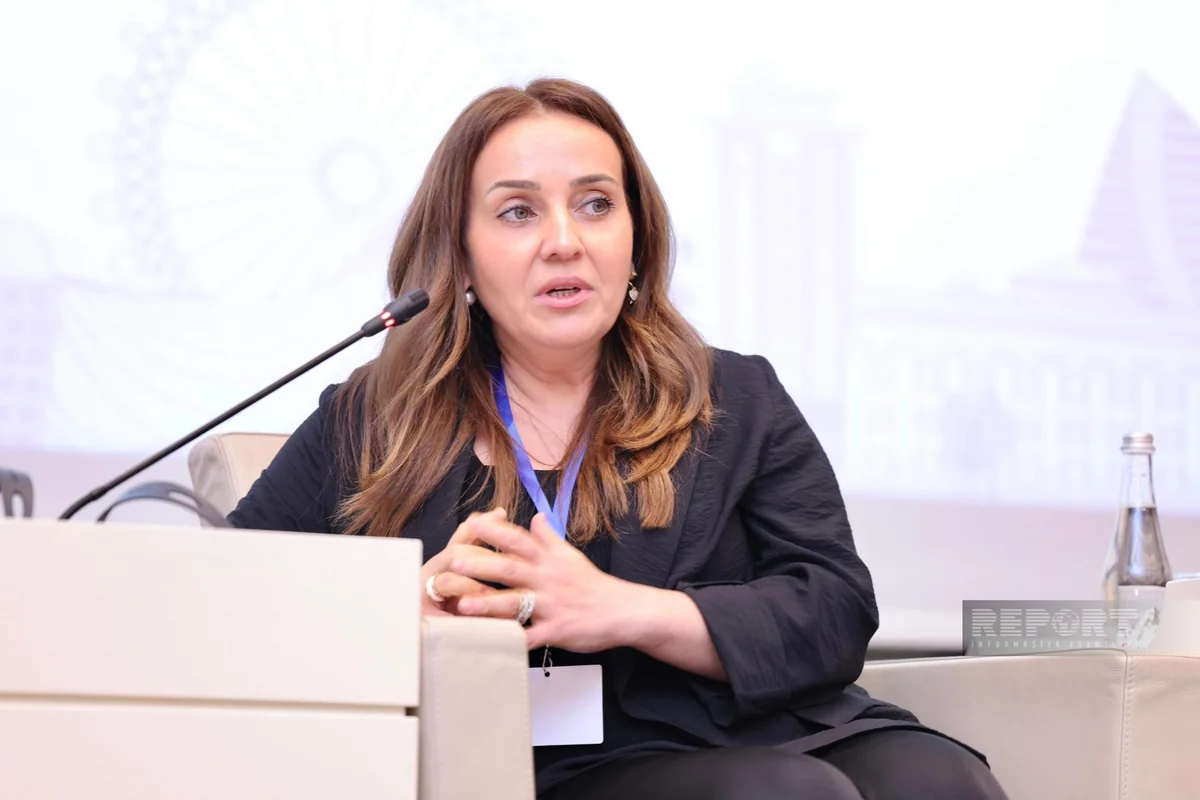
Common standards are needed to scale up green projects, Aliya Azimova, the International Finance Corporation's (IFC) representative for Azerbaijan, said.
According to Report, she made the remarks on the second day of Baku Climate Action Week 2026 (BCAW 2026).
Azimova said the goal should be not merely to finance individual projects, but to create markets.
"Green buildings illustrate this well, but the same approach can be applied more broadly across other sectors. I would again point to an IFC tool as a practical example. IFC developed a tool called EDGE. It is not simply another environmental certification, but a green building certification. The aim was to create a common standard that enables developers to build supply, banks to identify and finance green assets, and ultimately investors to finance portfolios rather than individual projects and buildings," she said.
"This tool also gave regulators greater clarity on standards and incentives that could be incorporated into regulatory requirements to stimulate economic activity. We have seen this development in different markets. We work with commercial banks to expand green construction and mortgage financing.
"I would cite India and the Philippines as examples. In India, we have created an investment platform worth more than $1 billion to support green, affordable and middle-income housing programs. Its importance lies not in an individual transaction, but in the ability to aggregate an asset class and attract larger flows of capital to finance it. The same logic can be applied to water, waste, transport, data and other sustainable infrastructure sectors," the IFC representative added.
Azimova also said sustainability is an economic necessity for Azerbaijan.
"We need to change the way we think about sustainability. Too often, it is viewed as an additional cost or a luxury. Instead, we should consider how to turn it into an economic and investment proposition.
"Nature-based solutions are a good example. Green corridors, permeable surfaces and natural drainage systems should not be viewed merely as landscape design. If they reduce flood damage, mitigate urban heat, preserve scarce water resources and reduce the need for more expensive conventional infrastructure, those avoided costs should be regarded as economic benefits and included in investment calculations," she said.
According to Azimova, this is particularly relevant for countries such as Azerbaijan, which face water scarcity, continued urbanization and growing environmental pressures.
"None of this can be achieved through government funding, private-sector financing, concessional finance or development finance alone. A system needs to be created that allows the ecosystem of stakeholders to develop plans and roadmaps, turn them into investable projects, move from individual projects to markets, and mobilize much larger volumes of private capital rather than relying only on public and development finance," she said.
Author