
 Baku 23° C
ICIEC CEO: Azerbaijan may attract capital from Persian Gulf through Islamic finance mechanisms - INTERVIEW
- 17 June, 2026
- 15:54
Stay up to date with the top news!
The large-scale reconstruction of the liberated territories and Azerbaijan's emergence as one of the central logistics hubs of Eurasia are creating fundamentally new opportunities for the inflow of international capital.
The development of the Middle Corridor transport route, the implementation of major infrastructure initiatives, the introduction of public-private partnership (PPP) formats, as well as the course toward transitioning to renewable energy sources entail not only significant investment volumes but also effective risk mitigation mechanisms. Under these conditions, Azerbaijan's deepened engagement with the largest Islamic finance institutions assumes the role of a strategic catalyst for attracting investments from the Persian Gulf states and the Asian region.
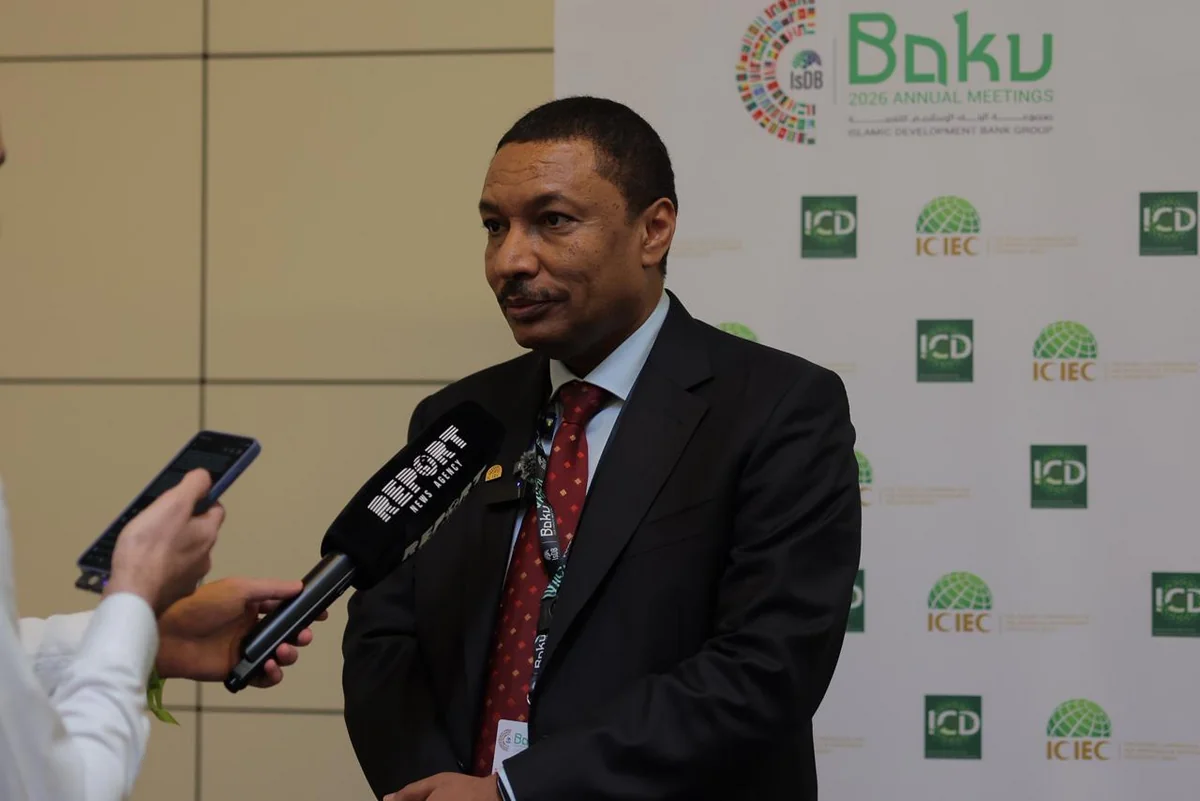
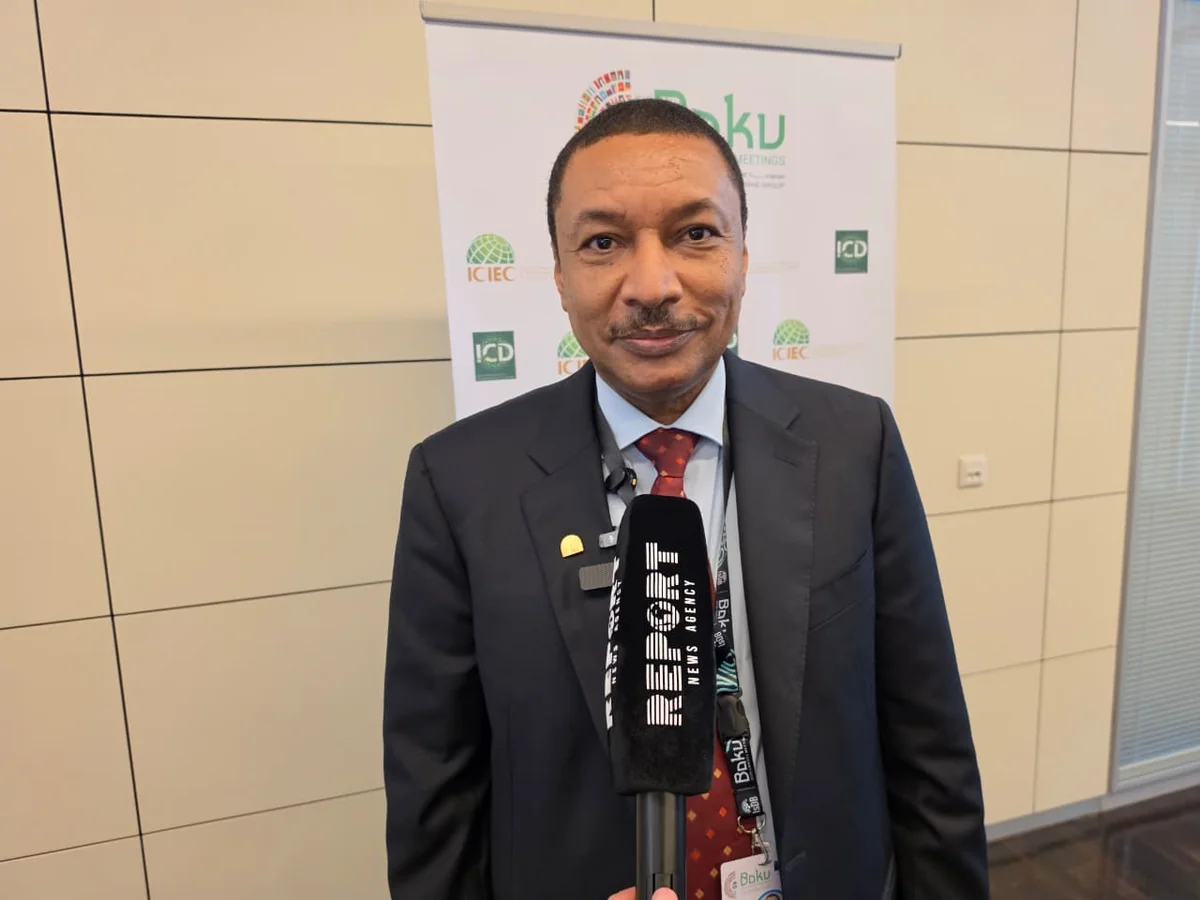
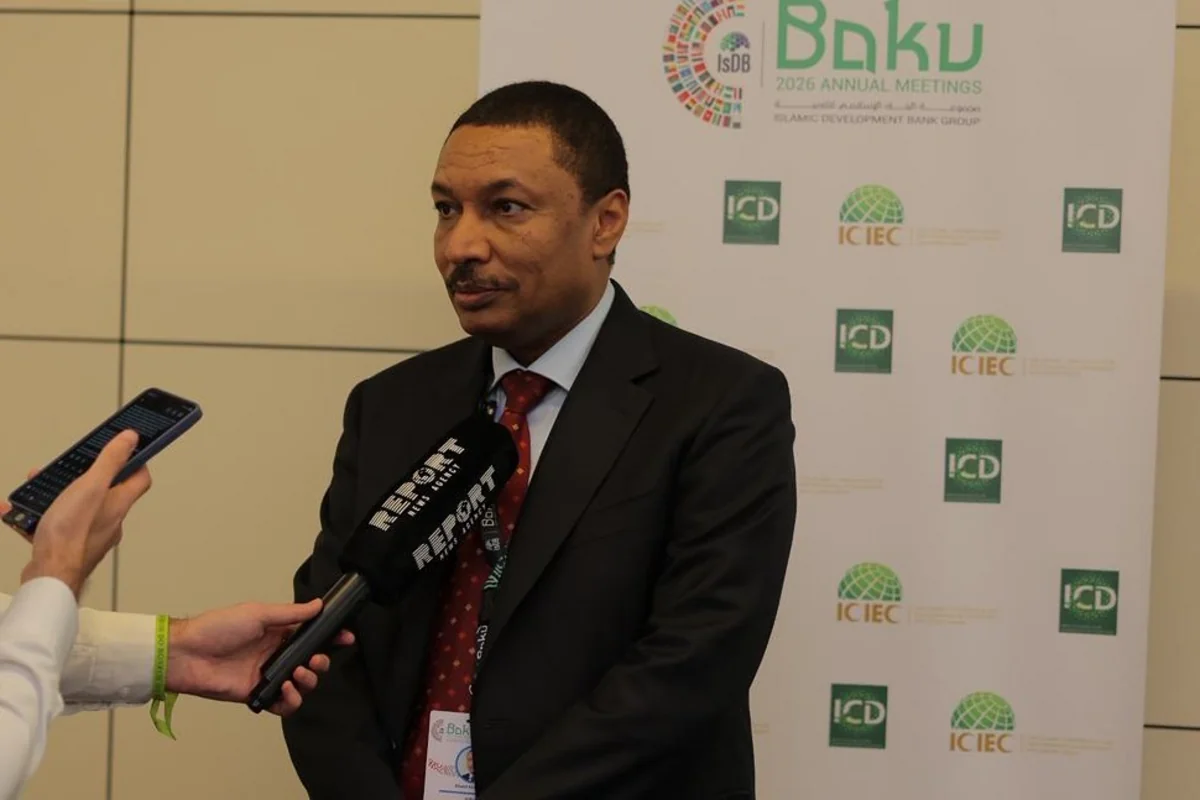
In an interview with Report during the annual meeting of the Islamic Development Bank (IsDB) Group, Khalid Khalafalla - Chief Executive Officer of the Islamic Corporation for the Insurance of Investment and Export Credit (ICIEC) and Acting Chief Executive Officer of the Islamic Corporation for the Development of the Private Sector (ICD) - discussed the opportunities for financing reconstruction projects in Karabakh, facilitating PPP initiatives in accordance with Shariah principles, risk insurance mechanisms along the Middle Corridor route, as well as details of new agreements with the State Oil Company of Azerbaijan (SOCAR) and Azerbaijani banks.
Report presents the interview:
- In May, the IsDB Group leadership visited the Karabakh region to assess the progress of reconstruction efforts. Is ICD considering the possibility of allocating direct credit lines or equity participation in private companies that are ready to invest in infrastructure, the energy sector, and the agricultural industry in the liberated territories of Azerbaijan?
- Azerbaijan is actively using public-private partnership mechanisms to restore infrastructure. Is ICD prepared to provide advisory support to the government and private consortiums in structuring such projects within Shariah principles?
- Absolutely. When it comes to public-private partnerships, not only ICD but the entire IsDB Group has significant experience in this area. We work together in a number of countries. We can see how the IsDB and ICD are simultaneously involved in financing PPP projects, particularly in infrastructure development, whether in the traditional transport sector or the energy sector.
We are definitely open to considering such opportunities if the opportunity arises to engage and support public-private partnerships. This is beneficial for all parties involved. It helps attract foreign investors, capital, and technological expertise to the country, and ensures the long-term sustainability of the project.
- Azerbaijan is consistently strengthening its role as a regional hub connecting Central Asia, the Caucasus, and the Middle East. How can ICD help attract greater investment and support regional economic integration?
- One of the key areas is undoubtedly promoting the development of the transport sector. We have implemented successful projects, particularly in the road and railway sectors of Türkiye. This experience is also applicable to Azerbaijan, ensuring the country's connectivity with neighboring states and strengthening the region's overall connectivity. Incidentally, the theme of our annual meeting is directly devoted to this issue.
- The development of the Middle Corridor (the Trans-Caspian International Transport Route) requires significant investment in Azerbaijan's port, rail, and logistics infrastructure. Is ICIEC exploring the possibility of insuring export credits or issuing investment guarantees for sovereign and private projects aimed at increasing the capacity of this corridor?
- Of course, this is precisely ICIEC's mandate – to assist in attracting foreign capital and investment to our member countries. We have implemented very large-scale infrastructure projects in our member countries. And what's especially important is that we don't operate in isolation. We also collaborate with export credit agencies (ECAs), both from our member countries and with leading global players (depending on the contractor): for example, European ECAs, the US Exim Bank, Japan's NEXI, or Korea Exim Bank.
Most such projects are typically quite large, necessitating the simultaneous involvement of commercial lenders, ECAs, and ICIEC. ICIEC's participation as a multilateral institution creates additional value: we are part of the IDB group (rated AAA), while ICIEC itself has an AA rating. This is extremely significant for financial institutions, particularly international ones. Our coverage facilitates credit enhancement for projects and motivates foreign capital to participate in transactions.
- ICIEC is actively collaborating with the Azerbaijan Export and Investment Promotion Agency (AZPROMO). The corporation's intention to attract investors and technology companies from China, South Korea, Japan, and India to the country was previously announced. What are the initial practical results of this work, and which joint investment projects are currently in the underwriting (risk assessment) stage?
- We signed a Memorandum of Understanding with AZPROMO back in 2024 for this very purpose-to stimulate investment and strengthen Azerbaijan's position as an attractive investment destination. Regarding ICIEC's specific achievements, we have already supported the export of Chinese telecommunications services to Azerbaijan.
Furthermore, we intend to work with AZPROMO to attract investors from other regions, primarily from the Persian Gulf states, to explore investment opportunities in Azerbaijan. This is an ongoing process, and our joint efforts in this area will continue.
- It has been reported that ICIEC held a series of productive meetings with key entities such as SOCAR Green and Southern Gas Corridor CJSC. What is the expected format of your participation in their projects? Will this involve insuring sovereign risks for infrastructure expansion or commercial reinsurance for SOCAR's green initiatives?
- Cooperation with SOCAR will be pursued in two areas. On the one hand, this will involve supporting export credits for SOCAR's international expansion. Within Azerbaijan, we will primarily collaborate with SOCAR on infrastructure projects and renewable energy, ensuring the involvement of international financial institutions in projects developed or promoted by SOCAR.
- What can you tell us about the new initiatives currently under discussion between the IDB Group (including ICD and ICIEC) and Azerbaijan?
- There are currently no specific projects, but there are a number of ideas in the initial stages of development, primarily in the areas of renewable energy, infrastructure development, and the railway sector. ICIEC previously supported the export of locomotives from Kazakhstan to Azerbaijan. This is precisely the area we could prioritize and expand.
- Today, a memorandum of understanding was signed between ICD and SOCAR during their annual meetings. What is the essence of this memorandum?
- The memorandum of understanding with SOCAR represents a framework for cooperation in renewable energy, infrastructure initiatives, and for promoting Azerbaijani exports in international markets, primarily in OIC (Organization of Islamic Cooperation) member states and the region as a whole.
- Overall, what specific benefits will the five documents signed with Azerbaijan today provide? What specific projects are currently under consideration?
- The framework agreement between Azerbaijan and the corporation is essentially aimed at creating a platform for attracting financial resources. These funds will be used to implement various projects, taking into account their specific needs.
Furthermore, our actual agreements with banks to open credit lines will be aimed at providing financial support to small and medium-sized businesses in Azerbaijan that meet established criteria. Thus, cooperation with Azerbaijan covers two main areas. On the one hand, it will support Azerbaijan's domestic economic activity and the improvement and modernization of its infrastructure, and on the other, it will facilitate the entry of Azerbaijani export products into international markets and their promotion, particularly within the region.
The main goal is to ensure that this mutual cooperation is not merely declarative, but is based on tangible results.
Author


