
 Baku 17° C
Bank executive: Azerbaijan's banking sector has fulfilled AZN 450 million of climate change commitment
- 09 September, 2026
- 18:29
Stay up to date with the top news!
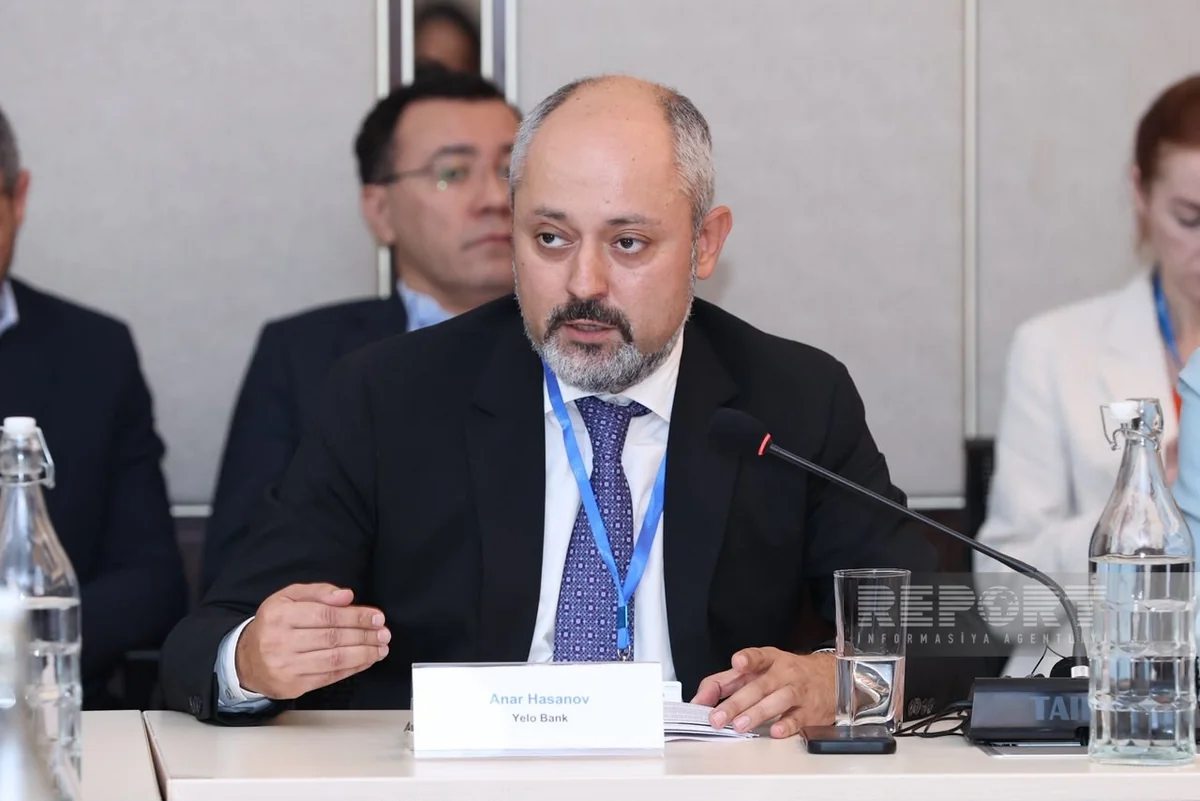
Azerbaijan's banking sector has fulfilled AZN 450 million of its AZN 2 billion commitment on climate change undertaken as part of the 29th session of the Conference of the Parties to the UN Framework Convention on Climate Change (COP29), held in Baku in 2024, Anar Hasanov, Chairman of the Board of Yelo Bank, said.
According to Report, he made the remarks on the third day of Baku Climate Action Week 2026 (BCAW 2026).
"With that commitment, the sector took on the responsibility of directing capital toward renewable energy, efficiency, cleaner technologies and business modernization. Over approximately a year and a half, we have allocated AZN 450 million of the amount envisaged. This is about twice as fast as initially planned. However, I believe sustainable financing is not only about climate. It is also about investment, innovation, productivity and long-term growth. I believe we have very significant opportunities in this area," he noted.
According to the banker, the main challenge now is moving from ideas to actual investments. "I think there are major challenges that we can highlight today. First of all, climate-related data is still inconsistent for banks, and therefore we cannot properly assess all the risks in this area. The pipeline of projects that are attractive to banks is relatively weak. Companies often see the opportunities, but lack the capacity to develop bankable projects. Therefore, many of these investments require high upfront costs with long payback periods, which calls for appropriate financing and, I think, risk-sharing structures. And this brings us to the biggest opportunity: putting the data, project pipeline and structure in order. This would allow banks to play a greater role in directing capital toward the transition of Azerbaijan"s small and medium-sized enterprises (SMEs). I think we should also briefly talk about the role of technology in this process. In a country like Azerbaijan, I believe much of the opportunity lies in helping existing businesses modernize the way they operate. Because, you know, it is quite difficult to find new assets in Azerbaijan, and if you compare this with investments made previously, I think a major part of the business is about figuring out how to create financing for enterprises that already exist and operate their businesses, so to speak, using somewhat outdated models.
"So, investments that reduce energy and water consumption, improve production processes or introduce cleaner technologies benefit the environment while also creating direct economic value. This leads to lower operating costs and higher productivity. And this is not merely an argument. I think it is a business necessity. You know, when we usually talk to our clients about this transition, one of the key issues here is the psychological aspect. Our clients think about green energy and these loans as a form of charity or, I don't know, social responsibility. But when we try to explain that this directly affects, for example, their electricity bill or, I don't know, their gas bill, their natural gas payments, it completely changes the way they think about it. So, when we talk about SMEs, I think we first need to consider how to explain that this is not charity, but real business action.
"And I think another very important point here is how we work across different sectors. This is not just an issue for the banking sector. We need to think about how we can work with the public sector, the government and other industries to strengthen the project pipeline and connect businesses with the right technologies. At the same time, we need to explain and demonstrate how these climate investments increase business profitability and, ultimately, profits. So, I can say that Azerbaijan's banking sector is fully ready to contribute by mobilizing financial resources for green investments, economic transition and climate resilience. However, I think the next important issue for us, as I mentioned, is to deepen cooperation with the government, businesses, the financial sector and our international partners to turn climate priorities into attractive investments for banks. And if we can do that, I believe this transition will not only serve climate goals, but also support business diversification, innovation, resilience and, of course, long-term competitiveness."
Author