
 Baku 22° C
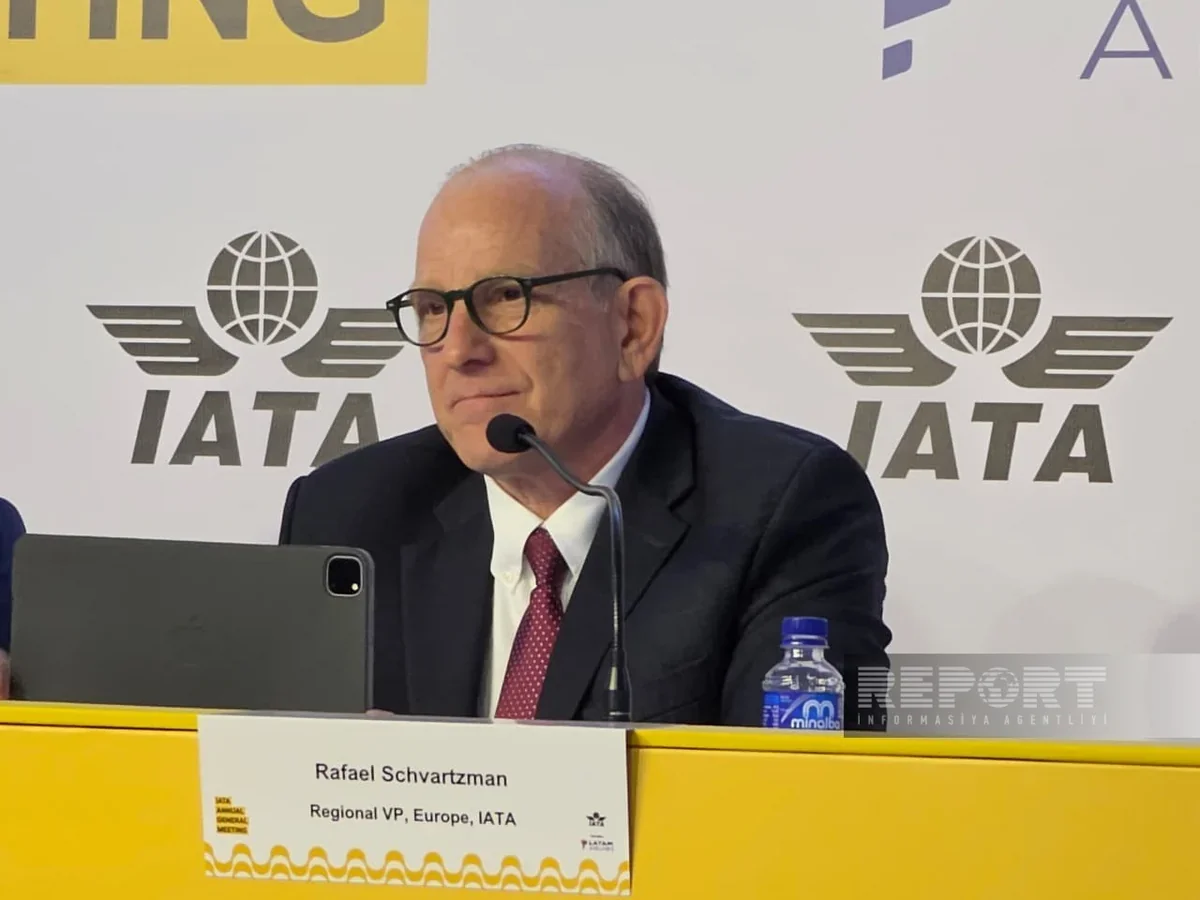
Rafael Schvartzman: Azerbaijan has advantages in terms of aviation fuel supply and logistics
- 08 June, 2026
- 09:24
Stay up to date with the top news!
The International Air Transport Association (IATA) is seeking to more actively engage with Central Asian countries, including Azerbaijan, as the region needs to modernize its aviation regulatory framework, IATA Regional Vice President for Europe Rafael Schvartzman said in response to Report's question at a press conference during IATA 82nd Annual General Meeting (AGM) & World Air Transport Summit (WATS), according to a Report correspondent from Rio de Janeiro.
He noted that one of the main challenges facing Central Asian countries remains the development of aviation infrastructure.
"The level of infrastructure development in the countries of the region varies, but they all face challenges. In Kazakhstan, the expansion of Astana Airport or the construction of a second airport is being discussed. However, the domestic air travel market there is already quite developed. Uzbekistan also plans large-scale development of the industry – a second airport will open in Tashkent soon – but the potential for domestic travel remains enormous. Now is an opportune time for countries in the region to consolidate these capabilities. This also applies to the development of sustainable aviation fuel (SAF)," noted Schwartzman.
According to him, Kazakhstan and Uzbekistan are considering establishing their own SAF production.
"However, beyond SAF development, there are more practical challenges – ensuring competitive supplies of traditional aviation fuel. In some countries in the region, the problem is not a lack of fuel per se, but limited access to it. For Kazakhstan, one of the key issues remains the transition to Jet A-1 fuel. I don't think this is a problem for Azerbaijan – the country has both the necessary fuel volumes and developed logistics for its delivery," the IATA vice president emphasized.
He also noted the significant contribution of aviation to the region's economic development, primarily through tourism.
"Uzbekistan is currently experiencing the most dynamic growth in its tourism sector. The country boasts a rich cultural heritage, which is a powerful draw for tourists. At the same time, the entire region has enormous potential for nature tourism, which remains underdeveloped. Kyrgyzstan's mountainous regions offer impressive travel opportunities, while Kazakhstan also boasts numerous unique natural sites, though access to them remains limited. Azerbaijan's tourism infrastructure is better developed, although there remains potential for further growth," said Schvartzman.
Speaking about IATA's activities in the region, he said the organization is expanding its presence in Central Asia.
"We have an office in Astana that coordinates our work in the region. We are also currently developing operations in Uzbekistan. Azerbaijan is covered by our Istanbul office. We strive to be closer to the countries of the region and actively engage with government agencies, as we see a significant need to modernize the regulatory framework.
It is important for us to work collaboratively with government agencies and air carriers. Uzbekistan Airways is a long-standing member of IATA, but new airlines are rapidly entering the market. Currently, 14 IATA agents are accredited in Uzbekistan – 12 passenger and two cargo. Kazakhstan and Azerbaijan have been operating in the BSP system for many years and are fairly mature markets. We maintain an ongoing dialogue with transport ministries, aviation authorities, air traffic management services, and airports in all countries of the region," concluded Schvartzman.
Author


