Baku 21° C
Oil Workers' Day: The role of black gold in Azerbaijan's history
- 20 September, 2026
- 10:17
Stay up to date with the top news!
Azerbaijan is marking Oil Workers' Day today, a professional holiday honoring the specialists in the country's oil and gas industry whose work has helped underpin its economic independence and development.
For every nation, there are dates that go beyond the calendar and become part of its collective memory. For Azerbaijan, September 20 is one such date.
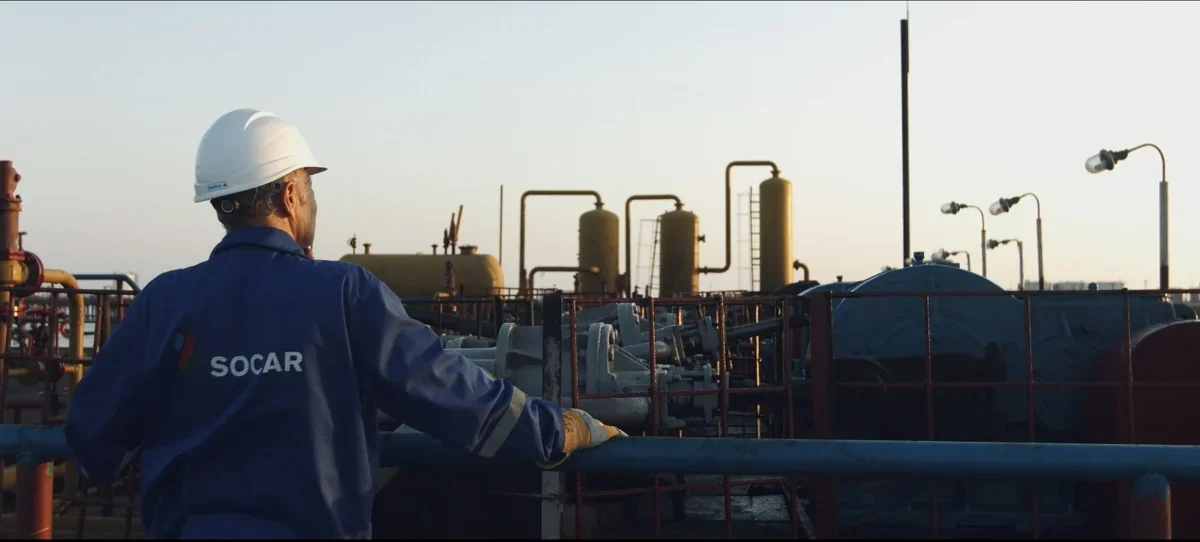
The day is an occasion to honor the engineers, drillers, geologists and other oil sector workers whose efforts have helped turn the country's "black gold" into a driver of economic development.
The date is significant for another reason: 32 years ago, on September 20, Azerbaijan signed the "Contract of the Century," an agreement that would shape the country's economic future and establish it as a major player in the global energy market. The deal marked a new economic chapter in the history of independent Azerbaijan, strengthening the state and contributing significantly to economic growth and living standards. But Oil Workers' Day is about more than the "Contract of the Century." It also celebrates a centuries-old oil heritage and the dedication of generations of workers who have powered Azerbaijan's petroleum industry.
Baku, also known as the world's oil capital
In 1848, the world's first oil well was drilled in Bibi-Heybat, near Baku, marking the beginning of a new era in oil production. By the second half of the 19th century, Baku had earned a reputation as the "oil capital of the world," producing a substantial share of global output.
In 1901, Baku's oil fields produced 11.4 million tonnes of crude, accounting for 50% of global oil production. At the time, Baku was more than an industrial city - it had become a major center of the global energy industry.
But Azerbaijan's oil story also passed through periods of profound upheaval. The collapse of the Soviet Union and the transition to a market economy brought major challenges. Against that backdrop, the signing of the "Contract of the Century" in 1994 marked a turning point. Cooperation with leading international companies to develop the Azeri-Chirag-Gunashli (ACG) fields revitalized the oil industry, bringing modern infrastructure, higher production and efficiency, and billions of dollars in investment into the country.
Oil revenues strengthened Azerbaijan's state budget and helped finance social programs and infrastructure projects. Energy exports also established the country as a major supplier and partner in international oil and gas markets. More broadly, the sector's development contributed to the consolidation of Azerbaijan's statehood and increased its international profile.
Figures highlighting Azerbaijan's energy role
Today, Azerbaijan remains an important player in the global energy market. As one of the Caspian Basin's major oil exporters, the country's strategic position is underpinned by the Baku-Tbilisi-Ceyhan (BTC) pipeline and other international energy projects. Since 2006, the BTC pipeline alone has delivered 631 million tonnes of crude oil to international markets, underscoring the scale of Azerbaijan's energy infrastructure and export capacity.
Production from the ACG fields and the Shah Deniz field has generated hundreds of millions of tonnes of oil and hundreds of billions of cubic meters of natural gas, cementing Azerbaijan's position on the regional energy map. The State Oil Company of Azerbaijan (SOCAR) is the largest shareholder in the ACG project, giving the state a significant stake in the development of its energy resources.
In the first half of 2026, around $75 million was spent on operating expenses for the Baku-Tbilisi-Ceyhan (BTC) pipeline, while capital expenditures totaled about $57 million. The pipeline stretches 1,768 km. From the start of operations in June 2006 through the end of June 2026, it transported about 631 million tonnes, or more than 4.7 billion barrels, of crude oil. During that period, 6,276 tankers were loaded at the Ceyhan terminal for shipment to international markets.
In January-June this year, around 13 million tonnes, or approximately 94 million barrels, of crude oil and condensate were exported through the BTC pipeline. The volumes were loaded onto 131 tankers at the Ceyhan terminal and shipped to international markets.
The BTC pipeline currently carries mainly ACG crude and Shah Deniz condensate from Azerbaijan. It also transports crude oil and condensate from other Caspian producers, including Kazakhstan and Turkmenistan, as well as additional volumes produced by SOCAR in Azerbaijan.
Since July 1, operation of the BTC pipeline, along with overall operational management of the BTC and South Caucasus Pipeline (SCP) systems, has been transferred from BP Exploration (Caspian Sea) Limited to SOCAR subsidiary SOCAR Midstream Operations LLC.
Latest oil and gas production figures
From the start of production at the ACG and Shah Deniz fields through July 1, 2026, about 679.8 million tonnes of oil, including gas condensate, and 529.6 billion cubic meters of gas had been produced. ACG accounted for 625.6 million tonnes of oil and 251.1 billion cubic meters of gas, while Shah Deniz produced about 54.2 million tonnes of condensate and 278.5 billion cubic meters of gas.
SOCAR currently holds the largest stake in the ACG contract, at 35.3%. Oil is produced from seven platforms at the field. The Chirag platform, which has been operating since 1997, has the lowest output at 19,300 barrels per day. The Central Azeri platform has the highest production, at 88,000 barrels per day, equivalent to about 4.4 million tonnes annually.
The global energy landscape, however, is changing. Lower oil demand and the growing role of renewable energy are pushing Azerbaijan to pursue new strategies. The country's priorities now extend beyond oil to include the development of its gas industry, expansion of gas exports and greater investment in alternative energy.
A day of national pride
Oil Workers' Day is therefore more than a professional holiday. It is an occasion to recognize the generations of Azerbaijani oil workers who have shaped the country's petroleum industry and to reflect on an energy legacy that continues to influence its economy and international standing.
The "Contract of the Century," signed 32 years ago, helped set Azerbaijan on a path toward greater economic strength and independence. Today, the country's oil workers are once again adapting to a changing energy landscape - this time as Azerbaijan seeks to build a more sustainable, innovative and lower-carbon energy future.
Author