Baku 22° C
Energy infrastructure strengthens Azerbaijan's geoeconomic role, MP says
- 03 October, 2026
- 18:15
Stay up to date with the top news!
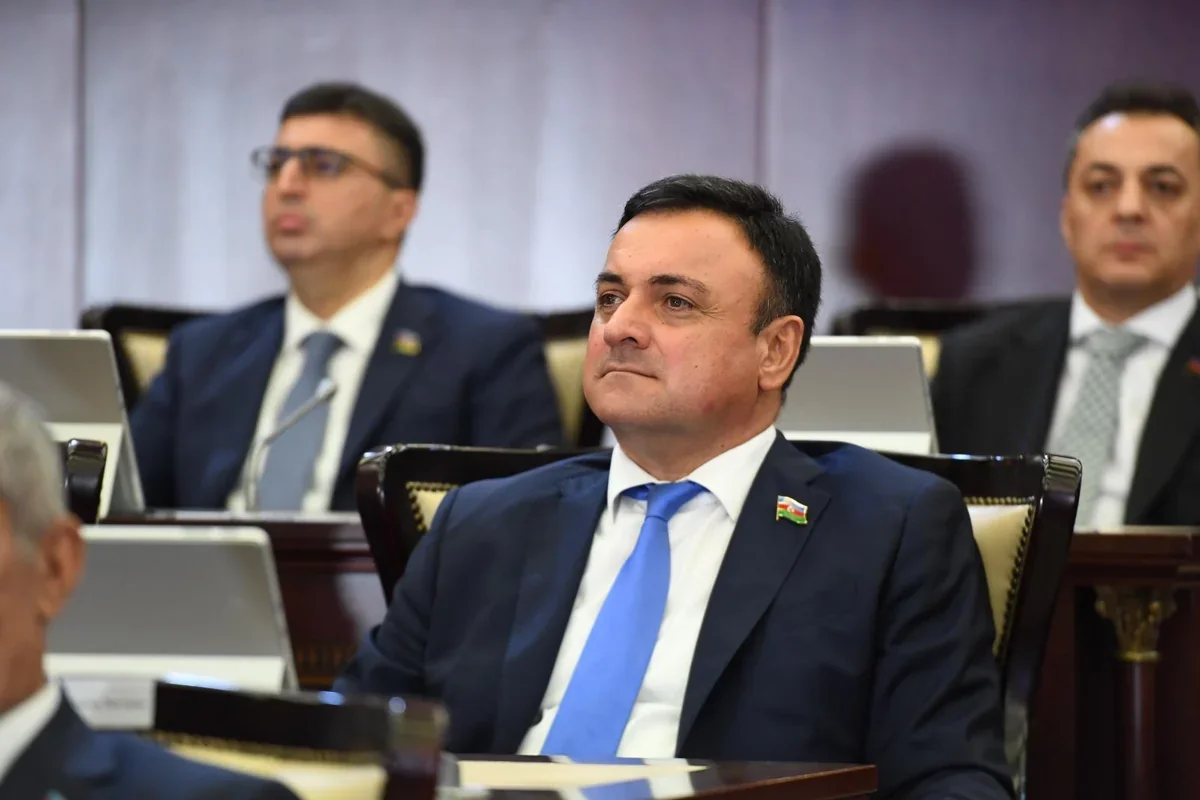
Azerbaijan is no longer merely an oil- and gas-exporting country and is moving toward becoming a regional energy hub combining energy production, processing, transit and access to different markets, MP Rovshan Muradov told Report while commenting on President Ilham Aliyev's speech at the 8th Congress of the New Azerbaijan Party (YAP).
According to him, in the modern system of international relations, energy security is no longer a separate area of economic policy but has become a strategic factor closely linked to national security, foreign policy and geopolitical influence.
"In recent years, the expansion of military and political confrontations in various regions of the world, disruptions in traditional supply chains, risks related to the security of energy routes and major economies' search for alternative sources have significantly changed the global energy architecture. The key issue is not only growing demand for energy. A more important trend is rising demand for energy from reliable sources, predictable partners and secure routes. It is precisely this change that further increases Azerbaijan's geoeconomic importance compared with previous periods," Muradov said.
He noted that Azerbaijan's advantage was not limited to its abundant energy resources. Its main strength, he said, was the integration of production, processing, exports, transit infrastructure and access to different markets into a single system.
Muradov said President Ilham Aliyev had emphasized at the YAP congress that Azerbaijan was among the countries producing and exporting crude oil, petroleum products, natural gas, electricity, petrochemical products and fertilizers. He added that demand for Azerbaijani gas and other energy products was expected to increase amid continuing geopolitical confrontation.
"In this regard, the main result of Azerbaijan's energy policy is not merely an increase in export volumes. The country has succeeded in creating infrastructure for bringing its energy resources to international markets, establishing long-term contracts and developing energy links in various directions. Alongside the economic importance of energy resources, this also strengthens Azerbaijan's role in the international energy system," he said.
Figures also demonstrate Azerbaijan's position as an energy exporter. According to the Ministry of Energy, 33.4 billion cubic meters of natural gas were produced in the country in January-August 2026, while 16.4 billion cubic meters were exported.
Of this volume, 5.9 billion cubic meters went to Europe, 7.5 billion cubic meters to Türkiye and 1 billion cubic meters to Syria.
In 2025, Azerbaijan and SOCAR supplied 12.5 billion cubic meters of natural gas to the European Union, up 53.8% from 2021. Azerbaijani gas exports to Germany and Austria, launched in January 2026, also indicate that the geographic reach of Azerbaijani gas in Europe through the Southern Gas Corridor is expanding.
"The role of the Southern Gas Corridor is particularly important here. This infrastructure, approximately 3,500 kilometers long, connects the Caspian basin with the markets of Türkiye and Europe. In terms of bringing Azerbaijan's energy resources to international markets, this corridor is not simply transport infrastructure but one of the main strategic pillars of the country's energy policy. The European Union also openly acknowledges the role of Azerbaijani gas in diversifying energy sources and routes," Muradov said.
The MP said that in modern geopolitics, the political and economic weight of energy resources was determined both by the size of reserves and by the stability and infrastructure through which those resources reached markets.
"Energy reserves underground are potential. What turns them into geoeconomic capital is infrastructure, long-term contracts, investment, reliable relations with partners and access to alternative markets. In this regard, Azerbaijan's energy projects in recent years have increased the country's ability to transform its resource advantage into a broader geoeconomic advantage," he said.
According to Muradov, the political weight of the energy factor also stems from this interdependence. For Azerbaijan, he said, the main objective was not to use energy as a means of pressure but to create a long-term system of cooperation based on mutual interests.
"As energy cooperation with Azerbaijan becomes part of partner countries' energy security, mutual economic interests deepen. This creates a more sustainable model of energy diplomacy. Such a model expands Azerbaijan's diplomatic room for maneuver, creates new cooperation platforms and increases the country's role in regional processes," he said.
Muradov added that the economic importance of energy exports should not be measured solely by foreign currency revenues. Energy income was also important for infrastructure development, economic diversification, investment in human capital and the creation of financial reserves for future generations.
"At the same time, there are major long-term challenges for an energy exporter. Volatility in global energy prices and the global energy transition limit the extent to which hydrocarbon revenues can be viewed as the sole basis for future economic growth. Therefore, to turn the energy advantage into a sustainable economic advantage, it is important to channel revenues into new production sectors, the non-oil economy, technologies and export capacity," he said.
According to Muradov, another important feature of Azerbaijan's new energy strategy was the development of conventional and renewable energy not as alternatives to one another but as components of a single system.
"Azerbaijan is not entering the energy transition solely as a hydrocarbon exporter. The country is also seeking to use the Caspian Sea's wind potential, expand solar and wind energy projects, modernize electricity grids and create regional green energy corridors. The plan to create around 8 GW of renewable energy capacity by 2032 demonstrates the scale of this strategy," he said.
According to the Ministry of Energy, Azerbaijan is also working to create green energy corridors that will connect the energy potential of the Caspian and Central Asia with the markets of Türkiye and Europe.
The Caspian-Black Sea-Europe Green Energy Corridor is expected to have a total transmission capacity of 4 GW. Work is also continuing on the Central Asia-Azerbaijan Green Energy Corridor.
These developments are gradually changing Azerbaijan's role in the energy system. While the country's main function in the previous stage was to bring oil and gas produced in the Caspian basin to world markets, energy production, processing, transit, electricity exports and regional connectivity are now developing in parallel.
"Today, alongside oil and gas, electricity, renewable energy, energy storage systems, regional interconnectors and green energy corridors also occupy an important place on Azerbaijan's energy map. Thus, the country's energy policy is transforming from a purely export-oriented model toward that of a regional energy connector," Muradov said.
He said Azerbaijan's main task at the next stage was to transform its existing energy advantages into broader and more sustainable economic opportunities.
"If hydrocarbon reserves, new gas projects, existing energy infrastructure, renewable energy, electricity connections, transit opportunities and economic diversification are developed within a single strategy, Azerbaijan's energy advantage can become more long-term. In that case, energy will serve not only as an export commodity and source of revenue for Azerbaijan but also as strategic capital supporting economic development, international partnerships and regional energy security," the MP added.
Author