
 Baku 21° C
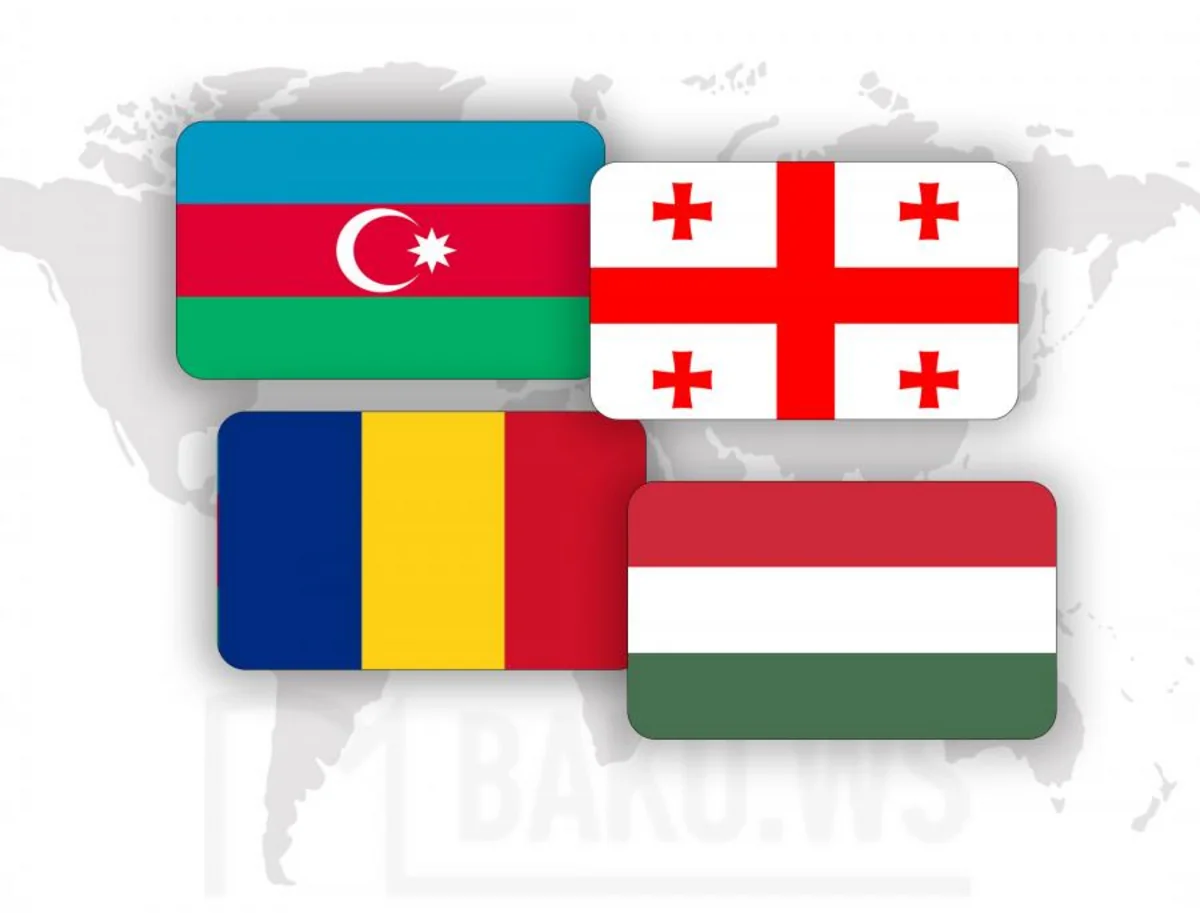
Azerbaijan, Georgia, Hungary, Romania agree on further steps for GECO project
- 29 May, 2026
- 14:52
Stay up to date with the top news!
The feasibility study for the Green Energy Corridor project has entered its final phase, Report informs referring to the Green Energy Corridor joint venture (GECO, Black Sea Energy).
This information was presented at a seminar organized at CESI headquarters.
The event was attended by delegations from Azerbaijan, Georgia, Hungary, and Romania, as well as representatives from GECO Power Company and CESI. Over the course of two days, participants engaged in active discussions on the technical and strategic aspects of the project as the feasibility study approaches its final stage.
The discussions included an analysis of the current state of economic calculations and cost-benefit assessments, key results achieved, and outstanding issues requiring further coordination between the participating countries.
Additionally, an in-depth technical analysis of the project's underlying assumptions and modeling results was conducted, covering issues of grid integration, HVDC infrastructure operation, and various technical scenarios for the corridor's construction.
The seminar participants also discussed the project's routing, including unresolved technical aspects, comments from participating countries, and further refinement of the proposed routes. Various potential business models for the project-regulated, market-based, and hybrid-were explored, along with preliminary financial assessment results and potential financing schemes.
The seminar concluded with a summary of the key results achieved and the identification of next steps towards finalizing the feasibility study.
This project is envisaged as part of the strategic partnership agreement on the development and transmission of green energy signed in Bucharest in 2022 between Azerbaijan, Georgia, Romania, and Hungary. This document marks an important step toward the creation of a green energy corridor to Europe.
The joint venture for the Caspian-Black Sea-Europe green corridor project was established under a memorandum of understanding signed between Georgia, Hungary, Romania, and Azerbaijan on July 25, 2023.
The Black Sea submarine cable project is a major infrastructure project that will directly connect Georgia and Romania and link the power systems of the South Caucasus and Southeastern Europe. The submarine cable will be 1,115 km long (underwater and 40 km overland), with a voltage of 525 kV and a capacity of 1,300 MW. Completion of the Black Sea submarine power cable is scheduled for 2032.
The project is included in the European Union's list of Projects of Mutual Interest (PMI). The European Commission plans to allocate €2.3 billion for its implementation.
Author


