Baku 19° C
Housing provision in Azerbaijan: A model of social inclusion and sustainable urbanization – SURVEY
- 14 May, 2026
- 15:40
Stay up to date with the top news!
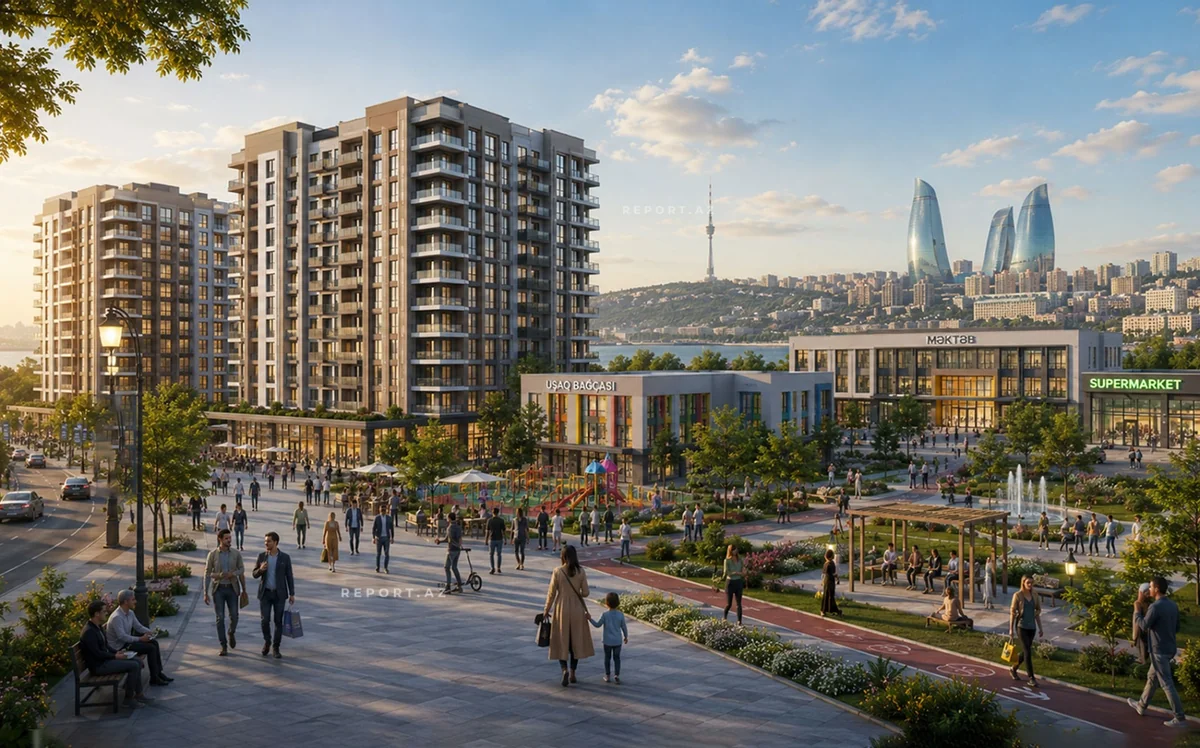
"Our home is not just a two-room apartment - it feels like an entire world where all our dreams have found a place. There is a kindergarten and a school nearby. Taking my daughter to kindergarten and watching my son play on the playground brings me real joy. Being able to walk to shops and cafés means spending time with my family instead of sitting in traffic. This is the place where our family's dreams have truly come to life," Chinara Mammadova, whose family became homeowners through the rent-to-own housing scheme, told Report.
Chinara's husband, Elvin Mukhtarov, said they are among thousands of families who have improved their living conditions through the rental-based housing program.
"When we got married, we explored the opportunities available in our country for obtaining housing on preferential terms. We decided this project was the best fit for us - all it takes is paying 12 months of rent in advance to move into a fully renovated apartment. We have been living here for three years now and are very satisfied with the conditions," he said.
First in the South Caucasus
The rent-to-own mechanism is the newest residential financing instrument introduced in Azerbaijan. Implemented by the Mortgage and Credit Guarantee Fund (MCGF), the mechanism has been in operation for just seven years.
This model facilitates family financial planning through long-term and stable payment terms, while also shielding beneficiaries from fluctuations in market prices. At the same time, the mechanism makes homeownership more flexible and accessible for young people and young families.
Deputy Director of the Rental Housing Department at the MCGF Aslan Zeynalov highlighted specific statistics and advantages of the program:
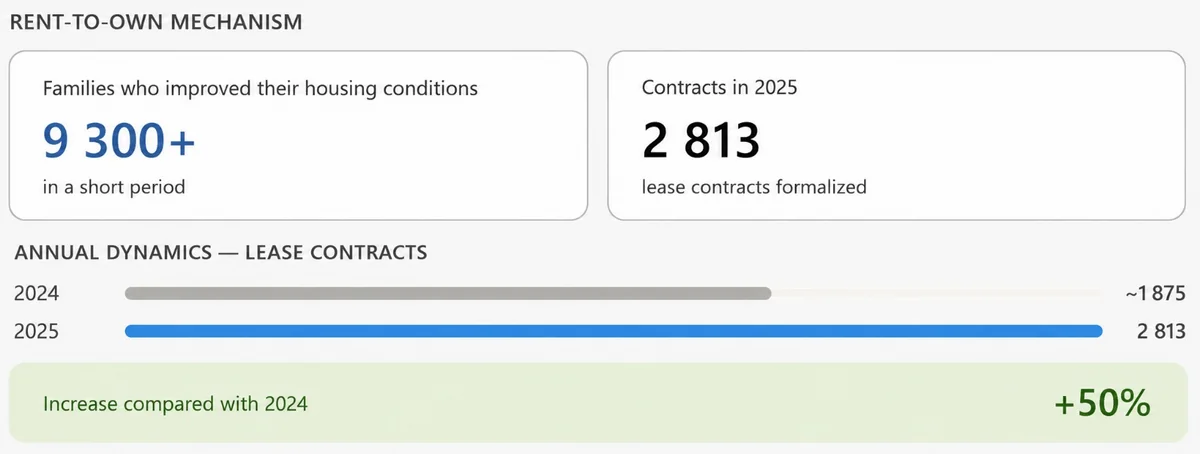
"The rent-to-own housing mechanism was established by a decree signed by President Ilham Aliyev on January 25, 2019, and has created additional opportunities for citizens to improve their living conditions. The main objective of the mechanism is to improve housing access for citizens who do not have sufficient personal savings. Within a short period of time, more than 9,300 families have improved their living conditions through this mechanism. In 2025 alone, a total of 2,813 rental agreements were formalized under the program, which is more than 50% higher compared to the same indicator in 2024."
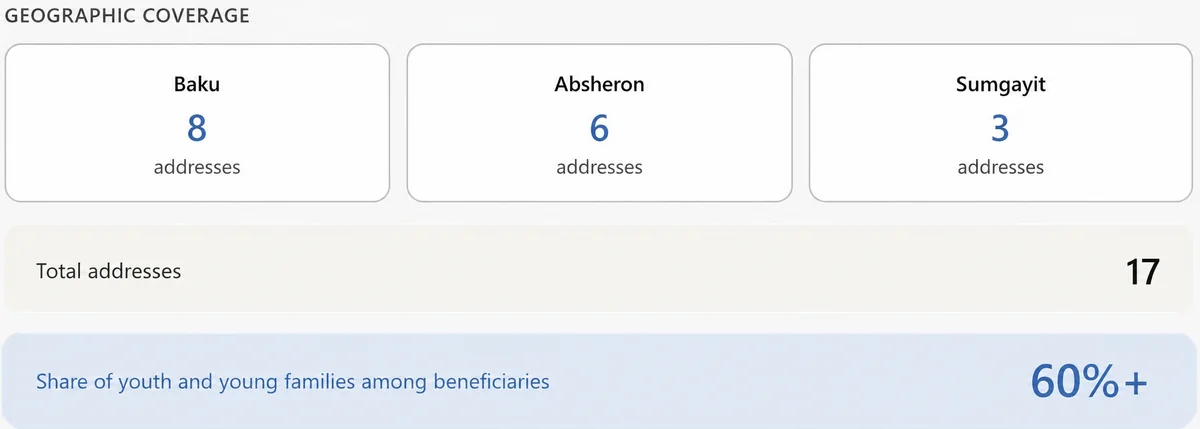
According to the Fund official, more than 60% of those benefiting from fully renovated rental apartments built to modern standards are young people and young families. "To date, rent-to-own apartments have been offered to the public at 17 different locations across Baku (8 locations), Sumgait (3 locations), and the Absheron district (6 locations)," he noted.
One of the key advantages of the rent-to-own mechanism is that it is not limited to specific privileged categories, but is available to all citizens with officially registered income, provided they meet relatively flexible assessment requirements.
Zeynalov emphasized that demand for the project continues to grow as public awareness increases:
"It should be noted that interest in the rental housing mechanism has been rising year by year, as reflected in the statistics. In 2025 alone, more than 30,000 electronic applications were submitted, more than double the figure recorded in 2024. As is known, rental apartments are provided to citizens for a long-term period of 25 years with fixed monthly payments. One of the most important advantages of this mechanism is that the monthly payment determined at the time the contract is signed remains unchanged throughout the rental period. Meanwhile, the real estate market continues to experience a steady rise in prices, which directly affects the rental market as well. The rental housing mechanism protects citizens from such impacts and effectively insures them against potential price hikes. This creates long-term social and economic security for middle- and low-income families. Another important advantage is that the mechanism enables citizens to use their personal savings more efficiently. Many people spend years trying to save enough money to purchase a home, but the real value of those savings declines as market prices continue to rise."
Those whose personal savings are sufficient to cover the down payment on a mortgage loan can also benefit from this instrument.
Azerbaijan became the first country in the South Caucasus to establish an organized mortgage lending system with direct state support. Since the mechanism was created by presidential decree in 2005, more than 58,400 citizens have received mortgage loans totaling over 3.9 billion manats.
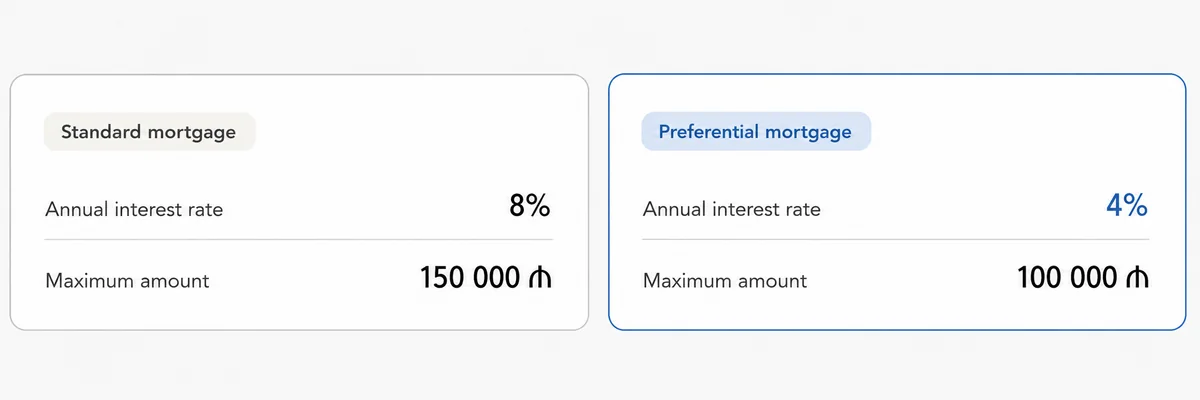
At present, the maximum amount for standard mortgage loans stands at 150,000 manats with an annual interest rate of 8%, while preferential mortgage loans offer up to 100,000 manats at a 4% annual interest rate.
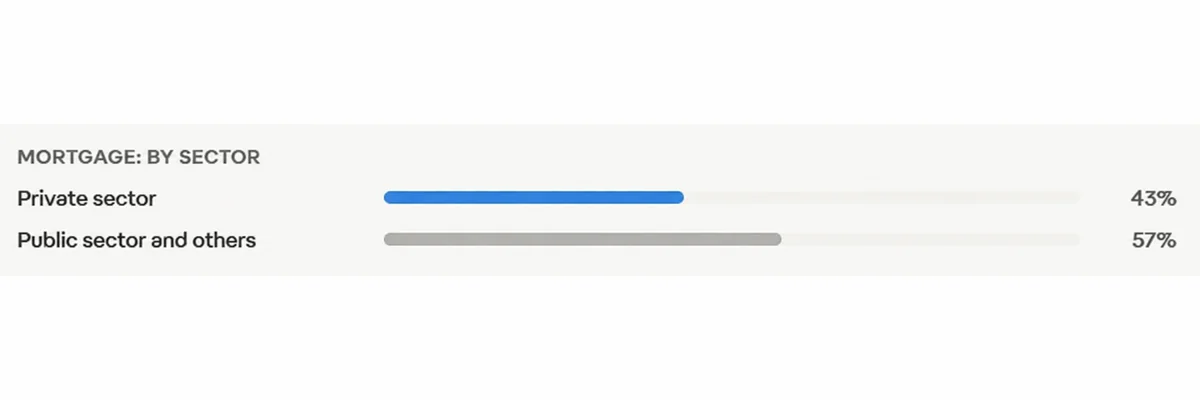
In addition to employees of the public sector, those working in the private sector are also able to benefit from the system. Around 43% of citizens who obtained housing through standard mortgage loans are employed in the private sector.
Favorable Terms, Affordable Prices, Excellent Infrastructure
Over the past decade, the State Agency for Housing Construction (MIDA) has played a key role in Azerbaijan"s policy aimed at improving housing conditions for citizens. Through the agency's initiatives, thousands of families have obtained new homes at affordable prices and under favorable conditions. The projects implemented by MIDA contribute not only to improving living standards in the capital, but also in the regions across the country.
"When we decided to become homeowners, the first thing we considered was our budget and the terms offered. With only a 10 percent down payment, we were able to achieve our dream. It was an excellent opportunity for us. The interest rate is low - a preferential mortgage loan at 4 percent. The apartment"s price was significantly below the market value, which made it a truly unique chance for our family," says Firdovsi Alizada, who purchased a home in one of MIDA's residential projects.
According to him, these developments are not merely residential complexes, but carefully designed projects aimed at addressing broader social needs. "The infrastructure is excellent. The public transportation system is very well organized, and we can easily commute to work. As a young family, living in such a modern and comfortable complex is truly a wonderful feeling," he noted.
According to Jamshid Amirov, Chief of Staff of the State Agency for Housing Construction (MIDA), the establishment of the agency in April 2016 by a decree signed by Ilham Aliyev marked a highly significant step toward improving citizens' housing and living conditions, as well as strengthening their social welfare.
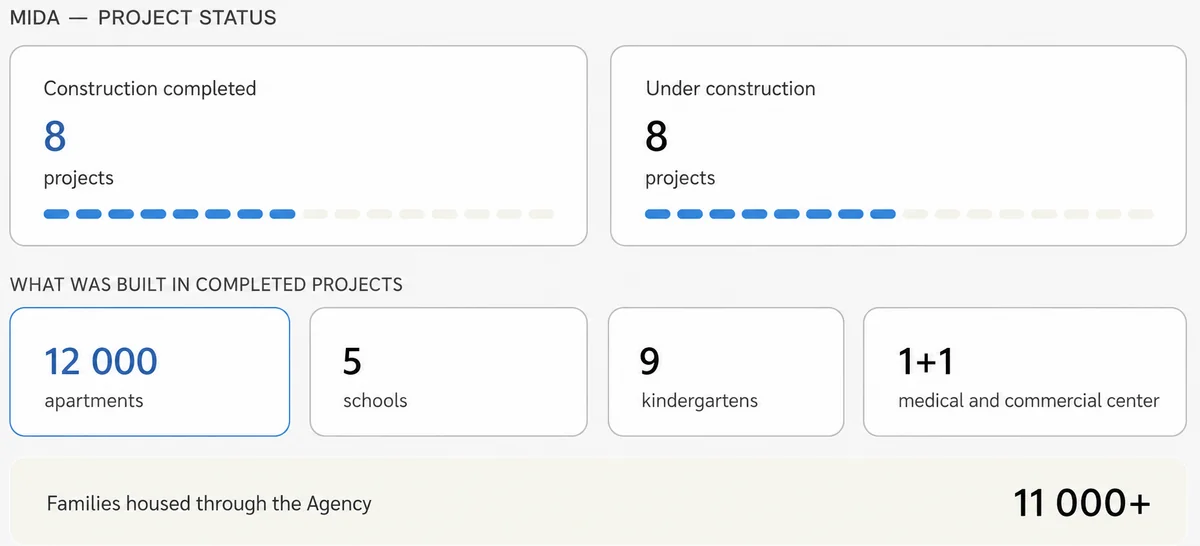
"In the years since the agency began operations, MIDA has launched a total of 19 projects in Baku and the regions. Of these, 16 are affordable housing projects, while 3 are being implemented within the framework of the program of Great Return to Karabakh," he told Report.
Amirov noted that construction has already been completed on eight projects, while work continues on another eight. "The completed projects include nearly 12,000 apartments, five schools, nine kindergartens, one medical center, and one shopping center. Overall, more than 11,000 families have obtained housing through the agency's projects," he stated.
He added that the apartments offered to citizens are fully renovated and equipped with kitchen furniture, central heating systems, and utility meters. The apartments are sold both through preferential mortgage loans and direct purchases financed by citizens' own funds.
Within the framework of the projects currently under implementation, the construction of more than 6,000 apartments, two schools, and five kindergartens is planned. At the same time, a new land plot has been allocated in the city of Salyan, while monitoring and assessment work is also being carried out in other regions.
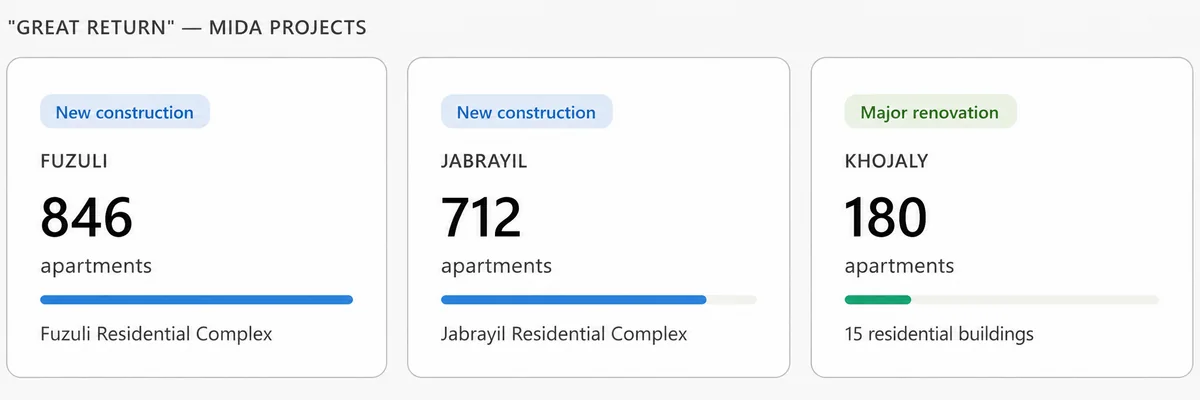
The MIDA official emphasized that large-scale projects are also being implemented in the territories liberated from occupation. "The Fuzuli Residential Complex includes 846 apartments, while the Jabrayil Residential Complex consists of 712 apartments. In Khojaly, 15 residential buildings comprising 180 apartments have undergone major renovation," he stated.
Great Return: From Tent Camps to Modern Cities
As for the liberated territories, the implementation of the Great Return program has enabled tens of thousands of former internally displaced persons (IDPs), who had lived for years in difficult conditions, to receive housing in their native lands within a relatively short period of time.
Fuad Huseynov, Deputy Chairman of the State Committee for Refugees and Internally Displaced Persons, told Report that more than 85,000 people have so far resettled in the liberated territories. "This figure includes not only former IDPs, but also specialists involved in reconstruction projects in the region, employees serving in local branches of various state institutions, as well as staff working in healthcare, education, culture, tourism, industry, and energy facilities that have resumed operations. At present, a total of 41 residential settlements in the Karabakh and East Zangazur economic regions have been built or restored and commissioned for use," he stated.
Huseynov recalled that even during the years when the territories remained under Armenian occupation, the Azerbaijani state carried out large-scale measures aimed at improving the living conditions of internally displaced persons. "Ahead of the 2003 presidential elections, Mr. Ilham Aliyev held his first meeting with voters in a settlement established for IDPs in the Bilasuvar district. During that meeting, he pledged that the necessary measures would be taken to improve the living conditions of this category of citizens and address their problems. The promises made at that meeting were fulfilled one year ahead of schedule," he said.
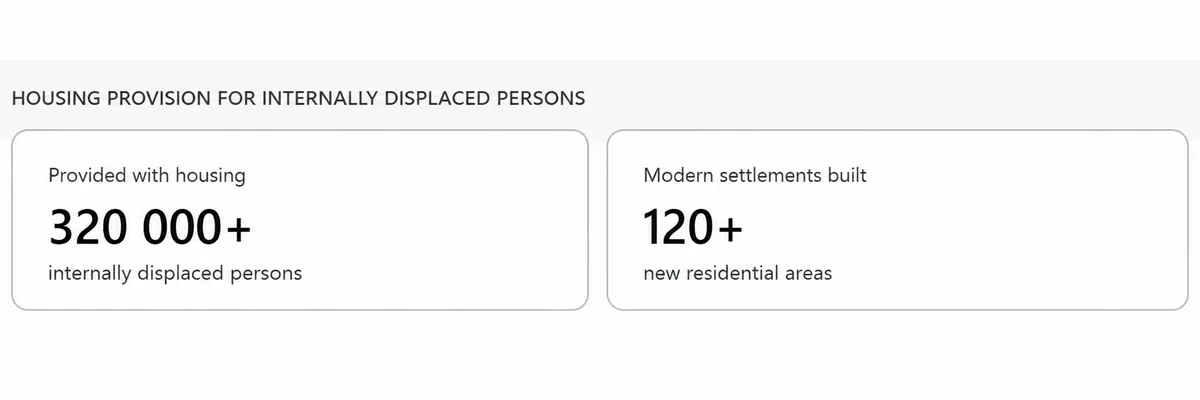
According to the deputy chairman, the measures implemented before the 44-day Patriotic War enabled hundreds of thousands of displaced persons to receive new housing. "The liquidation of tent camps, temporary settlements consisting of railway freight wagons, and Finnish-style settlements was completed during President Ilham Aliyev's first presidential term. The relocation of internally displaced persons to modern settlements equipped with the necessary social and technical infrastructure became large scale. As a result of these efforts, the poverty level among IDPs was reduced to a minimum, and more than 320,000 displaced persons were provided with apartments and houses in over 120 newly built modern settlements. Nevertheless, despite all the measures implemented, some families are still living in difficult and unsafe conditions," Huseynov added.
Notably, during the current process of organizing the return of residents to newly rebuilt cities and villages in the liberated territories, priority is being given to former internally displaced persons who continue to live in particularly difficult conditions.
Special Care for Vulnerable Groups
In general, improving the housing and living conditions of vulnerable segments of the population holds a special place in the social policy of the Azerbaijani state. In this regard, the programs implemented by the Social Services Agency, operating under the Ministry of Labor and Social Protection of the Population, are aimed at enhancing the welfare of martyr families, persons with war-related disabilities, and other privileged social groups.
These initiatives are not limited solely to providing housing; they also seek to promote social integration and improve the overall quality of life for beneficiaries. The large-scale support measures demonstrate the state"s commitment to the principles of social justice and social protection.
Faiq Aghayev, Deputy Chairman of the Board of the Social Services Agency under the Ministry of Labor and Social Protection of the Population, spoke to Report about the extensive support measures implemented in this area.
"Individuals who were disabled while defending Azerbaijan's territorial integrity, independence, and constitutional order, as well as families of martyrs, are provided with housing regardless of the date they were registered. The same applies to persons whose disabilities were established in connection with participation in the liquidation of the consequences of the Chernobyl disaster, including during the fulfillment of military service duties.
In addition, under Cabinet of Ministers Resolution No. 492s dated August 16, 2021, measures have been introduced to improve the living conditions of visually impaired persons registered in Baku, Sumgayit, and the Absheron district before the resolution came into force, as well as graduates of social service and educational institutions for children deprived of parental care," he said.
According to the deputy chairman, Ilham Aliyev has consistently shown special attention and care toward vulnerable groups in society.
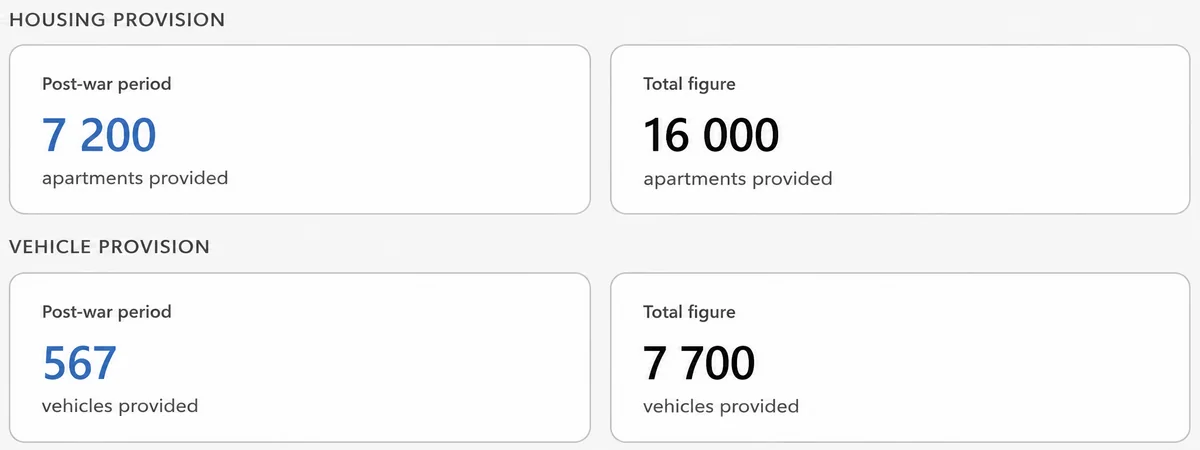
"By the instruction of the head of state, the ministry's housing and private home provision program for martyr families and war participants, implemented as part of the post-war social support package, has expanded fivefold. During the post-war period alone, 7,200 apartments were allocated to martyr families and persons with war-related disabilities, while the total number of apartments provided over the years has reached 16,000.
In addition, 567 vehicles were presented to persons with war-related disabilities in the post-war period, bringing the total number of vehicles distributed over the years to 7,700. Efforts in this direction continue on a regular basis, and work is ongoing this year to provide eligible citizens with housing and vehicles," Aghayev added.
Faiq Aghayev noted that the housing provision process for socially vulnerable groups covers the entire country.
"In previous years, individual houses were built and handed over to citizens living in the regions. Currently, apartments are being purchased in newly constructed residential buildings in the cities and districts where applicants reside and are then allocated to those on the waiting list. Overall, the process is being implemented simultaneously both in the capital and across the regions.
The measures carried out in this area make an important contribution to the sustainability of the country's long-term social protection policy. At the same time, the multiple expansion of housing provision as part of the post-war social support package reflects the state"s strategic approach to this issue and aims to ensure that all eligible beneficiaries on the waiting list are gradually provided with housing," he said.
Aghayev also stated that the funds generated through the ministry"s housing sales program are directed toward providing apartments and private homes for martyr families and persons with war-related disabilities across various regions of the country.
"As part of the housing sales program, fully renovated three- and four-room apartments in newly constructed residential buildings located in the Ramana and Umid settlements of Baku, as well as in the Absheron and Samukh districts, have been put up for sale. These apartments can be viewed through the ms.sosial.gov.az portal. Any citizen can visit the website to reserve and purchase apartments offered at affordable prices," he added.
Azerbaijan's Model Against the Backdrop of the Global Housing Crisis
Overall, the global housing crisis is becoming increasingly acute and systemic in nature. Today, around 3 billion people worldwide face serious difficulties in accessing adequate and affordable housing, while 1.1 billion live in informal settlements and slum areas. More than 300 million people across the world are directly affected by homelessness.
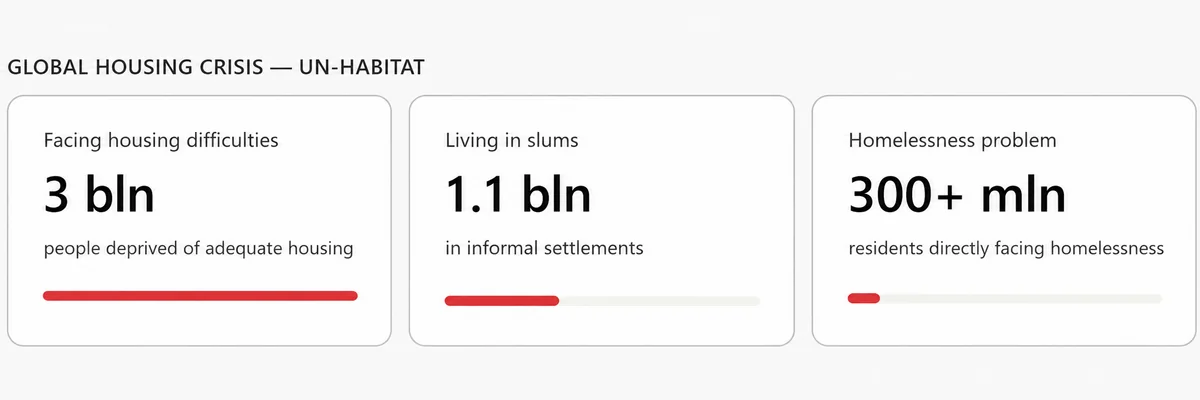
Data from the UN-Habitat and other international institutions show that the current situation poses not only social challenges, but also serious risks in terms of public health, security, and economic stability. Poor housing conditions increase the likelihood of infectious disease outbreaks, deepen social inequality, and limit opportunities for participation in the labor market.
In addition, rapid urbanization, population growth, rising construction costs, and limited land resources are among the key factors exacerbating the global housing crisis. One of the defining features of the problem is that it affects not only developing countries, but also advanced economies.
Against this global backdrop, the social and institutional measures implemented in Azerbaijan form part of a broader strategy aimed at creating long-term and sustainable solutions.
Nusrat Ibrahimov, Chairman of the Azerbaijan Society of Appraisers, told Report that at a time when the global housing crisis is deepening, Azerbaijan stands out for its systematic and targeted housing policy.
"State support mechanisms, social and affordable housing programs, as well as the introduction of unified registries and transparent selection mechanisms, have allowed the housing provision system to be built on strong institutional foundations. This approach aligns both with the principle highlighted within the framework of the 13th session of the World Urban Forum 13 (WUF13), to be held in Baku on May 17–22 - namely that ‘housing is not merely a right, but a комплекс of services that must be ensured" - and with internationally recognized principles of social inclusion," he said.
The chairman emphasized that one of the most important outcomes of Azerbaijan's social and affordable housing model is its contribution to sustainable urban development.
"Social housing projects not only provide vulnerable groups with better living conditions, but also help preserve social diversity within cities by preventing certain groups from being pushed to the periphery. This practice fully corresponds with the core goals of the World Urban Forum in terms of equality and social integration within urban structures," Ibrahimov noted.
According to him, new residential districts are no longer developed spontaneously, but are planned with consideration for functional zoning, transport connectivity, the capacity of social infrastructure, green space balance, and environmental impact.
"In line with the principles of ‘new urbanization," this approach optimizes the distance between workplaces, recreation areas, social services, and public transport, making cities more livable and comfortable. Infrastructure development alongside housing projects has become an integral part of modern urban policy, and Azerbaijan's experience clearly demonstrates the effectiveness of this principle. Over the past decade, newly built residential neighborhoods have been developed as integrated complexes that include transport hubs, schools, kindergartens, healthcare facilities, parks, and public spaces," he said.
The expert also stressed that improving access to housing is one of the key factors strengthening social equality in the country.
"Affordable housing and preferential mortgage programs have a significant impact on the social welfare of young people, civil servants, martyr families, war veterans, and other vulnerable groups, enabling their deeper integration into society. This has a powerful effect in reducing social stratification and preserving the principle of equality within the urban environment. Against the backdrop of the global housing crisis, the mechanisms implemented by Azerbaijan could serve as a model for other countries in the region," Ibrahimov added.
Thus, on the eve of World Urban Forum 13, Azerbaijan's achievements in the field of housing provision are gaining increasing international relevance. At a time when housing problems are becoming more severe in many parts of the world, Azerbaijan"s systematic approach in this area stands out. The country's socially oriented programs, preferential housing finance instruments, and modern urban planning approaches are aimed not only at improving citizens" living conditions, but also at strengthening social equality.
Fatima Baghirova
Video: Gulchin Jamil
Author