 Baku 22° C
Siligato: Five Caspian countries must jointly respond to climate challenges
- 08 September, 2026
- 10:32
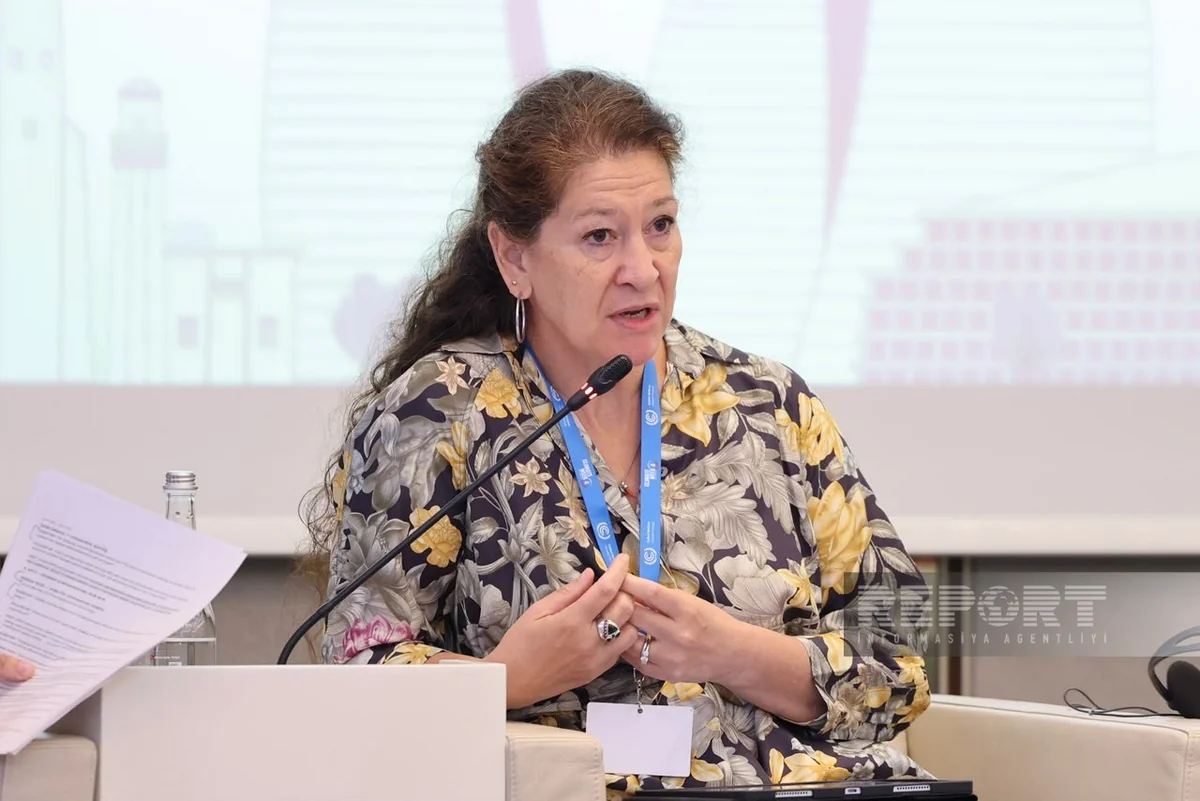
The five Caspian littoral states should develop a joint approach to addressing climate challenges affecting the Caspian Sea, which are already impacting the region's environment, infrastructure, economy and water security, Simonetta Siligato, Director of the UNOPS Multi-Country Office, said during a panel session held as part of Baku Climate Action Week 2026 (BCAW 2026), Report informs.
According to Siligato, the Caspian Sea is a single hydrological system, but scientific research and data collection have long been conducted separately within the national boundaries of the five littoral countries.
"If we really want to understand what is happening, we need to share data, interact and plan together," Siligato said.
She noted that the Blue in the Caspian Sea project, implemented by UNOPS together with the World Bank and funded by the Global Environment Facility in Azerbaijan, Kazakhstan and Turkmenistan, is creating a shared scientific foundation for joint planning.
Siligato also stressed the need to establish comparable monitoring systems, shared databases and platforms for information exchange.
She noted that the Tehran Convention, the Framework Convention for the Protection of the Marine Environment of the Caspian Sea, provides a foundation for cooperation among the five littoral states. However, she said the scientific and technical aspects of cooperation need to be strengthened, data sharing expanded and sustainable financing secured.
"This is no longer only an environmental issue. It affects infrastructure, ports, transport, local economies and livelihoods, as well as water security and biodiversity," Siligato emphasized.
She added that joint action by the five countries would be more effective and economically beneficial than individual responses to shared regional challenges.
Author