Baku 19° C
Sites of Memory of Western Azerbaijan: Aghkend's history of deportation and ethnic cleansing
- 08 October, 2026
- 14:55

Stay up to date with the top news!
Research on the history of Aghkend (present-day Aghnjadzor), a village in Armenia inhabited by Azerbaijanis until the late 1980s, has been published as part of the "Sites of Memory of Western Azerbaijan" project.
According to Report, the article was published by The Perished Civilization.
The project notes that the village was recorded as Aghkend during the Tsarist period and as Akhkend and Aghnjadzor during the Soviet period. Russian imperial sources record the village as Aghkend, while during the Soviet period the name came to be written as Akhkend and remained in use until 1968. According to the project, the village was then renamed Aghnjadzor as part of what it describes as a policy of Armenianization and the erasure of Azerbaijani heritage in Armenia. Since 1995, the village has been part of Vayots Dzor Province of the Republic of Armenia. From the mid-18th century until the Russian conquest, its territory formed part of the Daralayaz mahal of the Nakhchivan Khanate.
In 1827, Russia occupied the territory of the Nakhchivan Khanate, and the 1828 Treaty of Turkmenchay formalized its incorporation into the Russian Empire. During the Tsarist period, the village was part of the Sharur-Daralayaz Uyezd of the Erivan Governorate.
Between 1829 and 1832, an administrative census of the territories of the former Iravan and Nakhchivan khanates was conducted at the direction of the Russian authorities. According to the census cited by the project, Aghkend had more than 200 inhabitants, all of whom were ancestors of present-day Azerbaijanis.
Tsarist-era statistical records, also cited in Armenian sources, indicate that at various times before 1914 the village was inhabited exclusively or predominantly by ancestors of the Azerbaijanis.
In 1873, Aghkend had 498 inhabitants, all of whom were ancestors of the Azerbaijanis. In 1914, the village had 618 inhabitants, predominantly ancestors of the Azerbaijanis.
The project states that between 1918 and 1920, Dashnaktsutyun, the nationalist party then in power in the Republic of Armenia, carried out ethnic cleansing against the Turkic population in the Erivan Governorate and other areas, particularly Zangezur, Karabakh and Nakhchivan.
According to the project, the sharp decline in Aghkend's Turkic population provides evidence that its residents were subjected to ethnic cleansing. It points to a comparison between earlier population figures and the results of Soviet Armenia's 1922 census. In 1922, the village had 106 inhabitants, all of whom were Azerbaijanis.
The village subsequently became part of Daralayaz District.
According to an Armenian newspaper cited by the project, the uyezd authorities ordered the resettlement of approximately 155 people from neighboring Armenian villages to Aghkend in 1925, when the village was home to 145 Azerbaijanis. Armenian sources indicate that both Azerbaijanis and Armenians lived in the village until the late 1980s.
The project states that in the late 1980s, amid Armenian territorial claims to Karabakh and deteriorating relations between the two republics, Azerbaijanis were permanently driven out of the territory of the Armenian SSR.
The 1879 Collection of Information about the Caucasus notes that the village had two caravanserais and the ruins of an ancient fortress, which it says was built by "a person named Sulema."
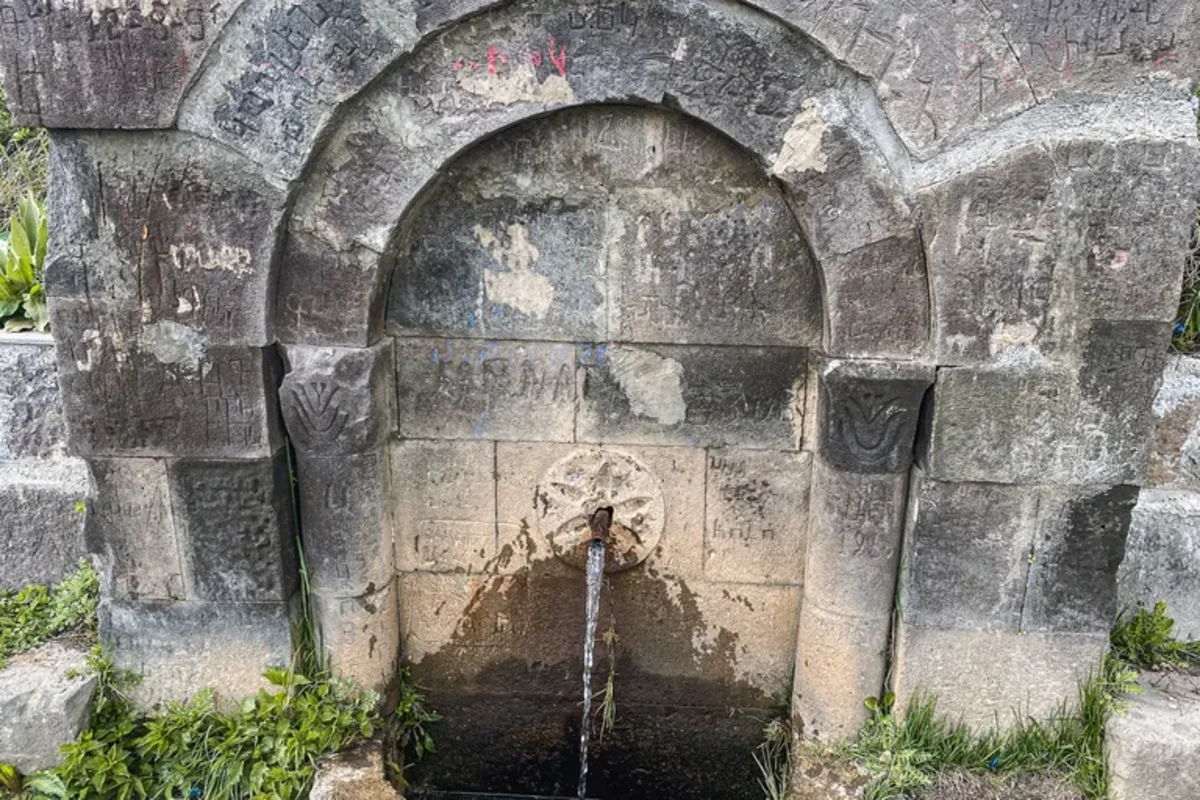
Between 2021 and 2024, extensive fieldwork was conducted across Armenia, including in remote mountainous regions, in preparation for the book The Perished Civilization. The research focused on identifying and documenting surviving Azerbaijani heritage sites.
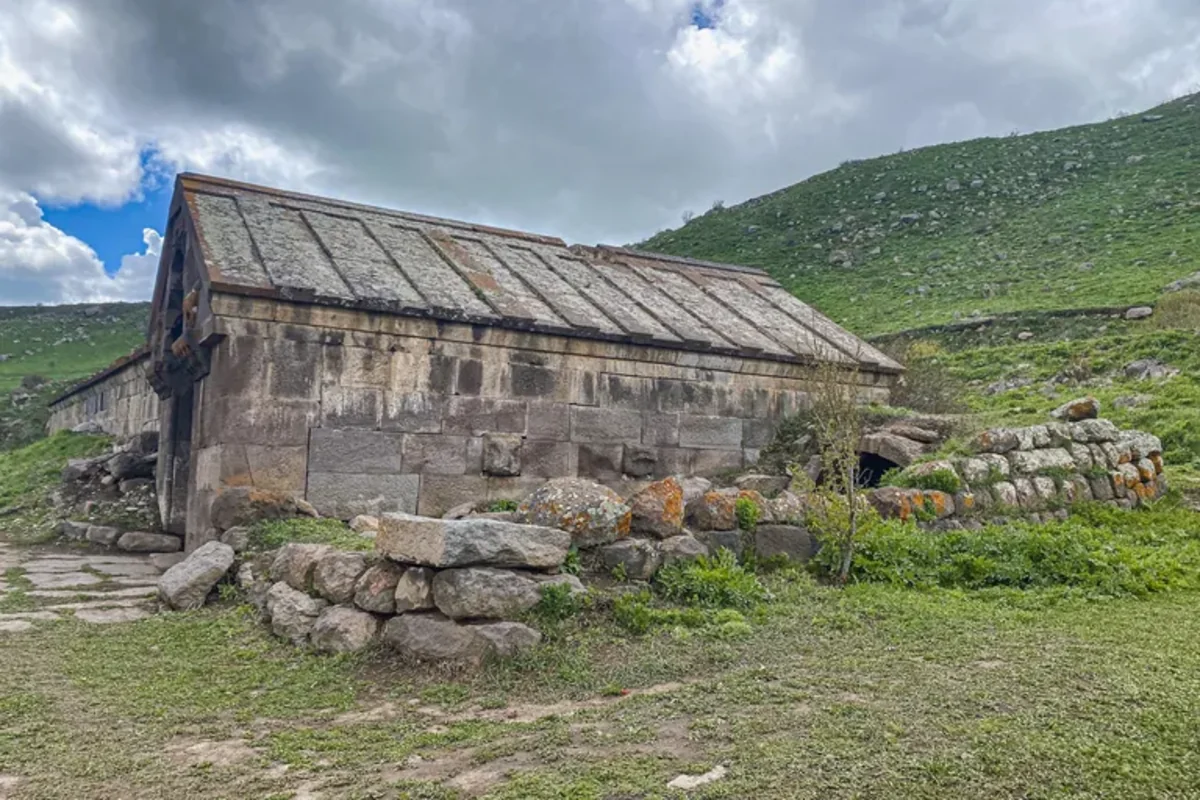
During the fieldwork, researchers discovered a caravanserai in the village which they date to the 14th century, the period of the Hulaguid dynasty's rule. According to the project, the caravanserai is currently presented as part of Armenian cultural heritage.

Author