 Baku 17° C
MP: Post-2020 reality presented Armenia with clear political choice
- 03 October, 2026
- 18:50
Stay up to date with the top news!
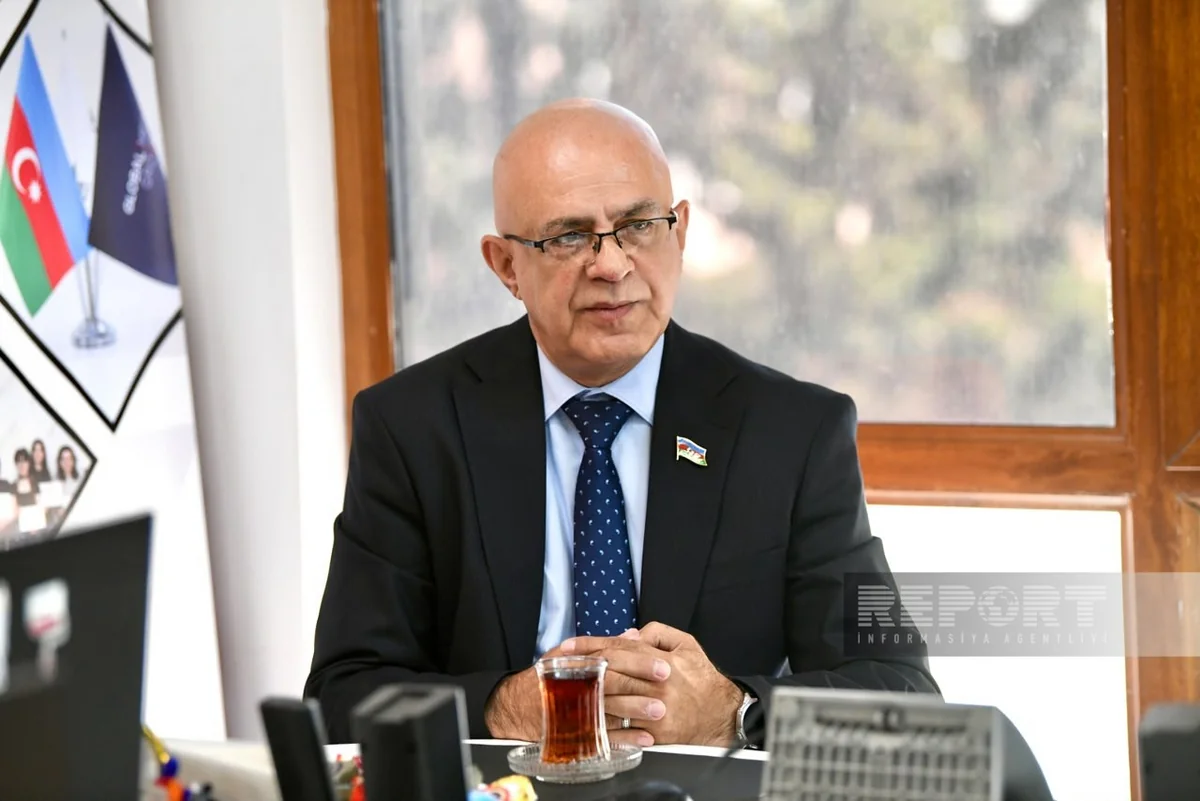
The new reality that emerged in the South Caucasus after the November 10, 2020 statement presented Armenia with a fairly clear political choice, Azerbaijani MP Elchin Mirzabayli told Report.
According to him, the choice was either to accept the results of the war, Azerbaijan's restored territorial integrity and the new security architecture formed in the region and make a real contribution to normalizing interstate relations, or to keep the Karabakh issue on the agenda through new political terminology and international mechanisms without accepting the changed reality.
"The following three years showed that there was a serious contradiction between these two approaches in Armenia's policy. To understand the essence of the issue, it is necessary to focus not only on Armenia's statements, but also on the relationship between those statements and its practical political behavior.
"Although an important diplomatic shift took place in 2022-2023 toward Armenia recognizing Azerbaijan's territorial integrity, the same consistency was not observed regarding the practical consequences of that recognition that would lead to the elimination of the separatist political reality in Karabakh," he said.
"This principle was also identified as the main political basis for the subsequent border delimitation process. At the Brussels meeting in May 2023, this approach was expressed more concretely. President of the European Council Charles Michel announced that the sides had reaffirmed their commitment to Azerbaijan's territorial integrity of 86,600 square kilometers and Armenia's territorial integrity of 29,800 square kilometers. In the following months, Nikol Pashinyan also openly stated that Karabakh was included in Azerbaijan's 86,600 square kilometers.
"The important point here is that the issue was no longer whether Armenia recognized Azerbaijan's territorial integrity. The main question was whether the political consequences of this recognition, implemented in accordance with the fundamental principles of international law, would be accepted," he said.
According to Mirzabayli, while recognizing Azerbaijan's territorial integrity, Armenia continued to keep on the agenda the issue of resolving the rights and security of ethnic Armenians living in part of Azerbaijan's Karabakh economic region through a separate international mechanism.
He said that during the three-year period following 2020, Armenia on the one hand moved toward recognizing Azerbaijan's territorial integrity, while on the other hand pursued a different political line regarding the practical consequences envisaging the region's reintegration into Azerbaijan's constitutional space.
Mirzabayli added that the events of September 2023 made the answers to these questions even more consequential.
By that point, he said, the gap between agreements reached at the diplomatic level and actual political conduct was no longer a theoretical dispute, but had become a factor directly shaping the region's future security architecture.
Author