Baku 16° C
MP: It's not surprising that Russia's leadership demonstrates more cruel attitude towards reps of other nationalities
- 29 June, 2025
- 16:49
Stay up to date with the top news!
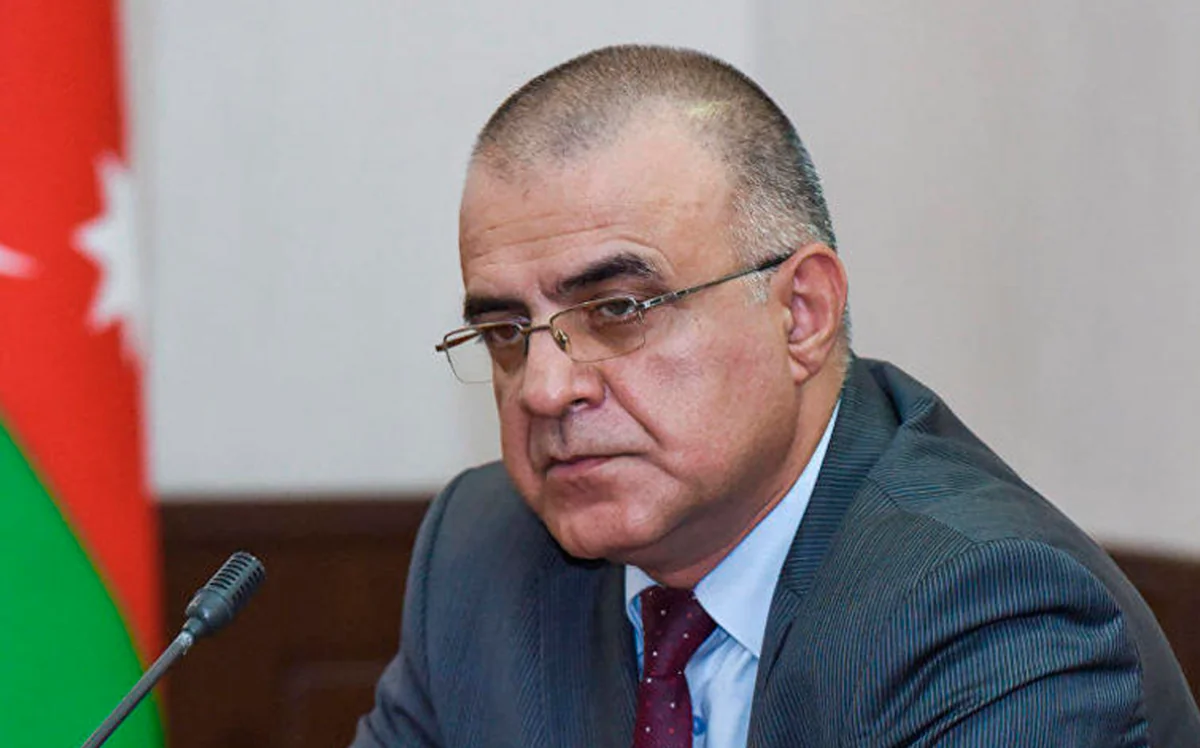
Recent events in Russia, in particular, pressure, offensive rhetoric, and violent actions directed against Azerbaijani migrants and non-Russians, serve several parallel purposes, Azerbaijani MP Elchin Mirzabayli told Report.
He noted that one of the goals is related to the confrontation between the church and the government in Armenia: "This is a typical example of Russia's 'multi-vector policy of influence.' Let's first consider this process step by step: The tension between Pashinyan's government and the Armenian Apostolic Church has reached its peak. The church accuses Pashinyan of betraying traditional values and leaning toward the West, while Pashinyan tries to limit the political influence of the church. In this struggle, the radical ultra-nationalist segment of Armenian society has rallied around the church. Moscow has long supported the church in Armenia as an instrument of 'soft power' and a mechanism of political influence. This is because the church maintains historical ties with the Russian Orthodox Church, and the church's position aligns with Russia's rhetoric about 'traditional values' in the post-Soviet space. That is, for Moscow, the church plays the role of one of the traditional pillars of imperialist aspirations in Armenia and the South Caucasus."
The deputy emphasized that violence against Azerbaijanis and Muslim migrants in general serves Moscow as a message in two directions. Thus, it shows the internal radical electorate that 'Russia maintains the principle of a firm hand, ensuring overwhelming superiority.'
"To the ultra-nationalist forces in Armenia rallied around the church, it conveys that Moscow is fighting the 'Turkic-Muslim threat' in the Caucasus and maintaining its influence. In other words, the pressure of Russian law enforcement agencies on Azerbaijanis, murders, the label of 'ethnic crime' not only create Islamophobia in Russia. It is also a message to certain circles in Armenia: 'Russia is your eternal ally, our common enemy is the Turkic-Muslim world.' It is very likely that in the wave of violence against Azerbaijanis, Moscow is simultaneously conveying the following messages to the church and ultra-nationalist groups in Armenia: 'We take a tough stance against your historical-mythical 'enemies,' without our influence no one in the region will be able to protect you from Turkic-Muslim superiority, and you should use this theme in propaganda and convey it to public opinion.'"
According to the parliamentarian, this is a multifaceted policy aimed at both strengthening Russia's position in the region and enhancing nationalist consolidation within the country: "On the other hand, the political circles of the Russian Federation are trying to redirect the semi-hidden discontent arising against the background of economic difficulties, international isolation, social tension created by the war in Ukraine, in the traditional order in different directions. Historically, in Russia, during periods of political and economic crisis, there was a tradition of creating an image of an internal enemy. Anti-migrant rhetoric in this context is a classic scapegoating strategy. The factor underlying all these events is the ideology of the 'leading role of the Russian people,' which is an important element of imperial consciousness in Russian statehood."
Mirzabayli noted that the chauvinistic, discriminatory, and Islamophobic policy currently being conducted in Russia against Azerbaijanis, Uzbeks, Kyrgyz, Turkmens, and representatives of other Turkic, Muslim peoples is not accidental: "The ruling political circles are at the head of this policy. In fact, this is a continuation of the imperial policy carried out for centuries against various peoples, which has taken a more rigid and open form. To understand the essence of Russia's current domestic and foreign policy, it is enough to pay attention to what is happening in Ukraine. If the Russian leadership pursues such a cruel policy against the brotherly Slavic Ukrainian people, kills civilians in Bucha and other cities, wipes villages and towns off the face of the earth, forces millions of people to leave their homes, it is not surprising that it demonstrates an even more ruthless attitude towards other peoples. In the 1990s, skinhead squads, distinguished by their cruelty towards migrants from Central Asia and the Caucasus, were under the patronage of special service agencies. In today's Russia, there is no longer a need for such groups. This function is performed directly, more openly, and cruelly by the police, OMON, and FSB. The crimes against Azerbaijanis in Yekaterinburg are clear proof of this. The details of the incident show that hatred towards other peoples in Russia is fueled at the state level."
He added that the concept of 'ethnic crime,' put forward by Russian law enforcement agencies, is also part of this policy: "For many years, Russia has been spreading not security and stability in the region, but oppression and ethnic discrimination. These processes are not accidental. Azerbaijan's independent policy based on its national interests and strengthening positions in the region worries Russian media and political circles. That is why the rhetoric is becoming tougher. However, this is short-term pressure, and it does not change the actual reality. On the contrary, such attacks on Azerbaijan strengthen the tendency in our society towards greater unity around national solidarity and a cool-headed diplomatic position."
Author