Baku 21° C
Azerbaijani public rejects campaign defending war criminals
- 29 June, 2026
- 17:01
Stay up to date with the top news!
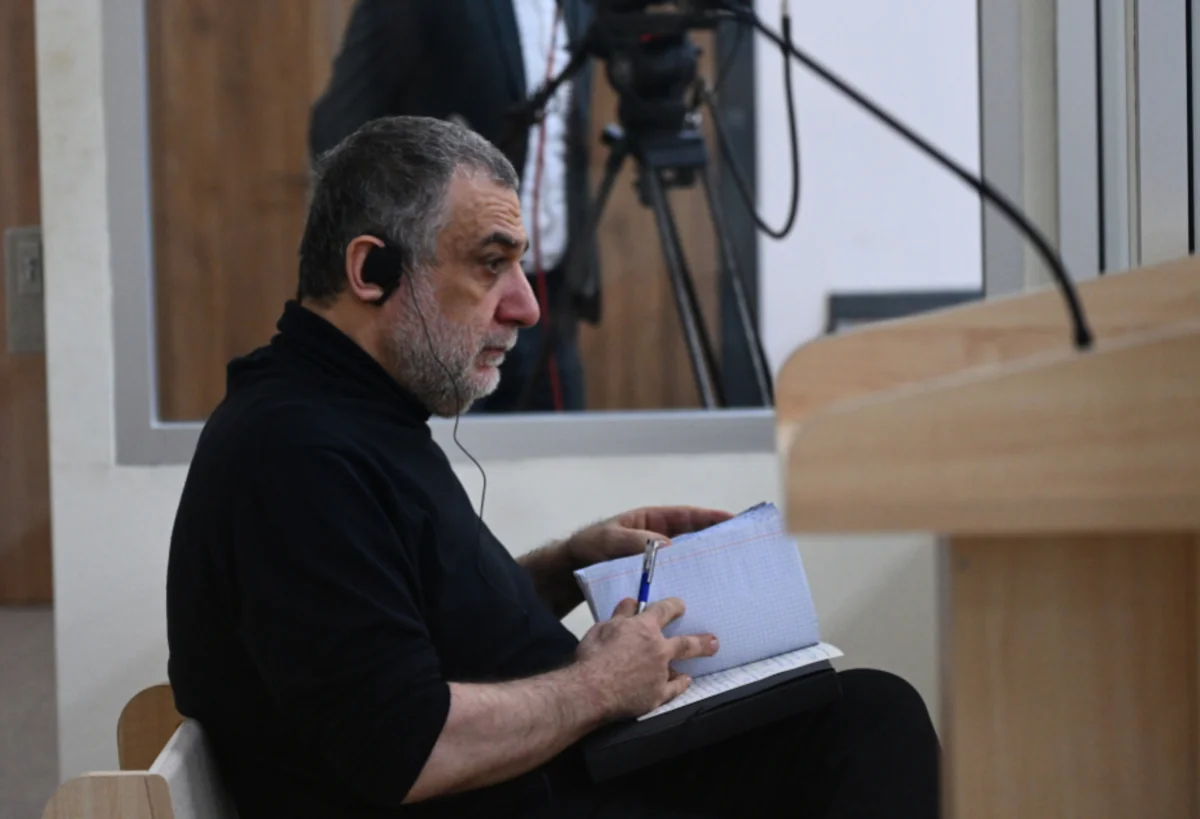
Representatives of Azerbaijan's public have demonstrated a firm stance against the campaigns conducted by pro-Armenian organizations in some Western countries aimed at portraying a number of war criminals convicted in Azerbaijan, including war criminal Ruben Vardanyan, as "victims," Report informs via AZERTAC.
In the Open Letter disseminated by Azerbaijani NGOs, families of martyrs, relatives of missing persons, victims of mine terror, and former internally displaced persons, it was stated that Ruben Vardanyan and others were convicted for the grave crimes they committed, as well as for financing separatism and terrorism.
"We strongly oppose the growing international campaigns that unjustly portray Ruben Vardanyan, who was convicted of grave crimes, as a victim while ignoring the real victims-the Azerbaijanis who suffered from the crimes for which he was convicted," reads the letter.
As noted, for years, Azerbaijani civil society, human rights advocates, mine victims, survivors of ethnic cleansing, and families of missing persons have engaged the international community through peaceful and lawful advocacy.
In an open letter to President Donald Trump of the United States of America (https://en.apa.az/foreign-policy/azerbaijani-ngos-address-open-letter-to-us-president-donald-trump-487462), Azerbaijani civil society representatives emphasized that those facing prosecution are not "hostages" or "political prisoners," but individuals convicted of serious crimes committed during decades of conflict and occupation, and that justice and accountability are indispensable for sustainable peace.
Similarly, in their appeal regarding the amendment introduced by Representative Brad Sherman to the U.S. House Foreign Affairs Committee (https://azertag.az/en/xeber/4264859), they stressed that these individuals were sentenced for acts that caused immense suffering and led to the displacement of hundreds of thousands of people, the destruction of cities, civilian infrastructure, and cultural heritage. The devastating scale of these actions directly culminated in deliberate acts of genocide, ecocide, urbicide, and culturecide.
Azerbaijan has both the right and obligation under domestic and international law to investigate and prosecute such crimes. The proceedings were conducted openly, with access to legal representation and full opportunities for defense.
Azerbaijani civil society has also rejected attempts to disregard victims' rights and distort the legality of these proceedings, including in responses to the Lemkin Institute for Genocide Prevention (https://report.az/en/foreign-politics/azerbaijani-ngos-call-on-us-based-lemkin-institute-to-apologize) and appeals to members of the British Parliament (https://www.azernews.az/nation/254843.html) and international organizations. These efforts have consistently sought truth, justice, accountability, reconciliation, and lasting peace.
"Yet our concern is not only legal. It is deeply human," the letter reads.
For decades, families of missing persons have appealed to governments, international organizations, and the conscience of the world. "Among them was Elmira Dadashova, who joined a peaceful demonstration in Geneva (last year to remind the international community that hundreds of Azerbaijani families still do not know the fate of their loved ones. She spent years searching for answers about her missing son, but passed away without ever learning his fate," the letter says.
As noted, at the historic Washington Summit of August 2025, facilitated by President Donald Trump, the leaders of Azerbaijan and Armenia signed a Joint Declaration and initialed a peace treaty, opening a fundamentally new chapter in relations between the two countries.
"Lasting peace requires trust. Yet trust cannot be built on silence about past crimes," the authors says.
Read the full text of the letter here.
Author