Baku 25° C
Omuraliev: Turkic states seek to cut transit costs and delays along Middle Corridor
- 16 September, 2026
- 11:19
Stay up to date with the top news!
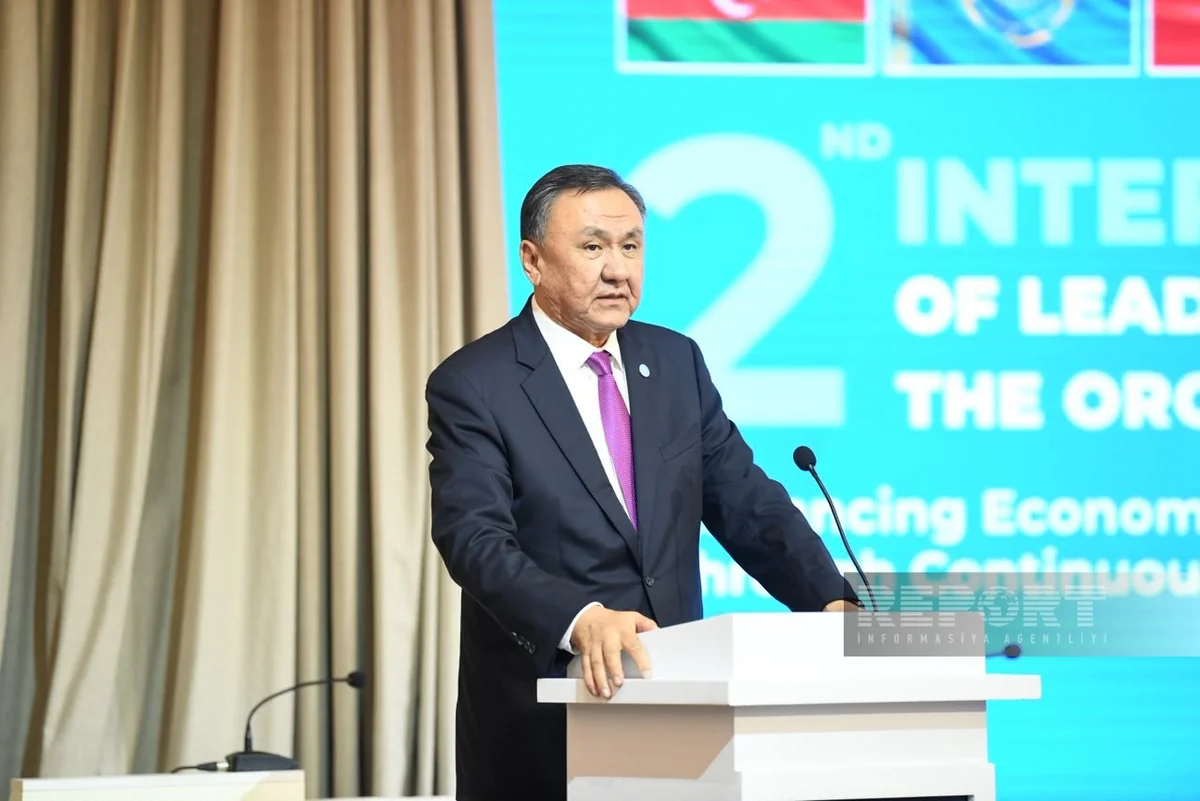
Turkic states are working to reduce transit costs and delays along the Middle Corridor, Secretary General of the Organization of Turkic States (OTS) Kubanychbek Omuraliev said at the Second International Conference of Leading National Analytical Centers of the OTS in Baku, Report informs.
He said the goals should go beyond simply increasing trade volumes and should focus on making trade faster, more efficient, digitalized, diversified and more beneficial for businesses and communities across the region.
Omuraliev noted that the "Turkic World Vision 2040" provides an important roadmap for deepening economic integration, improving connectivity, strengthening institutions, investing in knowledge-based sectors and promoting sustainable and inclusive growth.
He identified transport and logistics connectivity as the organization's first priority, highlighting the Trans-Caspian International Transport Route, also known as the Middle Corridor.
According to Omuraliev, the route could become one of the key channels for sustainable economic cooperation among Turkic states, serving as a strategic bridge between Asia and Europe through the Turkic region.
He stressed that the success of the Middle Corridor will depend not only on physical infrastructure. Ports, railways, roads and logistics hubs should be supported by harmonized standards, efficient AI-based border procedures, coordinated tariffs and digital customs services.
The OTS is working on initiatives including a simplified customs corridor, e-Permit, e-CMR and Digital Cargo. Omuraliev said these projects could reduce transit delays, lower costs and strengthen trust among traders and investors.
He also emphasized the importance of renewable energy for the economic future of Turkic countries.
"Energy security, the green transition and sustainable infrastructure are vital for our climate resilience and economic growth," he said, adding that cooperation in renewable energy, green finance and climate-resilient technologies could create new opportunities for economic growth.
Author